Daksh Pandey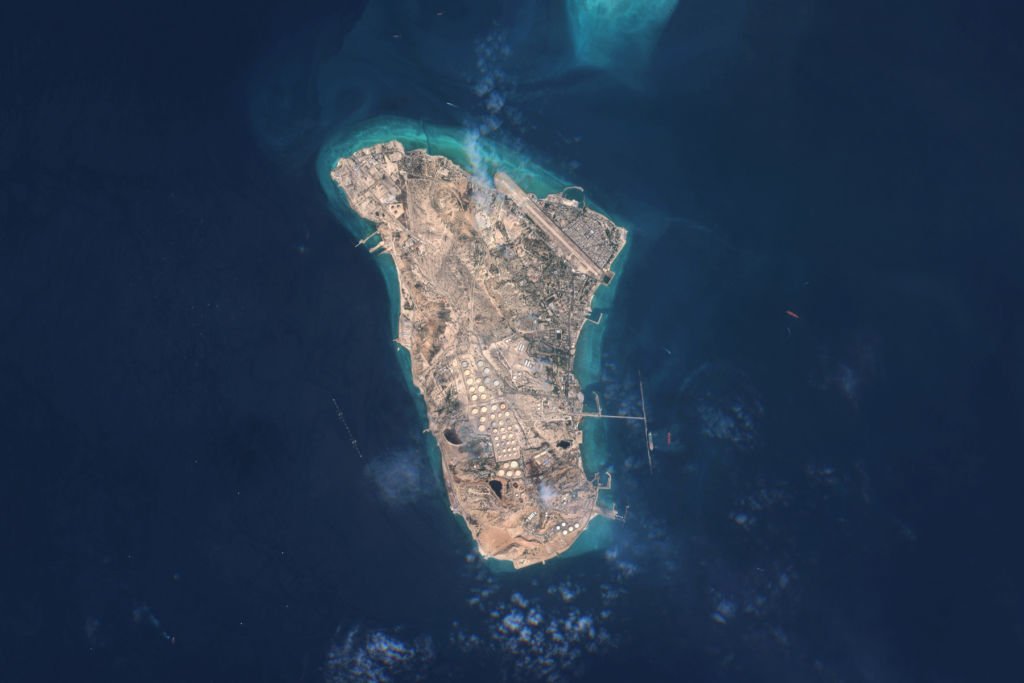
The warning by U.S. President Donald Trump that the United States could strike Iran’s Kharg Island oil network if shipping lanes remain blocked marks one of the serious escalations in the ongoing Middle East conflict of 2026.
The issue is tied closely to the Strait of Hormuz crisis. Iran has. Attempted to disrupt global oil shipping routes. Kharg Island is central to Iran’s oil economy. Any attack on its oil infrastructure would have geopolitical and economic consequences.
### 1. Background of the Crisis
The current tensions between the United States and Iran are part of a regional conflict that escalated in early 2026.
The confrontation intensified after U.S. And Israeli strikes targeted military infrastructure.
Iran responded with missile attacks, drone operations and threats against shipping in the Persian Gulf.
* A key flashpoint is the Strait of Hormuz. This route is one of the critical maritime choke points in the world for energy trade.
* Around 20% of the world’s oil supply passes through this strait every day.
* Oil from producers such as Saudi Arabia, Iraq, Kuwait, Qatar and the UAE travels through this route to global markets.
If shipping through the strait is disrupted energy prices around the world immediately rise.
After strikes and escalating retaliation Iran warned ships against passing through the strait and began targeting vessels and regional assets.
As a result shipping traffic through the area dropped dramatically creating an energy crisis.
### 2. What Trump. Why
President Trump announced that U.S. Forces had already launched airstrikes targeting military installations on Kharg Island but deliberately avoided hitting oil facilities.
However he warned that this restraint might not continue if Iran continues to disrupt traffic.
* The U.S. Destroyed defenses and facilities on the island.
* Oil infrastructure was intentionally spared during the strike.
* Trump said the oil network could become a target if shipping routes are not reopened.
The message was clear: Iran must allow ships to pass safely through the Strait of Hormuz or risk losing its oil export hub.
Trump also urged countries to help secure the shipping lanes and join a coalition to reopen the strait.
### 3. Why Kharg Island Is So Important
Kharg Island is one of the strategically important oil locations in the world.
#### 3.1 Iran’s Main Oil Export Hub
* 90% of Iran’s oil exports pass through Kharg Island making it the backbone of the country’s energy economy.
* Oil from Iranian fields is transported by pipelines to the island, where it is loaded onto massive tankers.
The island has oil storage tanks and long deep-water jetties for supertankers.
The infrastructure is capable of loading large ships simultaneously.
Without Kharg Island Iran would struggle to export oil
#### 3.2 Economic Lifeline for Iran
Iran’s economy relies heavily on oil exports.
If Kharg Island were. Destroyed:
* Iran’s oil exports could collapse.
* Government revenue would drop dramatically.
* Economic pressure on the leadership would increase.
Because of this the island is often called “Iran’s oil crown jewel.”
### 4. Military Importance of Kharg Island
Kharg Island is not an economic hub—it is also a military stronghold.
Iran’s Islamic Revolutionary Guard Corps (IRGC) maintains forces on the island to protect oil infrastructure and monitor shipping traffic.
* Facilities there include missile launchers, radar systems, surveillance networks, drone bases and attack naval boats.
* These assets allow Iran to threaten ships passing through the Persian Gulf.
The U.S. Strikes on Kharg Island targeted these systems to reduce Iran’s ability to attack or block shipping lanes.
### 5. The Strait of Hormuz Crisis
The threat to Kharg Island is closely tied to the crisis in the Strait of Hormuz.
#### 5.1 Why the Strait Matters
The strait is about 34 kilometers wide at its narrowest point making it vulnerable to disruption.
Iran could. Threaten shipping using naval mines, missiles, fast attack boats and drones.
A few mines could stop ships from passing safely because clearing them is extremely difficult.
#### 5.2 Impact on Global Oil Markets
The disruption has already caused:
* Oil prices to surge above $100 per barrel.
* Shipping companies to suspend operations.
* Tanker traffic to fall dramatically.
This is being described as one of the energy supply disruptions since the 1970s oil crisis.
### 6. Iran’s Response to U.S. Threats
Iran has rejected U.S. Warnings. Vowed to continue its actions.
Iranian leaders say they are blocking the Strait of Hormuz as retaliation for U.S. And Israeli attacks.
Iran has also threatened U.S. Bases in the region oil infrastructure in Gulf states and shipping linked to Western countries.
There have already been reports of missile and drone strikes targeting facilities in the United Arab Emirates and other locations.
Iran has warned that any attack on its oil infrastructure would trigger retaliation.
### 7. Regional Escalation
The crisis is spreading across the Middle East.
The conflict now involves actors: the United States, Iran, Israel and Gulf Arab states.
There have also been attacks and military actions in Lebanon, Israel and Gulf shipping routes.
Regional governments fear the conflict could expand into a scale regional war.
### 8. Why the U.S. Is Avoiding Oil Targets—for Now
Although Trump threatened to strike Kharg Island’s oil infrastructure the U.S. Initially avoided doing
There are reasons:
#### 8.1 Preventing a Global Energy Crisis
Destroying Kharg Island could remove a major source of oil supply pushing prices even higher.
High oil prices could harm economic stability, energy security and U.S. Allies dependent on Middle Eastern oil.
#### 8.2 Avoiding Escalation
Attacking oil infrastructure is considered an escalation.
Such a move could trigger a war with Iran draw other regional powers into the conflict and increase attacks on shipping.
#### 8.3 Maintaining International Support
The U.S. Is trying to build a coalition of countries to reopen the Strait of Hormuz.
If the U.S. Destroyed Iran’s oil export system some countries might view the move as excessive.
### 9. Global Economic Consequences
The crisis has already shaken markets.
#### 9.1 Rising Oil Prices
Energy prices have surged due to fears of supply disruptions.
Oil prices above $100 per barrel increase transportation costs, electricity prices and inflation worldwide.
#### 9.2 Impact on Asia
countries are especially vulnerable because they depend heavily on Middle Eastern oil.
Major importers include China, India, Japan and South Korea.
Any prolonged disruption could seriously affect these economies.
#### 9.3 Shipping and Insurance Costs
Insurance for ships passing through the Strait of Hormuz has increased dramatically.
Some shipping companies have stopped operating in the region
### 10. Possible Future Scenarios
Several outcomes are possible in the coming weeks.
* **Scenario 1: Diplomatic De-escalation**. Countries may negotiate a deal to reopen the Strait of Hormuz.
This would reduce tensions. Stabilize energy markets.
* **Scenario 2: Limited Military Conflict**. The U.S. Could continue targeting military assets while avoiding economic targets.
This would aim to weaken Iran’s ability to disrupt shipping.
* **Scenario 3: Attack on Kharg Island Oil Facilities**. If Iran continues blocking shipping lanes the U.S. Could strike the island’s oil infrastructure.
This would severely damage Iran’s economy.
* **Scenario 4: Full Regional War**. If both sides escalate further the conflict could spread across the Middle East.
This could involve Gulf states, Israel, proxy militias and global naval forces.
### 11. Why the World Is Watching Closely
The confrontation over Kharg Island is much more than one island.
It represents a struggle over energy security, freedom of navigation, power in the Middle East and global economic stability.
Because so much of the world’s oil passes through this region any conflict there affects the global economy.
President Donald Trump has warned Iran that the United States could strike the oil infrastructure of Kharg Island if Iran continues blocking shipping lanes in the Strait of Hormuz.
Kharg Island handles 90% of Iran’s oil exports making it a critical economic and strategic target.
The threat reflects escalating tensions in the Middle East. Highlights the importance of the Strait of Hormuz, for global energy supplies.
A prolonged conflict could trigger economic disruptions and potentially lead to a wider regional war.