Ansh verma
How to Use Sanchar Saathi in Android | Complete Security Guide for Smartphone Users — IndTech365
The rapid expansion of mobile connectivity in India has brought unprecedented convenience with it, but it has also opened the door to cyber fraud, smartphone theft, identity misuse, and SIM-based scams. Against this backdrop, the Government of India’s telecom security initiative Sanchar Saathi is fast emerging as one of the most talked-about digital safety tools this year.
The Department of Telecommunications developed Sanchar Saathi, a nationwide facility launched in 2023 aimed at providing mobile users with greater power to manage their digital identity. It allows citizens to check the number of mobile connections issued in their name through a portal and a mobile app, block stolen devices across networks, verify IMEI authenticity before buying any handset, and report scam calls along with suspicious telecom activities. From being a mere cyber-safety solution, it has grown really fast to become a tool of big-scale public security.
Government officials say millions of users have already accessed the service. CUF (Citizen-Centric Unified Framework) approach of the portal has made many processes simpler that were once required to be dealt with by the multiple authorities. Earlier, tracking or blocking a stolen phone required complaints with several telecom operators, but now the process is centralized: once an IMEI number is flagged through Sanchar Saathi, all cellular networks are required to enforce the block so that it becomes useless on any SIM card.
Another highly utilized feature on the platform has been the ability to check the number of SIM cards currently registered under a user’s identity. From urban centres to semi-urban regions, citizens have found mobile numbers activated in their names without their knowledge. The finding has created public awareness with respect to telecom identity misuse, and many unauthorized numbers were reported and then disconnected.
This is expected to have a bearing on India’s over ₹30,000 crore second-hand smartphone market. The industry has been dogged for a long time with the problem of stolen and fake devices entering circulation. For buyers, Sanchar Saathi will help verify instantly if the IMEI of a device is legitimate before purchase. Mobile sellers and resellers in the industry say that with the transparency coming in through the portal, the business will now get pushed toward more responsible transactions.
Despite the positive reception and practical uses, Sanchar Saathi drew nationwide attention recently after reports claimed that the government had directed smartphone manufacturers to install the app on every new handset. Critics and opposition parties cited privacy concerns, as a preloaded government app with data access to the device could turn into a surveillance mechanism. A debate quickly emerged, dominating technology policy discussions throughout the country.
On the controversy, Telecom Minister Jyotiraditya Scindia said Sanchar Saathi was never intended as a monitoring or call-tracking tool and was meant only for citizen security. He tried to allay data surveillance allegations, saying it would protect users against mobile theft and fraud, nothing more. Shortly afterward, the government made a rollback of the order for mandatory pre-installation, adding that the customers would remain free to download and use the app at their discretion. The decision was seen as a nod to user choice and privacy rights, helping ease scepticism surrounding the initiative.
How to Use Sanchar Saathi in Android | Complete Security Guide for Smartphone Users — IndTech365
Cyber experts maintain, however, that the success of Sanchar Saathi will depend on digital awareness. Even as users continue to lodge complaints of scam calls and fraudulent messages, a sizeable section of the population remains unaware that such a reporting system exists. Experts say a national awareness campaign, more so in regional languages, would enhance its adoption manifold and help stem the country’s growing tide of telecom scams.
For now, the early signs are promising: stolen phones have been tracked and blocked across states, unauthorized SIM activations have been found, blacklisted devices have been intercepted before resale, and thousands of suspicious telecom activities have been reported directly by citizens. Sanchar Saathi has created that rare digital model where users are not passive recipients of safety but active participants in it.
India is expected to surpass one billion smartphone users in the next couple of years. With increased dependence on mobile-based services for banking, digital payments, work communication, education, and healthcare, telecom safety has become increasingly linked with personal security and financial protection. In that context, tools like Sanchar Saathi represent more than just convenience; they signal a move toward national telecom hygiene and digital accountability.
Whether it becomes a permanent pillar of India’s cyber safety architecture will depend on its evolution, adoption, and transparency. But one thing is clear: in the face of a digital world fast becoming inextricably intertwined with everyday life, initiatives for citizens to help protect their mobile identity are no longer optional. With Sanchar Saathi, India has taken a decisive step toward securing the device that has become central to modern existence — the smartphone. The rapid expansion of mobile connectivity in India has brought unprecedented convenience but also opened the door to cyberspace fraud, smartphone theft, identity misuse, and SIM-based scams. Against this backdrop, one of the most widely discussed digital safety tools of the year has emerged in the form of the Government of India’s telecom security initiative, Sanchar Saathi.
The Sanchar Saathi, developed by the DoT and launched pan-India in 2023, aimed at giving mobile subscribers greater control over their digital identity. The portal and the app enable citizens to track mobile connections issued on their name, block stolen devices across networks, verify whether IMEI of a particular handset is genuine before purchase, and report scam calls and suspicious telecom activities. What started as a solution to safeguard cyberspace today has become a mass public security tool.
Government officials say that millions of users have already benefited from the services offered by Sanchar Saathi. The platform’s CUF method, or Citizen-Centric Unified Framework, has made lines of procedure less elaborate than before. Previously, in order to track down or block a phone that had been stolen, complaints had to be filed with various telecom operators. Now, the process is unified: once an IMEI number is flagged via Sanchar Saathi, all cellular networks must enforce the block, rendering the phone useless on any SIM card.

Another feature that has been highly utilized on the platform is that of checking the number of SIM cards currently registered under a user’s identity. From urban centres to semi-urban regions, citizens have discovered mobile numbers activated in their names without their knowledge. This has raised public awareness as far as telecom identity misuse is concerned, with several such unauthorized numbers being reported and subsequently disconnected.
The effect has also been felt on India’s second-hand smartphone market, reportedly estimated at over ₹30,000 crore. Long plagued by stolen and fake devices finding their way into circulation, the sector now has an official way for buyers to check devices before purchase through Sanchar Saathi’s instant IMEI legitimacy checks. Mobile sellers and resellers are of the view that the transparency brought in by the portal is pushing the industry toward responsible transactions.
How to Use Sanchar Saathi in Android | Complete Security Guide for Smartphone Users — IndTech365
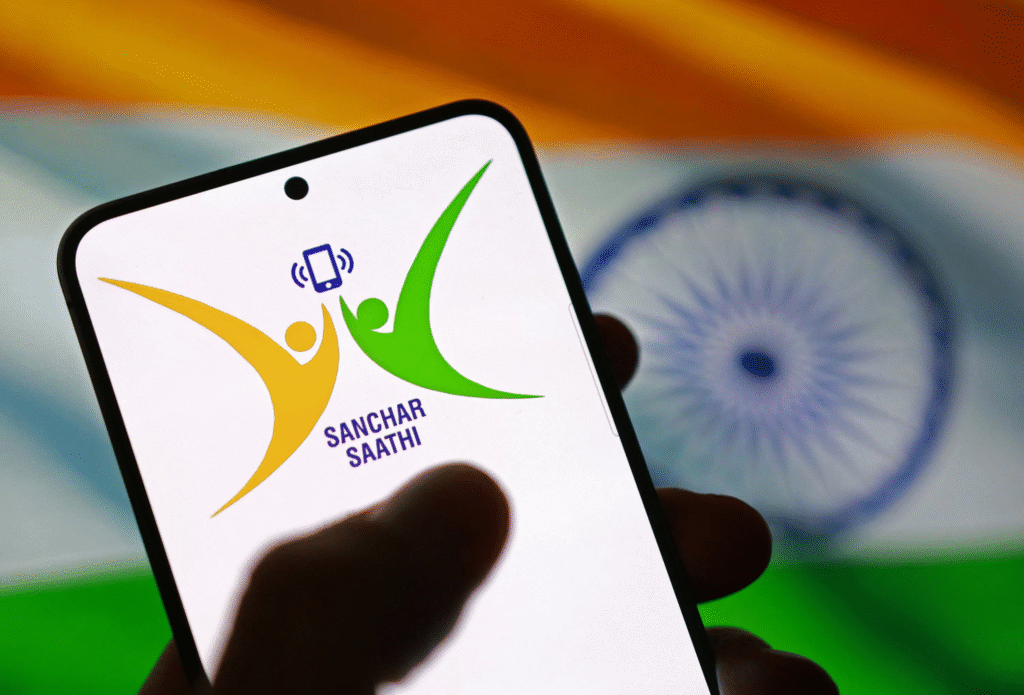
Despite the applaud and usability, Sanchar Saathi attracted national interest in recent times following media reports suggesting that the government had instructed all smartphone manufacturers to install the app on every new phone. Privacy concerns were expressed by both critics and Opposition parties, stating that a pre-installed government app with access to device data could indeed become a surveillance tool.
How to Use Sanchar Saathi in Android | Complete Security Guide for Smartphone Users — IndTech365
A controversy erupted, and the issue engaged the technology policy discourse across the nation. Addressing the controversy, Telecom Minister Jyotiraditya Scindia made it clear that the Sanchar Saathi application was never meant to serve as a monitoring or call-tracking tool but was meant to serve the purpose of citizen security. He said that allegations of data surveillance were unfounded and underlined that the app was meant to save users from mobile theft and fraud. Soon after, the government rescinded the mandatory preinstallation instruction and said downloading and using the app would be optional for the customers. The decision was seen as a nod to the user choice and privacy rights that helped ease the scepticism surrounding the initiative. Cyber experts maintain that its effectiveness will now depend on digital awareness. While users continue to lodge complaints about scam calls and fraudulent messages, a large section remains unaware that such a reporting system exists. Experts say a national awareness campaign, especially in regional languages, would increase adoption manifold and help curb the country’s rising tide of telecom scams. For now, the early signs are promising. Stolen phones have been tracked down and blocked across states, unauthorized SIM activations have come to light, blacklisted devices were intercepted before resale, and thousands of suspicious telecom activities were reported directly by citizens. Sanchar Saathi has created that rare digital model whereby users are not passive recipients of safety but active participants in it. India is expected to cross one billion smartphone users in the next few years. With increasing dependence on mobile-based services like banking, digital payments, work communication, education, and health care, telecom safety has become a part of personal security and financial protection. In this light, services like Sanchar Saathi are more than a matter of convenience; they denote changing national telecom hygiene and digital accountability. Whether this platform becomes a permanent pillar in India’s cyber safety architecture will depend on its evolution, adoption and transparency. But this is for sure: as the digital world becomes increasingly intertwined with everyday life, initiatives that help citizens protect their mobile identity are no longer optional. With Sanchar Saathi, India has made a decisive step towards securing the device that became central to modern existence: the smartphone.
How to Use Sanchar Saathi in Android | Complete Security Guide for Smartphone Users — IndTech365


 Daksh Pandey