Daksh Pandey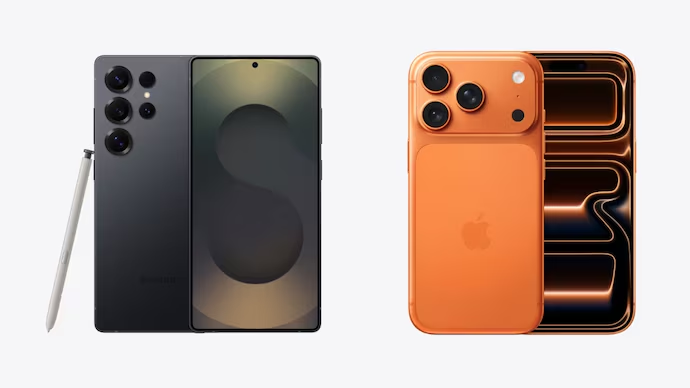
5 expected upgrades that many reports and leaks point to for the Galaxy S26 Ultra when placed next to the iPhone 17 Pro Max. (Important: S26 Ultra details are not official yet, so treat them as expectations, not confirmations.)
1) Faster charging + magnetic ecosystem catch-up (Qi2-style)
What’s expected on Galaxy S26 Ultra
Samsung has been criticized for sticking to 45W wired charging for multiple generations. Now, the S26 Ultra is widely rumored to jump to around 60W wired charging. That’s a meaningful real-world upgrade because it reduces “top-up anxiety” — the need to keep hunting for a charger during the day.
There’s also chatter that Samsung may adopt Qi2 magnetic wireless charging support, which would make it easier to use magnetic accessories (similar to how Apple’s MagSafe accessory world works). If Samsung nails this, it’s not just about charging — it’s about cases, mounts, wallets, car holders, stands, and “snap-on” convenience.
How it compares to iPhone 17 Pro Max
Apple’s iPhone 17 Pro Max already sits inside a mature MagSafe accessory ecosystem, and Apple also positions wireless connectivity advances as a major strength of the 17 series (including Apple’s own networking chip for Wi-Fi 7/Bluetooth/Thread across the lineup).
Some comparisons suggest the iPhone 17 Pro Max may be around 40W wired charging, which is improved for iPhone standards but still likely behind a 60W Samsung target.
What it means for buyers:
If you care about quick wired charging and potentially a more “snap-on” magnetic world, the S26 Ultra’s expected move to 60W + possible Qi2 support could be one of its biggest practical upgrades versus the iPhone 17 Pro Max.
2) Camera hardware upgrades aimed at low light + zoom detail
What’s expected on Galaxy S26 Ultra
Samsung’s Ultra phones already win on “versatility” (especially zoom), but leaks point to another step forward: expectations include improvements to the 200MP main camera hardware (often discussed as sensor/brightness improvements) and potential changes to telephoto capabilities. The goal would be cleaner night shots, better motion handling, and sharper detail when you crop.
How it compares to iPhone 17 Pro Max
Apple’s iPhone 17 Pro / Pro Max camera story has leaned into 48MP sensors across the triple-camera setup and Apple’s consistent advantage in video capture, color science, and social-media-friendly results. Apple also tends to win on “point-and-shoot consistency,” even when it doesn’t chase the biggest megapixel number.
The real difference (what people actually feel)
- Samsung’s expected upgrade is about pushing hardware to deliver more detail and more reach — especially when zooming or cropping.
- Apple’s advantage is usually predictability + video + ecosystem workflows (AirDrop, iMovie/Final Cut handoff, etc.), and the iPhone 17 Pro Max is positioned as a performance-and-pro-creation device.
What it means for buyers:
If your camera priorities are zoom, long-range detail, and flexibility, the S26 Ultra’s expected camera upgrades could widen Samsung’s lead there. If you prioritize video + reliable “always looks good” processing, iPhone 17 Pro Max remains tough to beat.
3) Display and “daily usability” improvements (size, efficiency… even privacy)
What’s expected on Galaxy S26 Ultra
Many previews expect Samsung to refine the Ultra experience with:
- a large ~6.9-inch class display (big-screen fans will love it),
- potential efficiency/brightness improvements, and
- in some regional reports, even a built-in privacy display feature idea (so side viewers see less).
Now, that privacy-display feature is the least certain and may not ship broadly (or may be software/optional), but it shows the direction: Samsung wants the Ultra to feel more “next-gen practical,” not just “more specs.”
How it compares to iPhone 17 Pro Max
Apple typically nails display calibration, smoothness, and consistency, but the iPhone Pro Max experience is less about being the biggest possible screen and more about balancing size with comfort and premium design.
Also, iPhone 17 Pro models have been discussed in the context of thermal/design tweaks (for sustained performance), which indirectly affects display comfort because a cooler phone is a better phone.
What it means for buyers:
If you want a phone that feels like a pocket tablet and you love Samsung’s big, vibrant panels, the S26 Ultra’s expected display refinements are a major “upgrade bucket.” If you want a giant iPhone with Apple’s “it just works” polish, the 17 Pro Max still delivers that style of experience.
4) Performance and “AI everywhere” refinements
What’s expected on Galaxy S26 Ultra
On performance, the Galaxy S26 family is widely expected to use a next-gen flagship chip — reports mention Snapdragon variants (including a “for Galaxy” tuned version) in some markets, with Samsung also potentially using its own Exynos in others. Either way, you should expect improvements in:
- sustained speed (less throttling),
- efficiency (better battery life for the same capacity),
- and on-device AI tasks (summaries, voice tools, photo cleanup, generative editing).
How it compares to iPhone 17 Pro Max
Apple officially positions the iPhone 17 Pro/Pro Max around its A19 Pro performance and pro-grade workflow capabilities. Apple also emphasizes its new wireless networking approach in the 17 lineup, which matters for modern “AI + cloud + ecosystem” usage patterns.
In many real-life comparisons, iPhones still tend to win on:
- peak single-core performance,
- long-term optimization,
- and smoothness across years of updates.
Meanwhile, Samsung often competes by offering:
- more customization,
- deeper multitasking,
- and aggressive feature rollouts (especially AI and productivity tools).
What it means for buyers:
This upgrade isn’t only about benchmarks — it’s about whether you want Samsung’s fast-moving feature ecosystem or Apple’s tightly optimized platform. If Samsung’s “for Galaxy” tuning delivers better sustained performance and efficiency, it becomes a bigger threat to iPhone’s usual advantage.
5) Battery life strategy: capacity vs efficiency vs charging speed
What’s expected on Galaxy S26 Ultra
There are mixed expectations here. Some comparisons still suggest Samsung could stick near 5,000 mAh, while other previews speculate increases. But even if capacity stays similar, faster charging and better efficiency can make the phone feel like a battery upgrade in daily life.
Samsung’s big “battery upgrade” story for the S26 Ultra, based on current reporting, is less about a massive capacity jump and more about:
- much faster wired charging (60W expected), and
- potential ecosystem improvements (Qi2/magnetic convenience).
How it compares to iPhone 17 Pro Max
Apple tends to get strong battery outcomes through tight hardware-software integration and efficiency improvements. Some comparisons even list the iPhone 17 Pro Max battery capacity slightly above the “typical” Pro Max range, but what matters most is Apple’s endurance tuning.
What it means for buyers:
- If your day is unpredictable and you love being able to charge fast, Samsung’s expected charging jump is huge.
- If you care about “I don’t want to think about my battery at all,” iPhone Pro Max models often deliver that kind of confidence through optimization.
The bigger picture: what these 5 upgrades really say
When you zoom out, these “expected upgrades” show Samsung’s likely strategy:
- Fix long-standing complaints (charging speed)
- Keep pushing hardware leadership (camera + big display)
- Add practical quality-of-life ideas (magnetic accessories, privacy, efficiency)
- Continue the software/AI arms race (Samsung-style features vs Apple-style polish)
Meanwhile, Apple’s iPhone 17 Pro Max strength is still the classic Apple formula:
- top-tier chipset performance + optimization,
- camera consistency (especially video),
- and a strong ecosystem (MagSafe + Apple services + smooth device handoff).
Who should pick what (based on these expectations)
Galaxy S26 Ultra might be your best bet if you want:
- faster charging and “top up quickly” lifestyle,
- maximum zoom flexibility,
- the biggest display experience,
- Android customization and Samsung’s rapid feature rollout.
iPhone 17 Pro Max might be better if you want:
- Apple’s optimized performance and long-term smoothness,
- strong pro video,
- a mature MagSafe accessory + Apple ecosystem workflow.