Daksh Pandey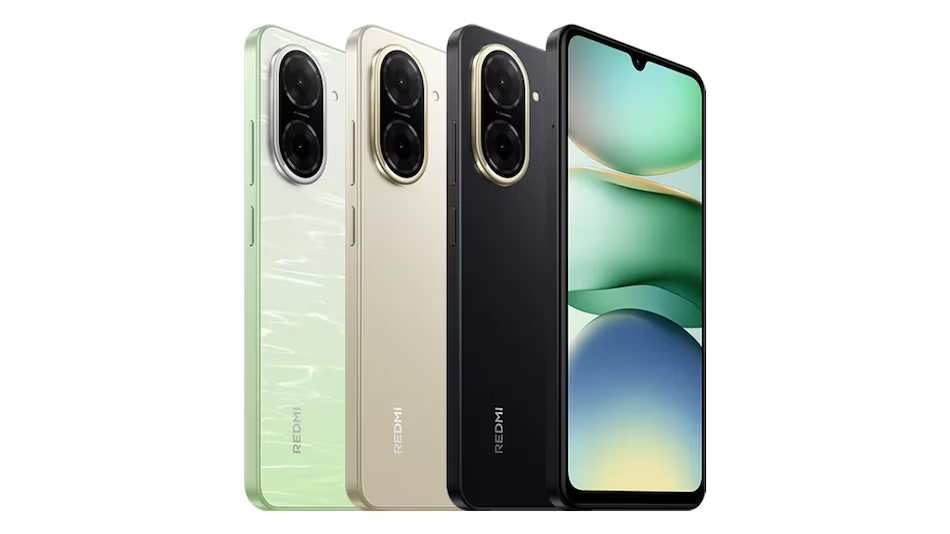
The Redmi A7 has been seen on a website that checks phones in Thailand. This means the Redmi A7 is probably going to be sold in Thailand
People have been talking about what the Redmi A7 might have. It could have a screen that is 6.9 inches and can show lots of things at the same time. It might also have a chip that helps it work called the Unisoc T7250 and 4GB of memory to help it remember things. The Redmi A7 could also have a battery that lasts a long time up to 6,000 mAh.
The Redmi A7 is part of a group of budget phones made by Redmi. It might be sold with another phone called the Redmi A7 Pro. The Redmi A7 could also be similar to a phone called the Poco C81 Pro in some countries.
Here are some things to know about the Redmi A7:
1. Why it matters that the Redmi A7 was seen on the Thailand website:
The Redmi A7 was seen on a website that checks phones in Thailand. This website is important because it makes sure phones are safe to use in Thailand. When a phone is seen on this website it means the phone company is getting ready to sell it in Thailand.
2. What the Thailand website says about the Redmi A7:
The website says the Redmi A7 has a number, 26020RNB4A. It also says the Redmi A7 can connect to the internet using 2G, 3G and 4G. The Redmi A7 was made in China.
3. What people think the Redmi A7 will be like:
People think the Redmi A7 will have a screen that is 6.9 inches. It might also have a chip that helps it work called the Unisoc T7250 and 4GB of memory to help it remember things. The Redmi A7 could also have a battery that lasts a long time up to 6,000 mAh.
4. How the Redmi A7 is related to phones:
The Redmi A7 might be similar to a phone called the Poco C81 Pro. It could also be sold with another phone called the Redmi A7 Pro.
5. Why the Redmi A7 has a chip and big battery:
The Redmi A7 has a chip called the Unisoc T7250 because it is cheap and helps the phone last a long time. The big battery also helps the phone a long time.
6. Where the Redmi A7 fits in with Redmi phones:
The Redmi A7 is a budget phone. It is part of a group of phones made by Redmi that’re cheap and have big screens and big batteries.
7. How much the Redmi A7 might cost:
People think the Redmi A7 might cost $100 or less. It could be sold in countries like India and Thailand.
8. What phones the Redmi A7 will compete with:
The Redmi A7 will compete with budget phones made by companies like Realme and itel.
9. What people should know about the Redmi A7:
The Redmi A7 will probably have a battery that lasts a long time. It might not be the phone but it will be good for everyday use. The cameras on the Redmi A7 will be basic.
10. When the Redmi A7 might be sold:
The Redmi A7 might be sold soon within a few weeks.
11. What to watch for next:
People should watch for information, about the Redmi A7 like when it will be sold and how much it will cost.
Official announcement from Redmi/Xiaomi (dates, pricing, launch event details). That will confirm trims, color options, and regional availability.
Retail listings in local e-commerce or telco portals — they often leak full pricing and availability windows.
Hands-on reviews and unboxing videos after launch — these reveal real battery life, display quality, and camera performance beyond bench specs.
Whether Xiaomi rebrands or launches a POCO twin (the POCO C81 Pro possibility). Rebrands sometimes shift price or marketing bundles (e.g., headphones, memory expanders).
12) Final assessment: who should buy it?
Good fit:
Buyers prioritising battery life and big displays who need a cheap daily driver for calls, messaging, social media, video and light apps.
First-time smartphone buyers or households looking for a low-cost “mainline” phone with long endurance.
Markets where 5G is not yet essential and price sensitivity is the top buying factor.
Not a fit:
Power users or gamers who need high CPU/GPU performance, fast charging, or 5G.
Photo enthusiasts who want advanced camera features and image processing.
the Redmi A7 looks like Xiaomi doubling down on the classic budget formula — big screen + big battery + rock-bottom price — and doing so at a time when many competitors are either pushing pricey 5G entry models or trimming battery sizes to hit slimmer form factors. For many users in Asia, Africa, and parts of Europe and Latin America, that’s still the right combination.