Daksh Pandey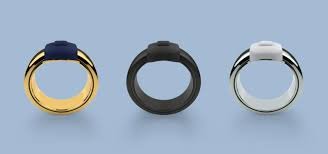

The Pebble Index 01 is a deliberately minimalist smart ring whose single, primary job is to capture short voice notes and act as an “external memory.” It does this with a physical button + on-ring microphone recording audio and syncing over Bluetooth with a free Pebble app on iPhone/Android for transcription, reminders, timers, and basic automations. It ships as a low-cost device ($75 pre-order; plans to rise to $99 later) and it’s notable for having no rechargeable battery — instead it has a long-life (hearing-aid style) battery designed to last years for typical usage. Pre-orders started recently and shipping is planned for March 2026.
Pebble
+1
What makes the Index 01 different?
Most of today’s smart rings focus on health – heart rate, sleep, activity. Pebble takes the opposite approach: one job, well done. The Index 01 intentionally omits sensors for health or motion, and it contains no screen, speaker, vibration motor or complex haptics. Instead it provides:
a small physical button (designed to be pressed by your thumb while wearing the ring on your index finger),
a microphone for short voice recordings,
an LED for status, and
Bluetooth connectivity to your phone’s Pebble app.
WIRED
The philosophy behind the design is simplicity and reliability-quicker one-handed capture of thoughts, reminders, timers, or calendar events without having to wake up any voice assistant or tap through an app. Position it as an “external memory” rather than a fitness gadget.
WIRED
Core specs & availability
(official / reportedly common items)
Price: $75 pre-order; expected retail later to be $99.
Pebble
+1
Sizes & finishes: Available in 8 US sizes from 6 to 13, coming in three finishes: Polished Silver, Polished Gold, and Matte Black.
Pebble
Weight & dimensions: Extremely light – approximately 4.7 g (size 10); width ~6.6 mm, thickness ~2.95 mm (product site).
Pebble
Water resistance: Rated for everyday exposure (approx. 1 m water resistance — OK for washing hands or shower splashes).
Pebble
Battery: Uses a non-rechargeable, hearing-aid type cell designed to last years of typical use. The Pebble quotes battery life in terms of hours of recorded audio rather than clock time — roughly 12–15 total hours of recording capacity that translates to years if used for short clips. The ring does not recharge.
Forbes
+1
On-device/offline features: Ring keeps a handful of minutes of audio locally if the phone is out of range. Transcriptions and indexing happen in the Pebble app, which emphasizes local processing and privacy.
The Verge
+1
Compatibility: Pebble app supports iOS and Android.
TechCrunch
Ship date: Preorders open now; shipping targeted from March 2026.
Pebble
How it works — everyday flow
Wear the ring on your index finger.
Press and hold the ring’s button using your thumb; say something like a short voice note – examples are: “Buy milk”, “Call Priya at 3 pm”, or “Idea for the blog”.
The ring captures audio and sends via Bluetooth to the Pebble app if present. If not, it will store some amount of audio in the ring memory itself.
The Pebble app transcribes audio to text, auto-categorizes it (reminder, timer, calendar event, plain note) and offers actions for setting an alarm, creating a calendar event, syncing to Notion or with any other integration, or running automations. Some transcription/AI processing intentionally happens locally or is privacy-focused.
The Verge
+1
Because activation is a physical button, it avoids false triggers that plague wake-word assistants and gives reliable capture in either noisy or quiet environments.
Battery & durability — real tradeoffs
The most debated design choice of Index is the lack of a rechargeable battery. To keep the ring small, cheap and maintenance-free for years, Pebble decided to use a replaceable, long-life hearing-aid style battery. The company frames this as avoiding “charging anxiety.” Expect
Battery life in practice: Pebble says the ring is good for about 12–15 hours of total recorded audio. If you’re using it to record very short clips – say 3–6 seconds, a handful of times a day, that translates to years of regular use before the battery needs replacing. Coverage of the review and Pebble’s FAQ explain this tradeoff.
Gizmodo
+1
Replacement vs recharge: When the battery finally runs out you’ll replace the ring’s battery (or replace the ring, depending on Pebble’s service/backing). This keeps initial complexity and cost down, but it is a different ownership model than rechargeable smartwatches or rings.
The Gadgeteer
If you are someone who likes to top up daily, the design of Index won’t appeal. But if “set it and forget it” capture without a charger is more your speed, it’s pretty compelling.
Privacy & data handling
One major selling point for Pebble’s approach is privacy:
The ring cannot record unless the button is pressed-what the researchers refer to as no passive ambient listening. Pebble points out that it built the device to avoid always-on audio capture.
Pebble
It would position the Pebble app as open-source and privacy-conscious, where transcription and indexing emphasize local processing where possible, offering offline capabilities. Pebble has discussed how it wants to run local models or keep user data on the device rather than send everything to a cloud service by default. Having said that, some optional integrations-such as being allowed to sync to cloud applications or third-party AI services-will more than likely involve internet usage if opted into by the user.
WIRED
+1
In other words, the default behavior seems to be set on local privacy with opt-in connectors for cloud services.
Use cases in the real world
Quick thoughts, ideas capture: Write down fleeting thoughts, title ideas, or voice memos when holding a baby or having your hands full.
Capture meeting/lecture short: Record one-line decisions, action items, or timestamps. Not designed as a long meeting recorder but great for a short capture.
Timers and Reminders: Convert a spoken request to a timer or calendar event while on the move.
Accessibility: a personal, straightforward input method for users who can’t use touchscreens or prefer to interact with devices by their voice.
Integration with workflow: export the notes into productivity applications such as Notion and to-do lists, or trigger automations from a physical tap.
Pros & cons
Advantage
Capture would be extremely simple and fast-easy, less friction than opening an app or using a wake word.
Low entry price: $75 preorder.
Pebble
Strong privacy posture by design: button activation, emphasis on local processing.
WIRED
No daily charging, long service lifetime for casual users.
Gizmodo
Disadvantages / risks
Non-rechargeable battery model might not be fit for everybody; it has to be replaced eventually.
Gizmodo
Extremely narrowly focused: if you’re looking for health tracking, notifications, payments, or broader smartwatch features, this isn’t the device for you.
On-ring storage is limited to a few minutes; requires phone for long-term sync.
The Verge
Any new product from a small company will always carry some level of risk around software updates, continued support, and integrations.
How it stacks up against the competition
Oura Ring / Samsung Galaxy Ring: These are health-first rings, with biometric sensors, long battery life, and rich health dashboards. Index 01 doesn’t try to compete with these on health; it is all about voice capture.
Smartwatches/phones: While they can already capture voice notes, the Index 01 wins on immediate, one-hand capture and lower friction. Other voice wearables: Not many direct competitors that are focused purely on voice memos in ring form factor; Pebble is creating a space for itself through low pricing and simple UX. New Atlas +1 Who should-and shouldn’t-buy it? Should buy if you: Often misplace small ideas or can’t find a really quick capture method. Looking for a discreet, easy-to-use unit that does not have to be charged daily. Such as minimalism and single-purpose devices. Should not buy if you: Want health tracking, notifications, or a multi-sensor wearable. Prefer rechargeable devices or hate replacing batteries. Need long continuous recording or professional meeting transcription without the phone around. Practical tips if you preorder or buy Order the correct ring size – Pebble offers eight sizes, but swapping rings later may be a pain. Pebble Test the pairing of device-to-phone, and check out the app’s privacy settings before using integrations. Speak in short, concise phrases to achieve the highest transcription accuracy. If you plan on heavy recording, the battery metric to understand is total recorded minutes/hours matter, not calendar shelf life. Forbes Verdict Pebble’s Index 01 is a really interesting design exercise: by stripping away everything but a microphone, a button and a connect-to-phone workflow, it genuinely offers a frictionless way to capture those fleeting thoughts — at an accessible introductory price. Whether or not it succeeds will depend on real-world transcription accuracy, app polish, and whether users accept the replaceable, non-rechargeable battery model. For writers, journalists, students, and people who lose ideas in the shower all the time, it’s a great little tool. If you want an all-in-one wearable, look elsewhere. Sources/further reading Major reporting and the product site used to compile this explainer: Pebble product pages and coverage from Wired, The Verge, TechCrunch, Forbes and others. Key references: Pebble’s Index pages and hands-on/announcements.