Daksh Pandey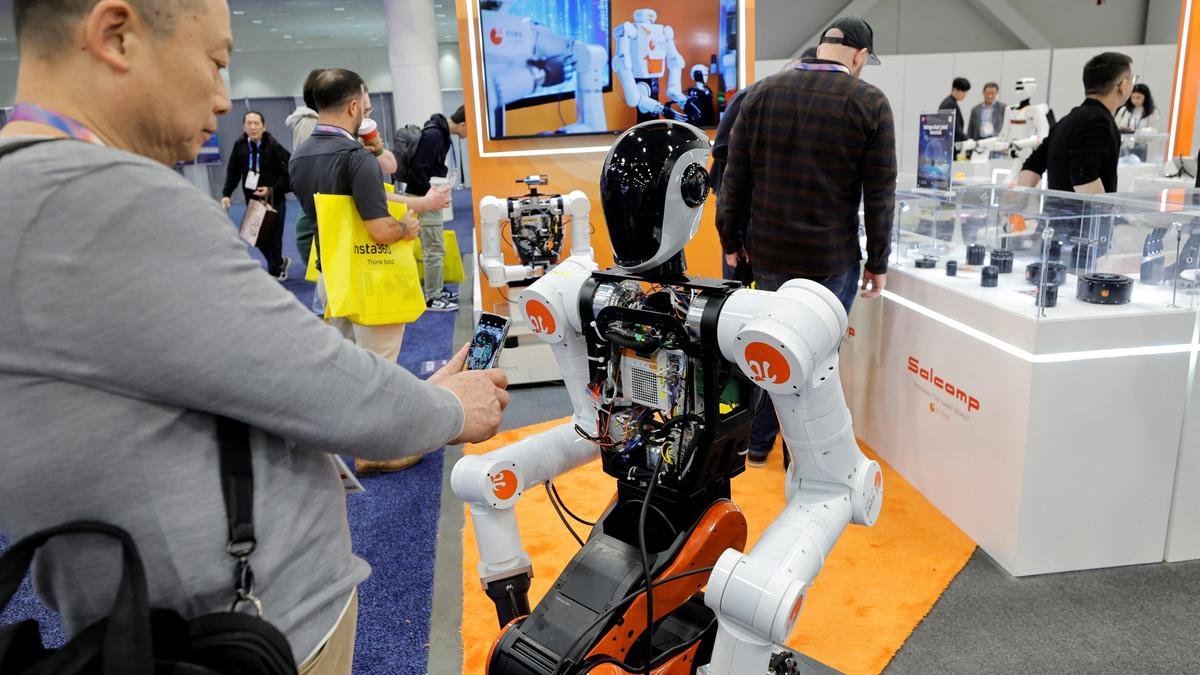
When Nvidia CEO Jensen Huang described robots as “AI immigrants,” he was not just making a catchy statement. He was presenting a powerful metaphor that reshapes how society should view artificial intelligence and robotics in the future. Just as immigrants move from one country to another in search of opportunity, contribution, and coexistence, robots powered by AI are “entering” the human world from a digital and computational realm. They are arriving to work alongside humans, learn our customs, adapt to our environments, and eventually become productive members of society.
This idea challenges the traditional fear-based narrative surrounding robots. For decades, science fiction has portrayed robots as invaders, threats, or replacements for humans. Huang’s perspective is completely different. Instead of seeing robots as conquerors or job-stealers, he sees them as newcomers that need guidance, training, acceptance, and regulation—just like immigrants in any country.
In his vision, robots are not here to dominate but to integrate. They are not enemies but collaborators. They do not arrive with full knowledge of our world; they must be taught how humans live, work, communicate, and cooperate. This makes the metaphor of immigration extremely relevant and deeply human.
Robots today are born in laboratories and codebases. They “grow up” through data, simulations, and real-world training. When they are deployed into factories, hospitals, farms, or homes, it is similar to immigrants entering a new society. They must understand physical laws, social norms, safety rules, and ethical boundaries. They must learn how to function within human-designed systems.
Huang’s statement reflects Nvidia’s long-term strategy. Nvidia is not just a chip company anymore. It is becoming the backbone of the AI-driven world. Its GPUs power the training of large language models, autonomous vehicles, robotics platforms, and digital twins. By calling robots “AI immigrants,” Huang positions Nvidia as the “infrastructure provider” of this new society where humans and machines coexist.
The phrase also subtly shifts responsibility onto humans. Immigrants need support systems—education, legal structures, integration policies, and cultural understanding. Similarly, robots need ethical frameworks, safety protocols, and regulatory oversight. If robots misbehave, malfunction, or cause harm, the fault does not lie in their existence but in how humans designed, trained, and deployed them.
This metaphor makes AI development a social issue, not just a technical one. It connects robotics to politics, ethics, economics, and philosophy. It encourages societies to think:
How do we welcome AI?
How do we integrate it fairly?
How do we prevent discrimination, misuse, or exploitation?
Just like immigrants contribute to economic growth, innovation, and cultural diversity, robots can contribute to productivity, efficiency, and safety. They can take on dangerous tasks in mining, disaster response, nuclear facilities, or space exploration. They can help aging populations by assisting in healthcare. They can support industries where labor shortages exist.
But integration is never simple. Immigration often triggers fear: fear of job loss, cultural change, and identity crisis. Robots bring similar fears. Will they replace workers? Will they reduce human value? Will they control decisions? Huang’s framing softens these fears by presenting robots not as replacements but as participants in society who need guidance.
In essence, Huang is saying that robots are not “born citizens” of the human world. They must earn their place through learning and usefulness. They must respect human values. And humans must take responsibility for how they are treated and used.
This is a profound shift from “AI as a tool” to “AI as a societal entity.”
In this new perspective:
- Humans are the hosts
- Robots are the newcomers
- Ethics are the immigration laws
- Training is education
- Safety is social harmony
By using the term “AI immigrants,” Jensen Huang humanizes AI while also reminding humans of their duty to shape it wisely.
To fully understand why Jensen Huang’s idea of robots as “AI immigrants” is so powerful, we need to look at history. Human civilization has always been shaped by migration. Whenever new groups of people moved into a society, they brought labor, skills, innovation, and cultural change. At the same time, their arrival often created fear, resistance, and uncertainty. The same pattern is now repeating with artificial intelligence and robotics.
During the Industrial Revolution, machines were the “immigrants” of their time. Steam engines, mechanical looms, and assembly lines entered human workplaces. Workers feared losing jobs. Societies worried about instability. Yet those machines transformed productivity and laid the foundation of modern civilization. Today, robots are a new generation of that same phenomenon, but with intelligence and adaptability.
When humans migrate, they enter a new environment where:
- They must learn new languages
- Follow new laws
- Adapt to social norms
- Find a role in the economy
Robots face a similar challenge:
- They must interpret human language
- Follow programmed ethical rules
- Understand physical space
- Learn how to cooperate safely
This similarity is what makes Huang’s metaphor so accurate.
Historically, immigrants have been vital for economic growth. In countries like the United States, immigrants built railroads, factories, technology companies, and scientific institutions. They filled labor gaps and drove innovation. Similarly, robots will fill gaps in industries suffering from labor shortages, such as manufacturing, agriculture, logistics, healthcare, and construction.
Many developed nations today face aging populations. There are fewer young workers to support growing elderly populations. Robots, like immigrants, can become a workforce that sustains economic productivity. They can assist nurses, maintain infrastructure, deliver goods, and help in agriculture. Without them, economies may slow down.
But history also shows that immigration creates fear. People worry about:
- Job competition
- Cultural change
- Loss of identity
- Economic inequality
Robots create the same emotional response. People fear:
- Automation replacing human labor
- AI reducing human relevance
- Machines making decisions without empathy
- Dependence on technology
Jensen Huang’s metaphor encourages society to approach robots with the same wisdom we apply to immigration policy. Not with panic, but with planning.
In human societies, immigration works best when:
- There are clear laws
- Education systems help newcomers integrate
- Jobs are created, not destroyed
- Cultural respect is promoted
For robots, this means:
- Clear AI regulations
- Ethical training datasets
- Safety and accountability mechanisms
- Policies to protect workers
Robots should not be allowed to “arrive” without rules. Just as illegal or unregulated immigration causes social tension, unregulated AI deployment can cause chaos. Responsible integration is the key.
Another historical lesson is that immigrants are often blamed for problems that existed before their arrival. Economic inequality, job loss, or political instability are often structural issues. Similarly, AI is often blamed for unemployment or social disruption, but these problems usually come from poor economic planning, lack of education, and outdated labor systems.
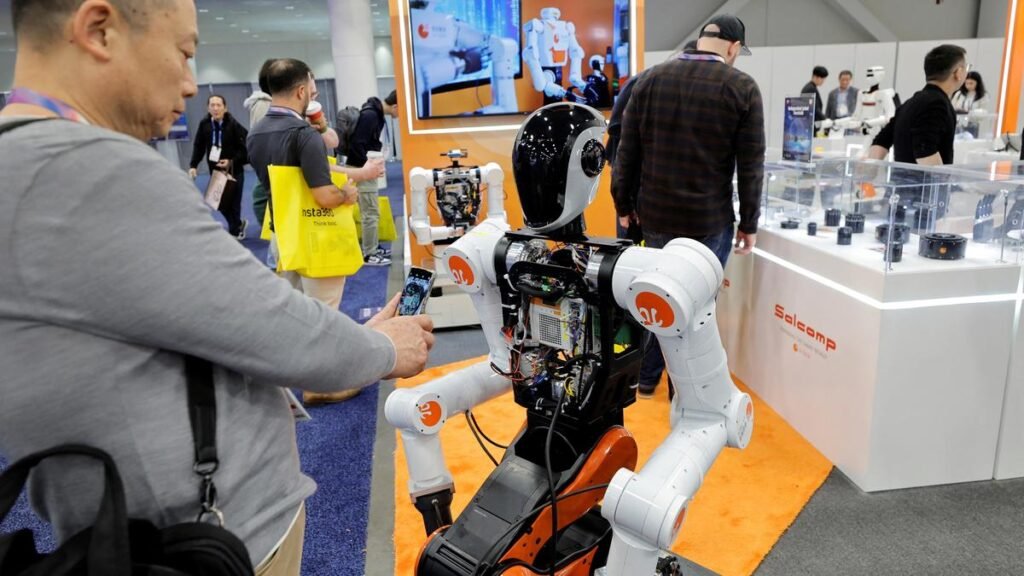
Huang’s statement subtly shifts the conversation:
Instead of asking,
“Will robots take our jobs?”
we should ask,
“How do we redesign society so humans and robots thrive together?”
Just as immigrants do not destroy a society but reshape it, robots will reshape industries and human identity. They will push humans toward more creative, emotional, and strategic roles while taking over repetitive and dangerous work.
Another important parallel is discrimination. Immigrants often face prejudice and dehumanization. With robots, the danger is different but similar: we might either overtrust them or completely devalue their impact. Treating robots as “AI immigrants” encourages balanced thinking. They are not gods. They are not demons. They are tools that require guidance.
This metaphor also raises ethical responsibility. If a robot causes harm, who is responsible?
- The developer?
- The company?
- The government?
Just like immigrants are governed by laws, robots must exist under legal systems that define accountability.
Historically, societies that embraced immigrants grew stronger. Those that rejected them often stagnated. The same principle may apply to AI. Countries that integrate robotics responsibly will lead in productivity, healthcare, space exploration, and technological dominance.
So Part 2 establishes this idea clearly:
Robots are not invaders.
They are arrivals.
And every arrival shapes civilization.