Daksh Pandey
“In the year 2025, two hardware waves occurred that did more than simply ship the latest and greatest devices on the market—instead, they altered the user expectation paradigm regarding personal technology in the following ways
Foldables just ceased to be “cool but compromised” and now feel more like regular high-end phones that also happen to fold.
Extended Reality (XR) evolved from a specialized VR market to the early form of Spatial Computing, which combines real + digital, with improved devices, improved cameras, improved comfort, and improved AI integration.
Following is a breakdown of the “big picture + deep tech” that enabled these technologies to emerge as the driving forces behind the tech scene for this year, with examples from the launches of 2025 technologies.
1) Why hardware was significant in 2025
The importance
Phones and headsets have sometimes felt like “same slab, faster chip” for years. But in the year 2025, the hardware began to transform in terms of shape and usage:
Innovations in form factor, such as book-like foldable designs, clamshell foldable designs, and concepts that would allow a device to be folded in more ways,
New Input/Output capabilities such as larger flexible displays, new hinges, and XR sensors have made possible a new generation of experiences related to working, watching, creating, and communication.
In-device AI meets new hardware: Hardware manufacturers began to integrate their designs around AI tasks (summaries, generative edits, “seeing” helpers) rather than simply viewing AI as yet another app to add to devices. Samsung espoused “AI + foldables” in particular, and AI helpers have become core to XR experiences.
“So 2025 wasn’t just “better specs.” It was about new shapes + new interfaces, which is why these categories are landscape-transforming.”
2) Foldable smartphones: the Year that made them feel “Mainstream Premium”
Foldables had been around for years, and it was always criticized for being too thick, too breakable, too creasy, too costly, and for questionable software in some models.
“In the year 2025, a number of transitions took place, and foldables became a viable option for a quality purchase: “
A) Thin-and-light engineering finally caught up
A major breakthrough area was mechanical/material innovation, with better hinges, internal frames, and display stacking.
Samsung touted significant hinge development improvements on the Galaxy Z Fold7, speaking of large size and weight reductions that made the device even more akin to a traditional smartphone when folded.
Samsung Mobility Press Releases
Mobile
The product pages for the “Fold 7” series emphasize a thinner design, as well as a better 1:1 ratio for the cover screen, which is an important comfort factor in terms of keyboard typing.
Samsung sec
“Can it fold?” was replaced by “Does it feel normal in the pocket and hand?” This was just the breakpoint that foldable phones required.
Why it is significant in the market:
The
Once afoldable becomes “normal enough” closed and “wow” opened, it ceases to be a secondary device and becomes a main phone for many individuals. {“-quote”:}
This indicates that there are now individuals who use
B) It shows enhancements where it counts: crease perception, brightness, energy efficacy
OLED stacks and cover glass layer progresses have been ongoing for several years. In the year 2025, innovation was more related to eliminating friction rather than boosting advertising specifications:
Improved behaviors for LTPO display refresh rates, as well as power-efficient display panels, ensure that battery life is well managed even on large screens.
What matters most about the improvement in the look of the creases (which are still not yet ‘gone’ but no longer very noticeable) is the fact that they are always a reminder of ‘prototype tech.’
All of the changes to the S30
Even when brands fail to release “crease metrics,” the user experience has undoubtedly refined itself, and critics are now often declaring the latest foldable designs to be “mature.”
C) Hinge reliability and durability became a selling point, not a question mark
Durability: Foldable brands either scale or stagnate. Brands in 2025 focused on the quantifiable aspect of durability:
Reviews and comparisons emphasize devices that can handle an extraordinary number of folds (hundreds of thousands of cycles) and position foldable devices as devices that you can hold on to for an extended number of years.
Why it changes the landscape:
A reduction in reliability concerns corresponds to a greater adoption rate, especially in the case of consumers who perceived foldable devices as fragile luxury items.
D) Cameras in foldables no longer remained as “compromise”
“Ultra” smartphones with slimmer models had left earlier foldables somewhat behind in camera performance due to their thickness.
By 2025, the messaging shifted:
A leading feature of the Fold7, as highlighted by Samsung, is that it features a high-resolution 200MP main camera.
While whether foldable phones measure up to the best camera phones in all aspects remains a matter of debate, it definitely is no longer necessarily “the worse camera.”
E) Multi-fold / “tri-fold” thinking extended the design space
2025 also emphasized that foldable phones will not be limited to one joint.
Coverage on Samsung’s Tri Fold concept indicates the industry is trying to offer larger screens while still remaining pocketable, albeit at a tradeoff in thickness or weight.
Reporting and previews on Samsung’s Tri Fold look at how the industry
Even if tri-folds aren’t common in the mass market yet, they have already begun to impact R&D: hinges, battery designs, screen ruggedness, software interfaces
F) The data from the market indicates that foldables are no longer a sideshow
Two key positives for 2025: record-breaking quarters, forecast growth of shipments.
Counterpoint revealed record foldable sales in Q3 2025, showing significant year-over-year growth.
IDC had also forecasted the folding device market to hit the number of around ~20.6 million units in 2025.
Even these figures make foldables a niche segment within overall smartphones, but what’s significant is that the trend has the power to influence the device’s design. A market segment does not necessarily have to maintain market dominance to make its presence felt on this count.
3) What foldables did in day-to-day computing
Hardware innovations are more significant when they bring about behavior change. The foldables that came out in 2025 brought about three behavior changes:
A) “One device, two modes” made reality in productivity tools
“The inner display of the foldable device is no longer ‘bigger.’ It shifts tasks:” “
Reading and research: browser + notes.
Messaging + context:
Chat on one side, doc/map on other side.
Content Creation: Timeline editing, thumbnailing, or making a quick layout check.
Then, once you have a cover screen you’re comfortable with (aspect ratio, typing, et cetera), you cease using this device as a “mini tablet” and instead begin using it as any other device—a device that sometimes turns into a tablet, à la the original Samsung Note 8 or 8. Samsung also stressed this improvement in their cover screen usability.
Samsung sec
B) Cameras + folding unleashed new “physical UI”
Foldables can also serve as their own tripod because a student can unfold
Hands-free group photos using the primary cameras
Video Calls At Better Angles
Creator workflows such as table top shooting
This is actually the subtle but present “hardware UX” shift—the device shape is now a feature.
C. Foldables fueled the premiumization trend
Foldables
Foldables are costly, however, they bring innovation to the upper category and challenge the market for their rivals.
Correspondingly, 2025 reflects the pressure on components, such as memory, that impacts the overall smartphone industry outlook. This can have ramifications on pricing and segmentation.
4) XR in 2025: from “VR gadgets” to the early era of spatial computing
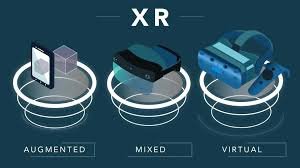
XR (Virtual Reality, Augmented Reality, and Mixed Reality) has long promised the world. The year 2025 was significant because the tech stack evolved at various levels at the same time:
Displays (micro-OLED displays on high-end models
Optics (pancake lenses, thin designs)
Passthrough cameras (better mixed reality)
Platform ecosystems (Android XR momentum, vision OS evolution, Meta strategy changes)
AI assistants capable of interpreting context from voice + vision data
The impact: It felt less like a tech demo and more like a nascent form of computing with XR.
5) The three XR ‘pillars’ which changed the year
Many people have
Pillar 1: Display + optics improvements made XR more clear and wearable
Why previous headsets have struggled:
Older VR may have had a clumsy look and feel and a blurry edge. By 2025, the optics and panels had improved.
Within Android XR circles in the year 2025, the role that micro-OLED and pancake lenses play as enablers for thinner devices is frequently mentioned.
High-end headsets are now incentivized to use high pixel density displays in an effort to improve the fidelity of passthrough, bringing mixed reality out of the “grainy webcam world.”
Actual example (premium MR): Apple Vision Pro (2025 refresh)
Apple also introduced the Vision Pro with the M5 chip and enhancements related to performance and screen interactions with the novel chip/stack (noting Apple’s newsroom announcement of enhancements related to “rendering and experiences as well as vision OS development”).
Whether you loved or hated Vision Pro, it reinforced the notion of “spatial computing” as a premium category, and others took notice.
Pillar 2: Passthrough + sensors – Enhanced mixed reality, not just virtual reality
Overall, the change from “VR” to “XR” is mostly a transition from virtual reality to mixed reality.
That requires:
Several external cameras for environment capture
Low latency sensor fusion
Precise hand/controller tracking
Comfort (Weight distribution. Straps. External Batteries. Thermals
By 2025, more devices with a focus on usable passthrough, rather than “see the room so you don’t punch the wall” capabilities, appeared.
Pillar 3: “Platforms and ecosystems were the actual battleground”
Competing in
However, it’s only half the story for hardware because it’s now clear from 2025 that XR is entering an “ecosystem war,” just as it did with smartphones back in the day.
A) Android XR came on the scene as a “serious” attempt at ‘open-ish’ platform
Google introduced Google Android XR as an “AI-enabled operating system” designed for headsets and glasses.
By end 2025, the developer messaging from Google also indicated an increasing pipeline of devices as well as readiness on the part of developers.
Why this matters:
A common platform will help to stamp out fragmentation, making it easier to attract developers, since AR/MR needs killer apps that go well beyond gaming.
B) Samsung’s “Galaxy XR” showcased how “Android XR” progressed to “shipping” stage after it was
Samsung launched the Galaxy XR as an Android XR headset with Gemini support. The device appears to target the high-end reality market. The Galaxy XR supports remote PC and Android handle tracking. The handle has an integrated battery compartment. The battery
Messaging that matters in the context of Samsung’s strategy includes:
mass market hardware experience
global presence strength
ecosystem integration with phones/watches/services
Despite the fact that the initial sales may not be extensive, this marks the beginning of the message being relayed to the market: Android XR is not a concept, it is tangible hardware.
C) Meta’s strategic shift: a lesson in the ongoing development of XR
The back-and-forth of
Consumer VR shipments were dominated by Meta with Quest. However, the end of 2025 saw the company pause its third-party Horizon OS headset lineup and decided to concentrate on in-house hardware and software solutions.
Why this matters:
This highlights why it’s so difficult for XR platforms to scale. It’s hard to support multiple hardware partners. This creates opportunities for other alternatives like Android XR. This is especially the case if their XR offering is significantly different.
6) XR Form Factors in 2025: Headsets First, Glasses Follow Fast on Their
The story of 2025’s XR isn’t just about headsets. It’s also the migration towards devices that resemble eyewear.
A) Cost and accessibility improved for stand-alone VR/MR
Cost is
The Meta Quest lineup continued to set the bar for “value XR,” and coverage of deals illustrates the stiff competition for price/performance.
It is paired with a contemporary XR chip named Quest 3S, which belongs to the ‘XR2 Gen 2’ series and is affordable for
This is because XR technology is still price-sensitive in regard to adoption levels.
B) “Glasses you’ll actually wear” became a true design objective
Google spoke of collaboration with “glasses companies” and the notion of Android XR glasses designed to be wearable throughout the day.
Android Wear was renamed to Wear OS later
But the key thing about this trend is that the largest market in the long term may not be massive VR headsets but rather lightweight AR glasses functioning in the same way as personal assistants.
7) “The Deeper ‘Tech Landscape’ Transformation—What These Innovations Change Downstream”
Foldables and XR technologies are not merely offering new devices. Rather, they’re altering the technology landscape in at least five different ways:
1) Component innovations cascading effect
Supply chains for flexible OLED displays
Ultra-Thin Glass and Polymers
Hinge Metallurgy and Precision Machining
Micro-OLED and Optics Supply Chains in XR
EXPLANATION
In
As these scale, costs decline while quality improves, leading to faster adoption.
2) A change in the design of apps to a “multi
Developers think more and more across:
phone cover screen
unfolded tablet canvas
headset spatial windows
GoogleIt drives innovation in UI libraries, responsive layouts, and other input models.
3) AI becomes an actual hardware feature instead of software.
Samsung’s foldable offerings position big screens as highly associated with AI productivity tasks such as summary creation, writing assistance, and editing.
Android XR also makes Gemini a core part of the experience.
More immersive XR experiences, enabled by the multimodal capabilities of AI assistants with voice and visual interfaces, make foldables even better “AI canvases.”
4) New Customer Expectations: “my device should adapt”
But after seeing foldables and XR:
There’s
Everyone expects screens to grow bigger
Interfaces that break the rectangle mold
Interfaces that break
cameras that facilitate the making and sharing of more physically based communications
Traditional slabs will also see a boost because they can reuse technology designed for foldable screens, such as display, materials, and battery technology.
5) Competitive pressure drives faster iteration
Once big brands demonstrate that such new technology has the potential, the response comes from competitors. The rise in foldable shipments and big brand releases demonstrate that competitive heat is being felt.
8) What to watch next (On the foundations of 2025)
On the basis of the lessons learned from the discoveries that were proved in the year 2025, the following are the
Foldables
thinner and lighter ongoing
Improved dust/water resistance and durable hinges more extensive pricing brackets (with more “Fan Edition”-style models) experiments such as multi-fold expanding form factors. XR more Android XR devices and developer tooling momentum better value = value MR (gaming/fitness) vs premium spatial computing for work/media increasing movement towards glasses for lightweight use platform strategy shifts (Meta’s temporary halt reveals that the ecosystem is still evolving and assuming its form)
The impact of Chinese users Bottom line Foldables have disrupted the 2025 mobile phone scene by demonstrating that a “phone that unfolds” can indeed be thin, rugged, camera-enabled, and functional enough to serve as a ‘real-world’ device, while market numbers reflect that this segment is registering a new high in shipments, defying a slowing trend in the overall sector. XR changed the dialogue for the computing platform in the year 2025 by advancing the state of the art in the area of key enabling technologies (displays, optics, pass-through, sensors), but far more by accelerating the platform war (vision OS, Android XR and the Samsung and Meta repositioning of their respective ecosystems, respectively). They brought technology beyond “better rectangles,” towards devices that morph into different shapes, and interfaces that extend beyond the screen.