Daksh Pandey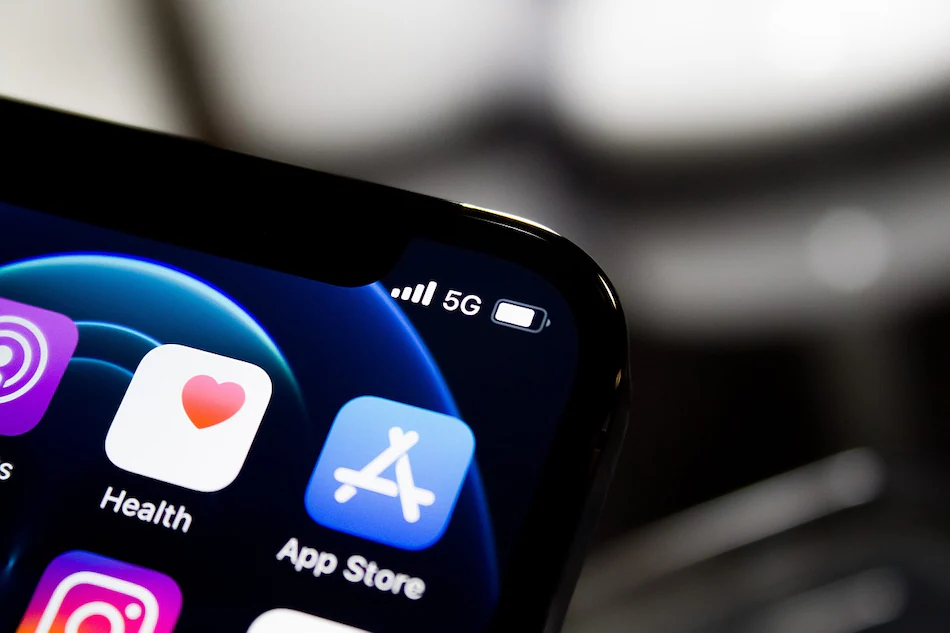
India has a lot of people using 5G now over 400 million people are using 5G in India. This makes India the second country with the 5G users China has the most 5G users. The minister in charge of communications Jyotiraditya Scindia talked about this on media. He said India is very good at adopting technology like 5G. The way India is rolling out 5G is very impressive and people all around the world are taking notice of how fast India is doing this with 5G. India is really setting the standard for 5G and how it can change the country digitally. The 5G rollout in India is happening quickly and it is a big deal, for the country.
The number in that headline is important because it shows how fast India has gone from anyone using it to almost everyone using it. This is a deal because it usually takes a lot longer for something like this to happen in a big country where people are careful, about how much they spend. To really get what it means to have 400 million 5G users we need to look at how they came up with that number, why many people started using it so quickly what is really making people use 5G and what still needs to get better so 5G can do all the good things it is supposed to do for the economy. 5G is a part of this and 5G is what we are talking about when we say 400 million 5G users.
1) So what does it really mean when we say there are 400 million 5G users?
When we talk about 5G users, in terms 5G users are people who have things like:
a 5G phone (device capability),
a 5G plan,
an active 5G connection on the network (coverage + device + SIM + provisioning), or
regular 5G usage (actual data sessions on 5G).
News reports about what Scindia said usually talk about the milestone as 5G connections or 5G subscribers or 5G users. They say India is second in the world for 5G connections. India is often compared to China and other places when people talk, about 5G connections. They mention India and China together when discussing 5G subscribers.
When we look at telecom measurement it can be different depending on where the information comes from. So it is best to think of the “400M+” figure as a way to measure how many people are using 5G on the network side than just counting the number of people who own 5G phones. A country might have a lot of 5G- smartphones but not as many actual 5G users because 5G networks are not available, in all areas or because customers are not set up to use 5G or are not using it. The telecom measurement of 5G users is what matters here not the number of 5G phones that people own.
Indias growth is easy to see in milestones. For example the Economic Times had reported that India has 365 million 5G subscribers as of July 2025. This shows that India could have than 400 million 5G subscribers within a few months. This is because the 5G networks in India are getting better and more 5G phones are available in the market. India will likely have more 5G subscribers as the 5G networks, in India get stronger.
2) I am wondering how India was able to reach a population of over 400 million people quickly. The population of India has been growing at a fast rate and I want to know what is behind this rapid growth. India is a country and it is home to a lot of people so I am curious to learn more about how the population of India got to be over 400 million people in such a short amount of time. The population growth of India is something that I think is really interesting. I would like to learn more, about it.
A) A “big bang” rollout by the top operators
Indias 5G story is really about what the big private telecom companies like Reliance Jio and Bharti Airtel’re doing. These companies are building their networks quickly all over the country in many cities and towns and they are trying to cover more and more areas. The thing is, when two big companies, like Reliance Jio and Bharti Airtel are competing with each other it makes a difference. They are trying to be the first to say they have the 5G rollout and the widest coverage so people can actually get a good signal and want to switch to 5G. This is why Indias 5G story is moving forward because of what Reliance Jio and Bharti Airtel are doing.
B) Falling 5G smartphone prices
The cost of devices in India is really low which is great for people who want to buy them. When the price of the parts that make devices work went down companies started making devices that are just for India. This helped 5G devices become cheaper. Now you can find them in all kinds of phones not just the expensive ones. People usually get a phone every few years and when they do they will probably get a phone that can use 5G. So over time most people, in India will have a 5G device. They will be able to use 5G whenever it is available.
C) Heavy data consumption culture
India is a place where people use a lot of data. They like to watch videos use video platforms play games and use digital services that need the internet. When 5G makes the internet faster and better people notice it away. This is especially true in areas where the current internet’s slow because so many people are using it at the same time. In areas the best thing about 5G is that it is, like 4G but it actually works fast even when a lot of people are online using 5G and other digital services like 5G.
D) Network upgrades and spectrum choices
In India the phone companies put up 5G mostly in the range of airwaves. This middle range is good because it gives a balance of how far the signal goes and how many people can use it at the same time. The phone companies also used ranges of airwaves for specific things they needed to do. The middle range is usually the choice for getting 5G to work everywhere in a country because it works well without needing a huge number of towers everywhere. The 5G, in the range gives good performance.
E) Policy, ecosystem, and a push for domestic capability
The government is really focusing on getting 5G out to everyone and making sure all the other things that go with it are ready like the places that make the equipment the labs where they test it and the people who do the research. They are even thinking about 6G already. Scindia has said times that telecom is like a main road, for the internet and he wants to make sure it is everywhere and safe which is a big part of what the ministry is trying to do with the 5G rollout and the whole telecom system.
3) Why being the largest in the world is a big thing and what it does not mean. The fact that something is the largest globally is a big deal because it shows that it is very important and a lot of people are interested in it.. Being the second largest in the world does not automatically prove that it is the best or that it is better, than everything else. It is a way to measure how big or popular something is compared to other things. Being the largest globally is still very impressive and it means that the thing has done very well and is very successful.
What this really proves is that some things are just not that simple. The thing that it proves is something that we should think about. What the whole situation proves is that we need to be careful. It proves that we have to consider things. What it proves.
India is really moving forward with kinds of telecom technology on a very big scale. India is doing this at a level, which is very impressive for India. The telecom technology that India is using is the latest and most advanced which is often called next-gen telecom. This is a big step, for India.
The country is really making infrastructure into real connections fast. They are not just putting up towers. The country is focusing on making these connections work so the country has connections that people can use.
People in charge have done projects quickly faster than a lot of people thought they could. This is surprising because India is a big country with a lot of different kinds of people and places which can make things more complicated for India and the people in charge of these big projects, in India.
What the artificial intelligence system does not automatically prove
This does not mean that India has the 5G experience everywhere. The quality of the coverage and the capacity of 5G can be really different in areas. For example 5G works well in some cities but it is not that good in the suburbs or, on the highways.. When you go to rural areas the 5G experience is even worse. So the India 5G experience is not the same.
The thing is, we are not sure if people are really using 5G things, like industrial automation and private networks on a big scale. These things are not really common yet. Also regular people might start using 5G before big companies do.
The milestone is really a step forward. It is something that we need to achieve first. It is not the result that shows we have fully changed to 5G. We should think of the milestone as a part of a bigger process, a scale that measures how far we have come, rather, than the last step that says the 5G transformation is completely done. The 5G transformation is a project and the milestone is just one part of it.
4) The timeline: from launch to mass adoption
India started its 5G launch a bit late compared to some other countries.. India is catching up really fast. If you look at what the government’s saying in public and what they are telling the press from 2024 to 2025 you can see that the government is keeping a close eye on how many people are using 5G. They think even more people will start using Indias 5G, in the future.
For example a report from the Press Information Bureau that came out in December 2025 said that India had 36 crore people who use 5G. That’s 360 million people. They think this number will go up to 42 crore by the year 2026 and then to 100 crore, by the year 2030. India will have a lot of 5G subscribers, 100 crore of them by the year 2030.
India has now crossed 400 million people so it is following the path that was expected. The country is about where it was predicted to be, which is roughly in line, with those forecasts. India is still moving forward on this path just like India was expected to do.
5) What is powering the day to day use of 5G, in India?
A) Video, video, video
The main thing that is driving up demand is high-resolution video streaming and social video. The thing 5G is that it helps with high-resolution video streaming and social video in two ways:
more consistent throughput during peak hours,
faster start times and fewer buffering events.
B) Gaming and real-time interactions
Low latency is really good for multiplayer gaming and cloud gaming. It makes these experiences better.. The improvement in latency depends on how your local network is set up and how close the content servers are to you. If the servers are close to you and your network is good then low latency can make a difference in your gaming experience, with low latency.
C) Hotspot and home broadband substitution (in some cases)
In some areas people do not have internet access at home so they use their mobile phones to get online. Sometimes the new 5G mobile network is an option for people who want to get online at home especially when they use a special router or a hotspot with 5G. The 5G mobile network can be a good alternative, to the internet people normally use at home, which is called fixed-line broadband and this is true when people use 5G with these special devices like 5G routers or hotspots.
D) Better experience in high-density areas
Places like stadiums and malls and transit hubs and campuses are really tough on networks. The new 5G network has a lot capacity so it can handle things better in these places where the old 4G network used to struggle. 5G is really good, at improving performance in the places where 4G used to have problems.
6) The economic meaning is really important: what does having, than 400 million actually allow the company to do with that money?
The real value of 5G is not about having a fast internet connection, on your phone. The 5G is actually a platform that will bring about the wave of digital productivity with the 5G.
A) Productivity and MSMEs
Small businesses get a lot of things from:
reliable video calls,
faster cloud access,
better digital payments reliability in crowded areas,
easier content creation and marketing workflows.
Making changes to how long things work and how fast they respond can really help a lot of people who have their own small businesses. These people, who are often called micro-entrepreneurs can see benefits from these small improvements, in uptime and responsiveness of micro-entrepreneurs.
B) Public services and “digital governance”
When networks get better the government and citizen services work smoothly:
telemedicine consults and diagnostics support,
online education content delivery,
We want to make identity and authentication on the internet. This is especially important, for networks that were previously really slow. We are talking about identity and authentication flows that’re faster and better. This means that people can use identity and authentication without getting frustrated with networks. Identity and authentication flows are the goal.
C) Industry and enterprise (the harder, slower layer)
The big changes that 5G promises are, in:
smart factories,
logistics and ports,
utilities (smart grids),
mining and heavy industries,
private 5G networks for campuses and industrial zones.
These things take time because enterprises need certain things like:
clear ROI,
security assurances,
devices/sensors at scale,
integration with existing systems,
skilled deployment partners.
The country of India has a big consumer base with over 400 million people and that is what gives it momentum. However when it comes to enterprise 5G it tends to be something that happens later like a second wave of India’s 5G. India’s 5G’s going to be big because of the large number of consumers, in India.
7) The competition and infrastructure story behind the numbers
A lot of people usually sign up for 5G when three things happen at the time:
rapid radio network deployment,
strong backhaul and core upgrades,
affordable devices.
India has a lot of competition between phone companies. You can see this when they are always trying to expand. For example Reuters said that Airtel is buying 5G spectrum, from Adani Data Networks. This shows how important it is for Airtel to have this 5G spectrum as Airtels networks get bigger. Reuters also talked about how 5G users Airtel has compared to all of Airtels subscribers at that time.
This matters because 5G is not something you can upgrade with new software. It requires:
new radios,
upgraded antennas,
fiber or high-capacity microwave backhaul,
core network modernization,
continuous optimization.
When the network gets bigger and moves from cities to smaller towns and rural areas it can cost more to support each user. This is why it is really important to plan the infrastructure in a way, for the network.
8) The “quality gap”: coverage, speeds, and consistency
People have different experiences even though there are more than 400 million users. The experience of people can be very different from one person to another, with 400 million plus users.
A) Urban vs rural
Cities tend to get a lot of things. Cities tend to get crowded. Cities tend to get noisy. Cities tend to get really busy. People go to cities and cities tend to get more crowded because of that. Cities tend to get dirty. Cities tend to get a lot of traffic.
denser tower grids,
They are putting out spectrum now and this means that people will have more options for internet and things, like that. More spectrum is being deployed. This is a thing because it helps people get better internet and it makes things work faster. More spectrum is what we need.
better backhaul,
quicker upgrades.
Rural expansion is getting better. The money side of things is not the same. There are people using the service in these areas so the companies that provide it have to be very careful about how they spend their money on new equipment and installations. Sometimes they even need help, from the government to make sure they can keep providing the service without losing much money. This is important for the companies to be able to keep expanding the expansion of the service. Rural expansion needs to be done in a way that makes sense for the companies that provide the service so they can keep providing it to people in areas.
B) Indoors vs outdoors
People often decide if a network is good or not by how it works inside buildings, like homes, offices and apartments. The indoor performance of a network depends on things, including:
frequency band,
site density,
building materials,
operator optimization.
C) Congestion is still a thing
When a lot of people go to the website and the spectrum capacity is not enough even 5G can be slow.
The thing 5G is that it is not magic it is just that it can handle more people at the same time but it is still limited.
5G has a capacity but 5G is still finite so it can get slow if too many users are on it, at the same time.
The milestone is really big. The next part is, about making the quality better not just adding more things. We need to focus on deepening the quality of the things we do than just expanding the number of things we have. The quality of the milestone is what matters now.
9) Security, scams, and trust on the “digital highway”
When more people get on the internet with connections the chances of falling for scams and fraud go up. This includes fraud that happens because of our SIM cards emails that try to trick us fake calls, bad links and scams that come from apps. The problem of SIM-related fraud is an one and it is still out there along, with phishing spoofed calls, malicious links and app-based scams.
Scindia thinks of telecom like a road that people use to connect to the internet, which he calls a ” highway”. On this highway the safety of the people who use it is very important, to him. He has talked about starting programs that will help people who use telecom services to make them feel safer and more aware of how to protect themselves. Scindia wants people to know how to use telecom services in a way. Telecom services are a part of our daily lives and Scindia wants to make sure that people can use them without worrying about their safety.
So the 5G era is going to be a deal. The success of the 5G era will partly depend on whether users of the 5G era feel that the 5G era is really making a difference for them.
connectivity is reliable, and
digital interactions are safe.
10) India and the road to 6G: people are talking about why the leaders of India keep talking about the road to 6G. The leaders of India are always mentioning the road to 6G. What is the reason that the leaders of India keep mentioning the road to 6G? The road to 6G is very important, to the leaders of India.
India is really getting into telecom messaging. This is all about making the most of 5G on a big scale. The main goal for India is to be a leader when it comes to 6G. This means India is working hard on getting patents doing research taking part in setting standards and making testbeds for 6G. The story that politicians are telling is that India did not just catch up with 5G India will actually help shape what 6G is going to be, like. India wants to play a role in the next generation of telecom, which is 6G.
People have seen Scindia a lot in public. There is a lot of talk about him in the news. When it comes to Scindia and telecom events you often hear this: Scindia says we should move forward with the rest of the world on 5G and then be ahead of everyone, on 6G. This is something that Scindia talks about a lot that we should march with the world on 5G and lead the way on 6G.
So India wants to be a name in standards and intellectual property when it comes to 6G technology.
This will depend on a things about India and 6G technology.
India and 6G technology are really important here.
India has to do with 6G technology to be a standards and intellectual property powerhouse.
* What India does with 6G technology
* How India uses 6G technology
* If India can make 6G technology work, for them
India and 6G technology will be a deal.
sustained R&D investment,
academic-industry collaboration,
a strong semiconductor and telecom equipment ecosystem,
participation in global standard-setting bodies.
The main idea makes sense. It is easier for a country to have an impact, on the generation when that country has already shown it can do things on a very large scale right now. The country needs to show that it can do things first. This is how a country can influence the generation of people.
11) What still needs to happen in the second part of Indias 5G story, which people are calling Phase 2 of Indias 5G story. Indias 5G story is not yet there is a Phase 2 of Indias 5G story that needs to take place.
Reaching, over 400 million users is a deal. The next big step will need us to pay attention to an important things:
A) Densification and backhaul
To keep the internet speeds consistent, as the usage of the internet rises the operators of the internet must:
add more sites in dense neighborhoods,
improve fiberization/backhaul,
optimize spectrum use.
B) Enterprise adoption
This means
clearer policy and licensing paths for private networks,
affordable industrial devices and modules,
robust system integrators,
proven sectoral templates (ports, factories, airports, logistics).
C) Monetization without hurting affordability
India has something that really works in its favor which’s that it does not cost a lot of money to get one gigabyte of data. The big problem is that the companies that provide this service have to keep making sure it is affordable for people to use while also putting money into making the network better all the time. The companies that provide the service will probably do a things:
premium tiers,
bundled content/services,
fixed wireless access (where feasible),
enterprise solutions.
D) Coverage expansion to underserved areas
True digital inclusion depends on having things like the internet and computers to everyone. Digital inclusion is really important because it helps people have access to things. Digital inclusion is about making sure everyone can use things.
* The internet
* Computers
Digital inclusion is necessary for people to be able to do things and have access, to digital information. Digital inclusion is what helps people get things.
deeper rural coverage,
reliable power at sites,
affordable devices,
local language digital services.
12) Why this milestone is important for people who use it every day for users, like you and me because this milestone really matters for ordinary users.
If you are not, in the telecom business the idea of 400 million 5G users might seem hard to understand. What does 400 million 5G users actually mean in real life:
There are places now where the internet, on your mobile phone feels like the internet you have at home. You know, the kind of internet that’s really fast and works well. More places where mobile internet feels like broadband.
Faster uploads (useful for creators, students, small businesses).
Better video calling reliability during busy hours.
Improved experience in crowded hotspots—stations, markets, events.
We need a pipeline, for the future applications that need to work really fast and be very reliable. These future applications will require latency and high reliability to function properly. The bigger pipeline is essential for these future applications to work as they should.
Not all of this gets to every neighborhood at the time today. But the thing about having more than 400 million people using it is that the 5G ecosystem, which includes things like devices and apps and investments and services will start to think that 5G is the new normal, for the 5G ecosystem.
India has done something big. Union Minister Jyotiraditya Scindia said that India now has than 400 million 5G users. This is a deal because India is now the second-largest 5G subscriber base in the world. It shows how fast India is adopting 5G and how much the telecom industry, in India is changing. The speed at which India is adopting 5G is really something to note. Indias 5G users are a part of this change. 5G is becoming really popular in India.
The achievement is rooted in aggressive operator rollouts, falling 5G device prices, and India’s intense demand for mobile data. At the same time, the next phase will be about turning scale into consistent quality, expanding coverage, improving digital trust and security, and pushing 5G deeper into enterprise and public-service applications.