Daksh Pandey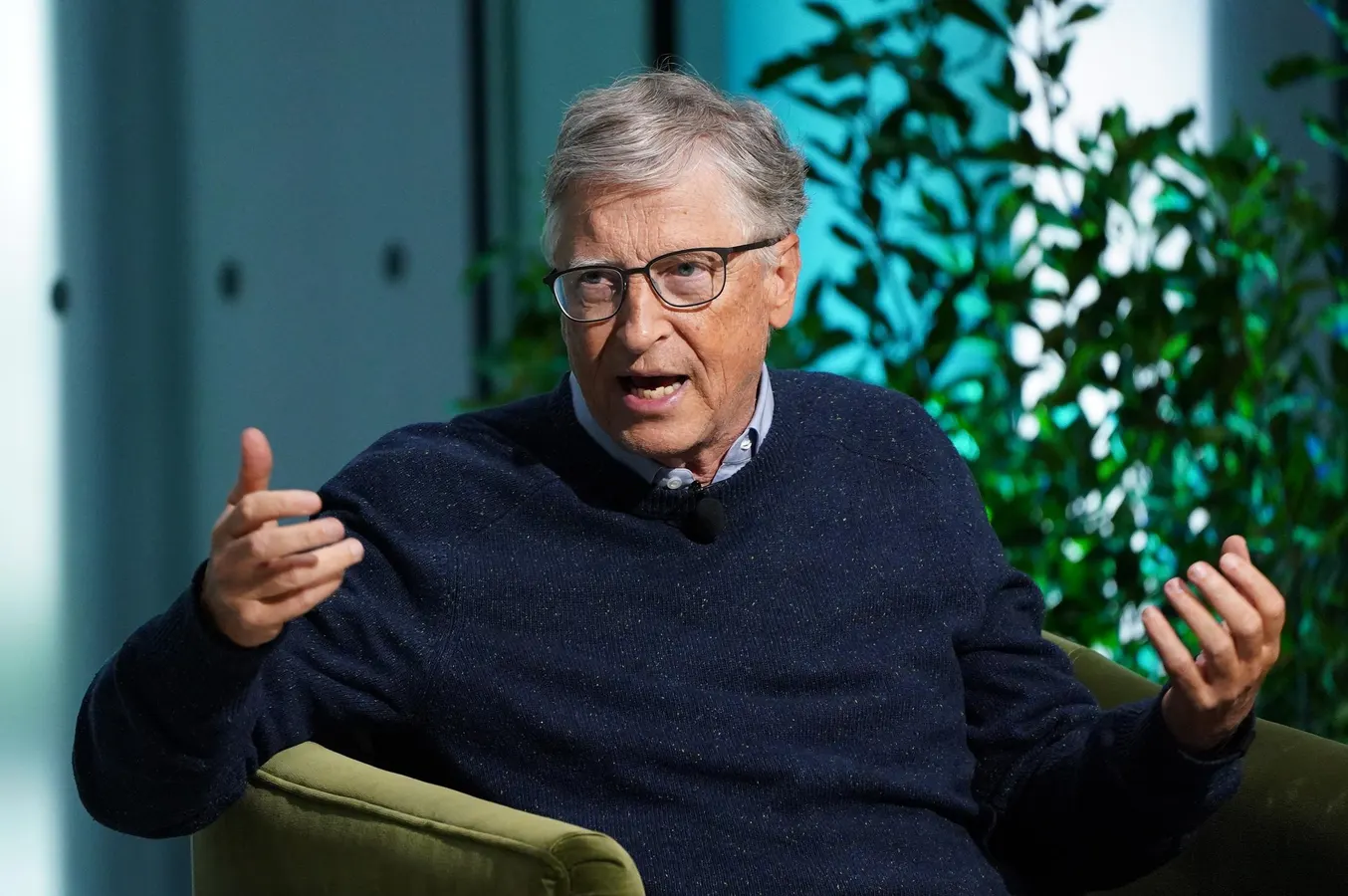
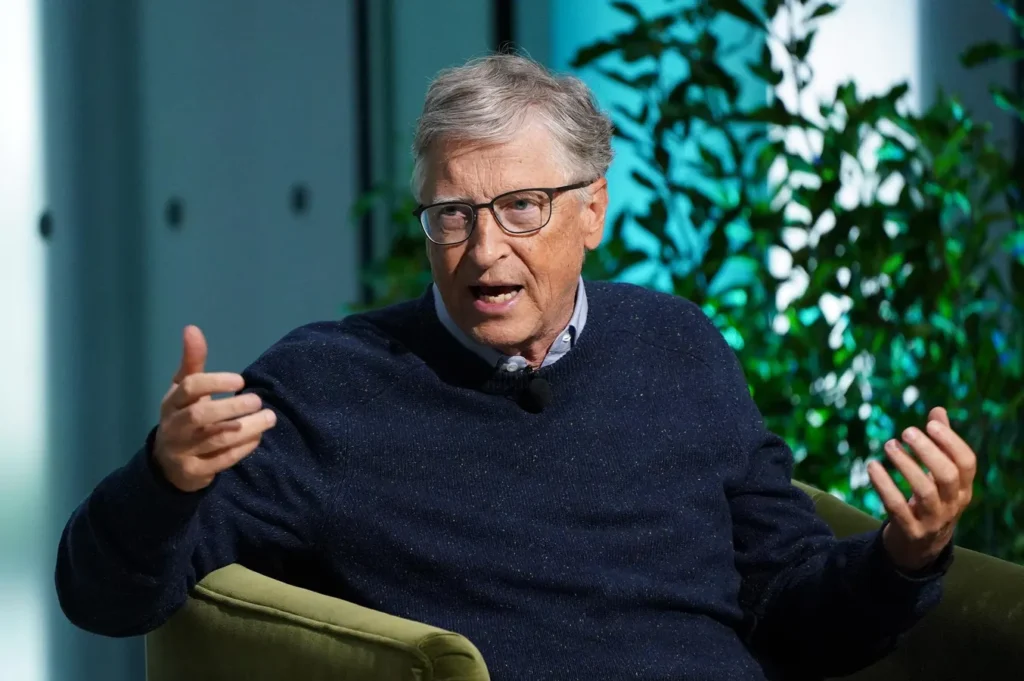
Late 2025 saw the Abu Dhabi Finance Week, an occasion at which Bill Gates, the co-founder of Microsoft and one of the most respected voices in the world when it comes to AI and development, issued a strong warning concerning the state of the artificial intelligence sector as a whole. The reason behind the warning was an interview he issued with the CNBC broadcaster, during which he warned those at the helm of the sector that too many of these companies are overvalued and “a reasonable percentage” would fail to justify the value placed upon them.

This is quite an important statement, as Gates is not only a billionaire tech entrepreneur but also a person deeply engaged with tech policy and philanthropic use of tech. His comments come at a moment when adoption, investment, and value placed on AI has skyrocketed to incredible levels around the globe, and AI is also perceived to be “one of the most transformative forces ever.”
Within this essay, we shall discuss:
What Gates originally said
The reason why he issued the warning
As a
The overall economic and technological implications
What this means for investor
What all this means to companies in the field of Artificial Intelligence
What it all means to innovation and society
The History of the
Outcomes of interest and Risk
Balanced evaluations and critiques
- What Bill Gates Actually Said
“At the core of Bill Gates’ message was this warning to both AI firms and investors:”
Many AI companies are overvalued based on current financial performance.
The AI sector is highly competitive, and not all firms will succeed.
To this end, investors need to be prepared for a valuation correction, so the stock price of these companies could decrease.
A fair percentage of these firms may not be “worth that much” in the future.
I did not hear him argue that AI is not a valuable thing; rather, he reiterated that “AI is a deeply profound technology that will remake the world.”
However, he emphasized the fact that valuation does not always reflect reality in a paradigm – particularly when speculations trump fundamentals.
- Reasons why Gates made this Warning
A. AI Valuations Have Exploded
There have been completely astronomical increases in valuation in recent years for companies in the AI space, from startups to public tech giants:
Certain startups, even ones that are not generating profitable income, have been estimated at the hundreds of billions of dollars.
In publicly traded companies that involve the field of Artificial Intelligence, the price/earnings ratio has been significantly higher than in the past for technology stocks.
However, this massive growth has also resulted in some analysts referring to this era as a possible AI bubble, whereby people invest in future potential as opposed to past performance.
B. Competitive Dynamics Are Brutal
As mentioned
Gates: “Artificial intelligence is a hyper-competitive space. You’ve got hundreds, thousands of companies competing for the same things: talent, data, customers, money.” Not every company is going to succeed, even if it has a promising product on paper.
In history, there is the observation that competition may trigger a consolidation process in the sector, with a few firms thriving while the rest dwindle or are acquired.
C. Market Psychology Matters
In bull markets (markets in which the prices are rising), the investors can get caught up with “fear of missing out” (FOMO). Such a phenomenon makes valuations soar irrespective of current earnings and business models.
The above phenomenon has been noticed and analyzed by Gates, who observes a trend of inflation in valuation before the onset of profitability, which is a characteristic of a bubble.
- ECONOMIC IMPLICATIONS OF THE WARNING
The warning made by Bill Gates is multi-layered regarding economics, as it relates
A. Allocation of Capital and Resource Utilization
The money that flows to these overvalued but unprofitable firms could imply that resources are not allocated properly. When firms are overvalued, meaning that they are given more money than justified by fundamentals, it implies that other sectors are deprived.
Sharply correct valuations may also mean that investors, whether individual or institutional, could find themselves faced with losses and depleted capital for innovation.
B. Effects on Investment Behavior
The warning calls by a respected figure, like Gates, have the potential to affect the psychology of investors. Investors might start being cautious, leading to changes in:
More rigorous due diligence
Emphasis on sustainable business models
Shifting investments away from highly speculative stocks that may pose a risk to
C. Market Volatility
“If large corrections happen in valuations, it is likely to be followed by broader market volatilities, including not only technology stocks but also allied industries such as semiconductors, cloud computing, robotics, and enterprise software.”
- What This Means for Investors
It is important for the investment community to view the message of Gates as a warning flag of risk awareness rather than purely a source of investment advice
B. Valuation vs. Fundamentals
When valuations grow faster than earnings and gross profit potential, it becomes riskier to achieve future gains. Stockholders might have to inquire about:
Does this company have a clear path to profitability?
Are the products differentiated?
Can it withstand competitive pressures?
A. Managing Nano-Risks through Advances in Science
Investors may select:
Diversification by industry and type of assets
Hedging Strategies
(to mitigates risk)
Emphasize basics rather than hype
Emphasize
C. Long-Term vs. Short-Term
For the long-term investor, the fundamental value proposition remains attractive – the expectation remains that many industries will be disrupted by the impact of AI. However, short-term volatility and corrections are certainly feasible.
- What This Means for AI Companies
In regard to AI startups as well as large companies, Gates’ warning is a mix of realities and opportunities.
A. Realities
“Expect tough competition: Many companies may go out of business or be taken over.”
Profitability is a consideration: If a business is unable to generate a sustainable business model, then the business’s valuation is likely to be affected.
Execution trumps hype: Execution in product development, customer adoption, and revenue generation becomes key to success.
B. Opportunities
Healthy or positive competition promotes innovation. Firms with innovative prowess will flourish.
A focus on value creation – be it in the healthcare sector, or agriculture, or education, or the area of enterprise solutions – is the key attraction for lasting investment.
Partnerships and eco-systems help counter threats, while strategic partnering can build a better market position.
- Wider Technological and Social Effects
Gates’ message is not the denial of the importance of AI. Rather, the reverse.
Artificial intelligence as a transformative force
Transcendental ideal
Gates has long maintained his belief that AI is capable of creating a revolution in society, whether it is enhancing the efficiency of industries, solving issues in healthcare, or issues in the education sector. He reiterated it during the interview.
B. Innovation + Responsibility
With its growing presence in our day-to-day lives, topics such as ethics, safety, equity, and access have become increasingly significant when it comes to artificial intelligence.
CTR – Counter Terrorism Review
“AI has the potential to transform labor markets, productivity standards, and economic systems. This will demand:
Reskilling and education infrastructure
Transition and change management policies
Transitions
Global cooperation and partnership among the government, businesses, and civil society
- Historical Comparisons: Dot-com and Beyond
Bill Gates’ worries are echoed in the history of technological booms.
A. The Dot-Com Bubble
During the late 1990s, several internet firms saw a tremendous rise in value without proper business models. When the bubble burst during 2000 to 2001, several firms went out of business, but a few firms that survived became leaders in the market (such as Amazon). Gates has often commented upon this period during discussions on the value dynamics in AI.
B. Industrial Revolutions
Other disruptive technologies—the use of electricity, the automobile, and the personal computer—are taking numerous decades to realize their economic advantages. These involved:
Early Hype
Competitive Shakeouts
Emergence of dominant players
Widespread societal change
It is likely that AI may evolve in a similar fashion.
- Possible Outcomes and Risks
A. Valuation Corrections
If there is a cooling off in valuations and some non-performance, there could be market corrections, which might include:
Manage investor expectations
Result in acquisition or bankruptcy
Move capital to more sustainable firms
C. Innovation Continues
Although during the shakeout period innovation could decline in general, it could speed up in domains in which AI shows tangible efficacy — for example, in healthcare diagnostics, agricultural optimization, and climate research models.
C. Geopolitical and Economic Competition
Artificial intelligence hasbecome a paramount aspect of global economic and strategic rivalry. Nations and firms that want to be at the forefront of this aspect of technology will invest significantly in it, and this means that global imbalances could increase.
- Balanced Assessments and Criticisms
Experts do not all concur that the AI industry finds itself at present in a bubble:
Indeed,
Certain investors regard the market valuations as reflecting real long-term potential. Other commentators feel that it has earned its place, given its spread in all sectors. However, Gates’ warning should not be interpreted in the sense of anti-AI rhetoric. Conclusion: What Must Stakeholders Do? “It’s a warning that says you should approach these technologies […] with a level of caution and a level of realism that’s a little bit different from the typical enthusiasm associated with the tech industry,” Overvaluation is a definite possibility, particularly in a speculative market. Competition will determine who will win or lose. To investors, it is important to look at fundamentals. The transformative potential of AI is still great. The future course of companies’ execution, of investors’ capital allocation decisions, and of societal regulation and adoption of artificial intelligence will shape the future of the market and, beyond, of society and economy. A message of disciplined innovation and optimistic caution is imperative in these unprecedented technological ages, and it is found in the words of Gates.