Daksh Pandey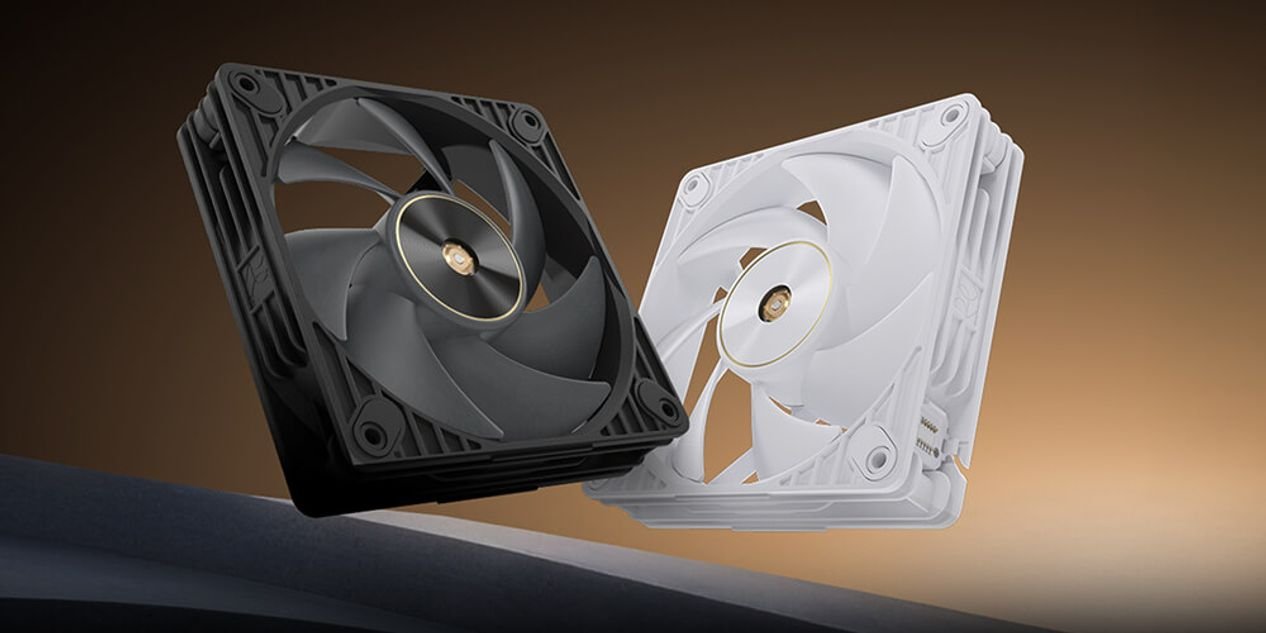
In December 2025, ASUS, which is one of the world’s best-known technology brands, introduced its new high-performance PC fan, called the ProArt PF120 Case Fan.
Case fans are an important component in computer systems used for the cooling of internal components like CPUs, GPUs, and power components. These internal components are increasingly becoming more powerful and heat-generating; hence, the fans need an update that enables them to cope with this heat without making much noise in the process. ASUS’s ProArt PF120 fan comes as its latest product in this lineup that focuses more on design than gaming systems.
- What Is the ProArt PF120?
The ProArt PF120 Case Fan is a 120mm high-static-pressure PC cooling fan produced by ASUS with its ProArt sub-brand, which was primarily established with the purpose of delivering products that cater particularly to creative professionals in terms of monitor, motherboards, and workstation solutions. The ProArt PF120 marks a major entry into the Cooling domain, meant not only for general cooling requirements but also high-performance applications typically required in AIO Liquid Cooling solutions.
As opposed to conventional case fans that focus on RGB and gaming style, the ProArt PF120 case fans have a professional look and come in black and white versions that easily blend with workstations or professional computers.
- Importance of Cooling Fans
Cooling fans significantly influence the regulation of optimum temperatures within a computer case. High temperatures can cause a component to perform at a lower speed, affect the system’s overall stability, or even reduce the component’s lifespan. Most contemporary computers rely on various cooling fans to establish steady airflow paths, which include:
Air Flow (CFM): Measures the capacity of the fan to handle air.
Static Pressure (mmH2O): The fan’s ability to “push” air through a resistance, such as a radiator or a dust filter.
Sound Performance: The sound level of fan operation at different speeds
Durability & Reliability
”The fan’s durability & reliability”
The fan’s durability
The ProArt PF120 is so designed as to excel in every one of these respects.
- Key Specifications and Performance
Conforming to an official press release from ASUS, this is what ASUS’s ProArt PF120 has for specifications:
Max Fan Speed: Approximately 3000 RPM (±10
Airflow: 104.
Static Pressure: 7.3 mm
Noise Level: 39 dB(A)
Frame Thickness: 28 mm
Type of bearing: Fluid dynamic bearing (FDB)
Voltage: 12V operation and 5V startup
Weight: ~221 g
Color Choices: Black or White
These specifications position the PF120 in the “premium performance” market, in which both air flow and pressure are capable of outperforming competing products. Where air resistance becomes an issue, high static pressure becomes beneficial, such as in dust filters and radiators.
- Design and Material Innovation
4.1. Liquid Crystal Polymer Blades
Among the most interesting technology breakthroughs in PF120 is its utilization of liquid crystal polymer (LCP) in making blades for its fans. The reason why LCP is chosen is that it is robust, resistant to heat, and not prone to deformation.
As LCP enables tight manufacturing tolerance, this helps reduce the difference between the tip of the blade and the frame to just 0.5mm, thus increasing efficiency by reducing turbulence and noise that would be caused by this difference.
4.2 Brass Bearing Housing
The bearing assembly on the PF120 is CNC-milled out of brass, offering high accuracy and durability. Having the brass housing instead of a cheaper plastic alternative also enhances heat conductivity. The motor has a three-phase six-pole system, which offers smooth rotation and is more vibration-free since it produces less noise.
4.3. 28mm Thick Frame
Most 120 mm fans come with a thickness of 25 mm, whereas for the PF120, it uses a 28 mm thick profile. This increase in height allows for a more substantial blade design in addition to increased pressure output without increasing its overall dimensions. This allows for performance improvements to be obtained with easier mounting on all chassis designs.
- Connectivity and Cable Management
One of the biggest advantages of the PF120 fan is the patented daisy-chain connectivity feature. This means the need for individual power and control cables in most other computer fans results in messy PC builds whenever multiple fans are connected.
In the case of daisy-chain connectors, users are able to attach fans to each other, which helps to cut the number of cables leading to the motherboard or controller. Such designs are significant when users have to design a clean workspace that looks professional.
- Three Stage Speed Controller (Included with Multi-Pack)
Owners purchasing the three-pack variant of the PF120 will also be supplied with an inline speed controller from ASUS to set the speeds of their fans at:
1400 RPM, noiseless operation
2200 RPM (Balanced Performance
3000 RPM (maximum cooling)
This allows manufacturers a degree of freedom to design their system with more emphasis on quieter performance under light loads or maximum cooling under heavier work.
- Performance Compared to Competitors
Industry analyst observations show that PF120 competitors include performance fans such as Noctua NF-A12x25 and T30 models offered by Phanteks. Observers point to ASUS’ focus on both pressure and air flow capability while still keeping noise within acceptable levels.
Some early observations from commentaries are that the real test for the PF120 will be to prove its performance in actual testing simply because speed does not always lead to performance. With its high RPM speed, close blade gap tolerance, and optimized motor, the PF120 will come out on top if done correctly.
- Target Audiences
The PF120 is not targeted towards gamers or rgb enthusiasts. However, its design and features make it an excellent solution for:
Creative talents working on silent or clean-desktop computers
Content producers that prefer minimalist designs and smooth air circulation
Content producers often choose to work
Consumers/Enthusiasts upgrading the cooling systems in high
Closed loop cooler users who require substantial static pressures
System design that focuses on small size, hence the need for efficiency
This is in line with the overall brand vision for ProArt, which is to reach beyond the usual markets for gaming monitors.
- Visual Design and Color Options
The PF120 comes with a minimalist visual pattern, designed to provide both black/white versions with brass rim highlights around the rim. It is far less conspicuous compared to graphics-laden lighting like RGB. It may also integrate better into an environment like an office or content production area.
- Availability and Packaging
ASUS will be selling single fan packs as well as packs containing three fans, with the three-fan packs including the speed controller. Details on selling prices are still unclear and could vary by market or region. Timelines for availability might be different in some markets, and potential customers can obtain more information from ASUS itself.
- Industry Reaction and Community Discussion
Initial reactions from the PC crowd seem to be a combination of interest and skepticism. Some are pleased that ASUS is trying to step up to compete against more established brands of premium case fans, while others have already joking about the name. Only time will tell how well the new PF120 lines up against other case fans.
- The Wider Implications of ASUS’ Entry into the Fan Market
The entry of ASUS into the high-end fan market under the brand name ProArt shows that the company does not only aim high but also looks to expand its cooling technology range. In the past, the ASUS ecosystem included monitors, motherboards, and peripheral devices, and the entry of high-end fans might result in a well-integrated ecosystem.
This new direction also shows that the increased popularity for efficient and silent cooling solutions with ever-more-powerful CPUs and more-powerful GPUs matches an actual demand in the market. Cases like the PF120 fill a need for power without sacrificing sound quality and overall design.
- Technical Breakdown: Aerodynamics and Noise
“As more data becomes available
Airflow optimization does not only depend on the maximum CFM. The increased static pressure enables the fan to better “force” air through dense radiators and cases. ASUS asserts that the PF120’s pressure performance has been enhanced at all fan speeds to outperform key competitors.
edgeup
13.2 Sound Performance
Noise is also always an issue. The key point ASUS makes here is that both the motor and fan of PF120 are optimized in terms of tonal variations, meaning that instead of noise variance, there will be a smooth noise.
ASUS Pressroom 14. Building and Reliability Issues Premium fans have to ensure that they provide longevity as well as efficiency. Their choice of using high-quality materials such as LCP and brass in the PF120 fans implies that the fans are durable. Moreover, fluid dynamic bearings are longer-lasting compared to sleeve bearings. ASUS Pressroom 15. Conclusion The ASUS ProArt PF120 Case Fan is a serious entry in the high-end market with its ability to combine high-end materials, high-performance capabilities, simplicity in terms of design, and better cable management. PC builders looking to optimize performance, minimize noise, and have professionally designed systems may find this to be an interesting option, pending further testing. While discussions in the early stages are focused on performance capabilities from a paper point of view, it will be interesting to see how it fares in terms of user reviews going forward. However, ASUS has definitely invested in fan design, showing an indication that it intends on expanding its ProArt family or meeting new demands based on new workstations or personal computers being developed.