Daksh Pandey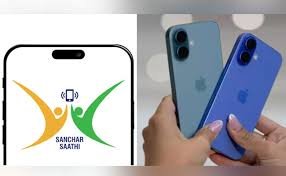
The headline concerns a brief, high-impact policy clash in India: the government’s telecom department issued directions that would have had the effect of forcing smartphone makers to pre-install the government’s “Sanchar Saathi” cyber-safety app on devices sold in India; and then-after intense backlash-rolled the mandate back. In the middle of this, Apple signaled it would engage with the government and look for a “middle path,” but may not implement the order in its original form, because Apple’s iPhone ecosystem is built around tight control over what ships on the device and how apps are installed. Reports from Reuters and Indian outlets said Apple planned to communicate concerns to New Delhi rather than comply as written.

To understand why this became controversial so fast, it helps to know what Sanchar Saathi is: Sanchar Saathi is a DoT initiative available as a mobile app and web portal aimed at helping citizens protect themselves from telecom-related fraud and misuse. It’s closely linked to systems like CEIR (Central Equipment Identity Register) that can help block or trace lost/stolen phones by IMEI and curb the use of counterfeit or cloned devices. The government also positions the app as a way to report suspicious connections, reduce identity misuse, and enhance subscriber security. In December 2025, the government publicly described the app as a citizen-facing security tool complementing the existing portal with “on-the-go” protection and reporting.
What sparked the “row” wasn’t the app’s very existence but how the mandate was framed. The DoT directions that were announced-stated that manufacturers/importers should ensure the app is pre-installed on phones meant for India, and that it would be visible to users, functional, and enabled at the time of first setup. Reporting around the original order suggested that the instruction covered both new phones and also pushed manufacturers to distribute the app to some existing devices via updates, setting off alarm bells as it appeared a government-backed app might become effectively unavoidable.
Press Information Bureau
That is where Apple’s stance becomes more understandable: Apple’s model, as applied worldwide, is that it controls the software image shipped on iPhones, while apps are normally installed through the App Store-with limited exceptions, such as enterprise distribution. Apple also has strict norms against carriers or governments forcing “bloatware-style” preloads on iPhones. According to Reuters, Apple did not plan to comply with the preload requirement and would convey concerns to the government. Indian reports, quoting industry sources, further said Apple might not be able to carry out the order “in the current form” but would discuss a workaround.
Reuters
There’s also a practical technical-policy angle: the DoT requirement-as publicly described-expected the app to be installed and enabled by default, and in some formulations of the directive, it was framed as something that couldn’t be disabled by users. That clashes with how Apple positions iOS around user consent, permissions over privacy, and a curated installation path. Even when governments have legitimate goals-fraud prevention, stolen phone blocking-“mandatory, preloaded, enabled” creates the perception in an especially sensitive democracy that the state is insisting on an always-on presence on personal devices, which contain private communications, location traces, and financial activity. As reported by Reuters and other outlets, the backlash framed this very much as a political storm around surveillance fears.
The opposition and criticism by civil society followed a familiar pattern: when a government app is mandated at the OS level, critics worry about scope creep-even if today’s features are benign, tomorrow’s updates could expand capabilities. Digital rights groups publicly argued that a mandatory install without transparent consultation undermines trust and sets a precedent for coercive device control. Separately, Reuters noted a broader context of concerns about expanding surveillance capabilities via smartphones-for example, proposals around always-on location tracking-which makes the political environment more sensitive to any “forced install” move.
Then came the flip-flop. Several credible reports stated that India’s telecom ministry/government rescinded/retracted the order following the furore, arguing the application would be pre-installed and that this would not be mandatory; the app is voluntary. Reuters, citing criticism from politicians, privacy advocates, and technology companies, said the government shelved the order. AP also similarly reported the order was rescinded and highlighted that the application would be voluntary, adding that there have been concerns regarding consent/privacy and how the pressure goes against company policies, not least Apple’s. Indian media quoted the government’s reasoning chalking this up to: since the app is getting accepted, it need not be thrust.
So when the story says Apple will “discuss with govt” and “may not follow in its current form,” it’s pointing to the likely reality that even if Apple wants to cooperate with India’s cyber-fraud goals, it prefers a design that doesn’t break Apple’s global platform rules. Apple often negotiates implementation details: not “no,” but “not that way.” In earlier India telecom contexts, Apple reportedly resisted certain app-level enforcement models (for example, around spam reporting tools), preferring OS-level privacy boundaries and standardized user flows rather than government or operator requirements that alter core device behavior. That history is why many observers expected Apple to push for an alternative mechanism rather than outright refusal.
Times of India by Lamya Arsiwala
What might a “middle path” actually look like here, without Apple breaking its own rules? One is voluntary installation nudges rather than forced preloading—e.g., during device setup, a screen recommending downloading Sanchar Saathi from the App Store, with a clear skip option. Another is a deep-link prompt from system settings or a carrier settings page that opens the App Store listing, again with user choice intact. A third is a strong web-first integration: if the core value that the government wants is indeed IMEI verification and blocking of stolen phones, Apple could point users to the official portal flow while keeping the app optional. These aren’t confirmed solutions in the reports—just typical compromise space when governments want distribution and Apple insists on consent-based installs.
From the perspective of the government, the motive is not too difficult to decipher. India has large-scale problems concerning mobile theft, counterfeit devices, SIM-related fraud, and identity misuse, and tools like CEIR and citizen reporting can genuinely help. However, local reporting does highlight success stories concerning operational recoveries related to the CEIR. The government has moved to promote it as a facet of citizen empowerment against digital fraud. Hence, perhaps for the policy thinkers, the quickest way through which protection could be scaled up was by making the tool ubiquitous by default. Such “fast scaling” methods that resemble coercion can backfire in certain cases. Users stop trusting the tool, while political opposition frames it as surveillance and global tech companies push back.
This episode also teaches a larger policy lesson: that cybersecurity and privacy are not zero-sum adversaries, but methods of distribution matter. A voluntary app can still be widely used if it serves real benefits—recovering phones, checking suspicious SIMs, verifying devices—and is seamless to use. But the moment that a state requires pre-installation—especially with language suggesting that it be enabled and on at device setup—it enters the range of “device governance,” which democracies treat as the sort of regulatory overreach to be viewed with extra skepticism. That’s why the backlash was instantaneous and why the government’s reversal happened quickly. AP News +2 The Guardian +2 For everyday consumers, the practical takeaway is simple: You can still use the Sanchar Saathi voluntarily via the app or portal for services like authenticity checks of devices and stolen-phone-related actions, but you shouldn’t assume it will be baked into every phone by default. The takeaway for industry is much deeper: India is a very important market, but almost always Apple will push back against the attempt to compel changes in its platform architecture-forced installs, in particular-and try to turn governments toward consent-driven approaches. That is why “Apple will discuss” and “may not follow in its current form” is basically code for: expect negotiation, not immediate compliance. Reuters +2 AP News +2 Finally, watch what happens next in policy terms. Even after the rollback, debates about telecom fraud controls, device verification, and the boundary between citizen protection and state power will continue. If the government returns with revised language-clearer opt-outs, transparency guarantees, independent audits, or narrower mandatory requirements-it may reduce resistance. If it tries again with broad “preload and keep enabled” rules, the same coalition of privacy advocates, opposition leaders, and platform companies will likely push back again, because the core issue is not the idea of safety tools but the precedent of compelled installation on personal devices.