Daksh Pandey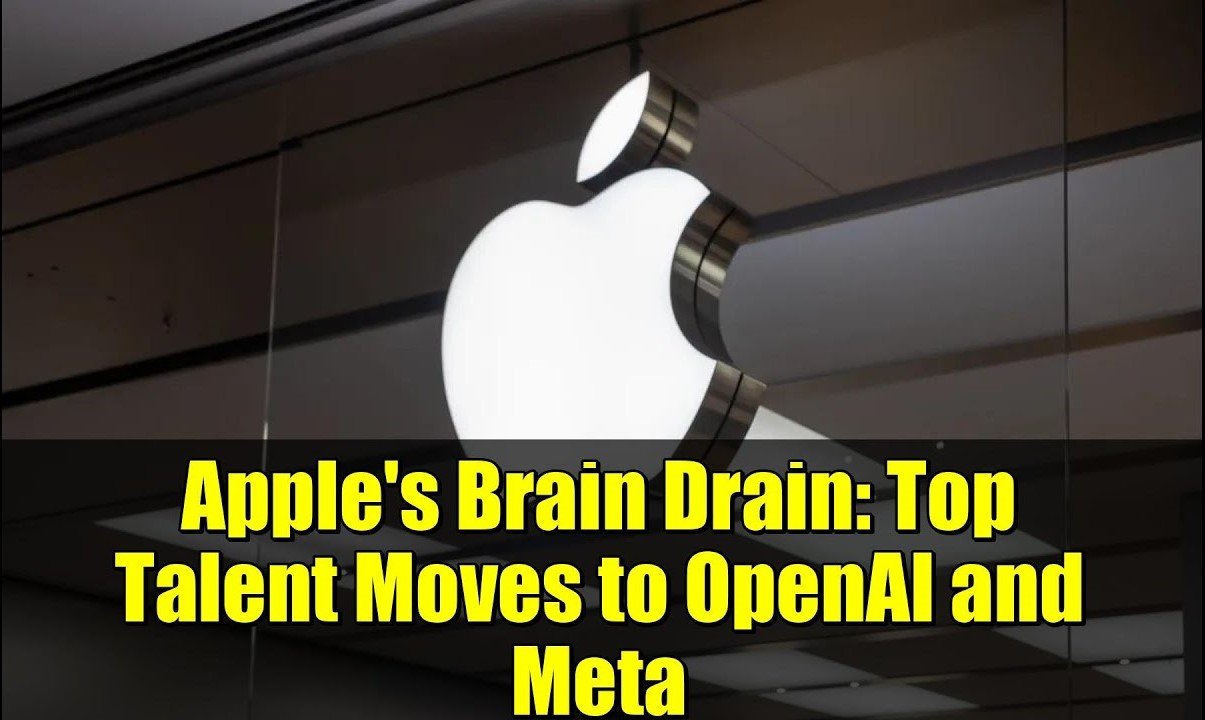
???? What’s happening: A wave of senior-level exits at Apple
- Multiple top-tier execs leaving or considering departure
Reports indicate that JOHNY SROUJI — Apple’s Senior Vice President of Hardware Technologies and essentially the architect of Apple’s custom-silicon chips — is seriously considering leaving Apple.
PYMNTS.com
+2
Phone Arena
+2
In parallel, Apple recently lost several other senior executives: John Giannandrea (previous head of AI/ML strategy) will retire in spring 2026, Alan Dye (head of human interface design) is departing for a competitor, and other senior leaders in legal, policy/environment, and operations are also stepping down or retiring.
Business Standard
+2
Moneycontrol
+2
But the attrition isn’t only at the “C-suite” or senior-exec level: dozens of engineers, designers and specialists in hardware engineering, display technologies, watch design, headset design (e.g. for Vision Pro), AI/ML modelling and robotics have also left or been recruited away.
Moneycontrol
+2
MacRumors
+2
- Many ex-Apple folks are ending up at OpenAI (and other rivals)
In one concrete example, a senior Apple director responsible for display technologies — Cheng Chen — who had oversight over optics used in Apple’s Vision Pro headset, reportedly joined OpenAI.
MacRumors
+1
Earlier, other top engineers (e.g. hardware-engineering lead Tang Tan) had also shifted to OpenAI.
mint
+1
More broadly, sources say Apple has lost experts across many domains — silicon design, camera and audio, wearable and headset engineering, robotics software, and UI design — to new employers including OpenAI and other AI/hardware-focused companies.
Switzer Daily
+2
Moneycontrol
+2
⚠️ Why this exodus matters: Risks for Apple’s future
- Engineering know-how and institutional memory are vanishing
Having served for years or even decades, many of these executives embody deep domain knowledge — especially around silicon/chip design, hardware architecture, integrated product development, design language, and AI system design. Losing them disrupts continuity and may erode Apple’s ability to push ambitious hardware or AI-powered products.
36kr
+2
Business Standard
+2
In particular, JOHNY Srouji’s potential exit threatens Apple’s “silicon moat.” Since Srouji led Apple’s in-house chips (from the early days of A-series chips for iPhone/iPad to the M-series for Macs), his departure could destabilize long-term chip roadmaps.
PhoneArena
+2
36kr
+2
- AI ambitions may be stalled or derailed.
Many of the departures are concentrated in AI/ML, design, and hardware — the very areas Apple needs to succeed if it wants to compete in a future where AI and AI-enabled hardware (AR/VR, wearables, smart devices) matter more than ever.
Business Standard
+2
mint
+2
Industry observers argue that despite Apple’s public AI ambitions (e.g. “Apple Intelligence,” device-level machine learning, possible AI-powered hardware/products), the wave of exits could force the company to reorganize its AI roadmap midflight — which might lead to delays or scaled-back ambitions.
TradingView
+2
Business Standard
+2
- Market, investor and competitive consequences
Analysts warn that Apple’s hardware + AI leadership shake-up undermines investor confidence. The company’s ability to deliver “next-big-thing” devices (especially AI-enabled ones) may now be in question, which may impact stock valuations, product timing, and competitive positioning.
TradingView
+2
News18
+2
- Cultural and organizational disruption
Beyond immediate technical loss, these exits reflect a larger structural issue: many of Apple’s old-guard executives joined during the era of its early rise (Jobs era or shortly after), and now many are at retirement age.
Business Standard
+2
Daily Switzer
+2
Combined with a more aggressive “talent war” in AI/hardware among major tech firms (OpenAI, Meta, etc.), Apple might find it harder to retain or attract talent — especially if it’s perceived as risk-averse or slow to adapt to AI-era demands.
Business Standard
+2
36kr
+2
Why people are leaving – and why competitors like OpenAI are a lure
Based on reporting and expert analysis, several overlapping factors appear to drive the exodus:
Age and tenure: Many of Apple’s longtime execs have been around for decades; some were already approaching retirement, making this a “natural” wave of turnover.
Business Standard
+2
mint
+2
AI talent war & opportunity-seeking: As AI becomes central, firms like OpenAI and other AI-driven startups are offering more aggressive compensation, broader freedom, and the chance to work on what many see as the “next frontier” — not just incremental updates to consumer devices.
Business Standard
+2
mint
+2
Strategy and internal frustration: Some insiders reportedly view Apple as risk-averse and slow to move on bold AI and hardware ideas. That perceived inertia (or overcautiousness) may push ambitious engineers and designers to seek more dynamic environments.
Business Standard +2 mint +2 Structural constraints / limited growth path: For high-capability technologists (especially in hardware and silicon design), Apple’s traditional corporate structure and promotion path may feel limiting. For example, Srouji reportedly sees limited upside unless he becomes CTO — an uncertain or blocked path under the current leadership lineup. 36kr +2 Phone Arena +2 Together, these levers make alternative employers (like Open AI) far more attractive for top talent. Indeed, many departures seem driven not by dissatisfaction with Apple per se, but by “pull factors” from rivals — compelling visions, more autonomy, and aggressive compensation. What this says about broader tech-industry dynamics-and where Open AI fits in The trend at Apple is part of a larger tech-industry reshuffle, where AI-first companies (or companies doubling down on AI + hardware) are aggressively recruiting talent from traditional hardware & software incumbents. Apple — once the gold standard of stability — is now vulnerable to this kind of disruption. The arrival of Open AI (and similar AI-first ventures) in hardware + AI device design threatens Apple’s longstanding dominance in vertically integrated hardware + software ecosystems. As some former Apple designers and engineers join Open AI, the risk grows that future “category-defining” devices may come from these newcomers, not Apple. Apple’s internal challenge: balancing legacy continuity (hardware, product maturity, brand reliability) with innovation speed (AI, new form factors, new device paradigms). The brain drain exposes a tension many ageing tech giants face — how to evolve without losing their core. For competition: rivals may see an opening — both in “next-gen AI hardware” and in recruiting not just fresh talent, but seasoned, intimately experienced engineers/designers who shaped industry-leading products for years. ✅ What this could imply – worst-case, potential implication, something to watch If key departures (especially Srouji’s) finalize, Apple might struggle to deliver on future hardware breakthroughs — especially in chips, AR/VR/AI hardware, next-gen Macs/iPhones, or other ambitious products. AI-driven projects, such as future versions of digital assistants, on-device machine learning, or even entirely new product categories, may delay or get scaled down due to loss of specialised talent and leadership. On the flip side, this could force Apple to reorganize: recruiting fresh talent, accelerating internal promotions, shifting strategic priorities — which might lead to a more diversified leadership structure and perhaps more openness to “riskier, bolder” bets. For competitors (particularly OpenAI), this exodus is a golden opportunity: they gain not only raw talent, but institutional memory and design philosophy from Apple — which might translate into breakthrough products