Daksh Pandey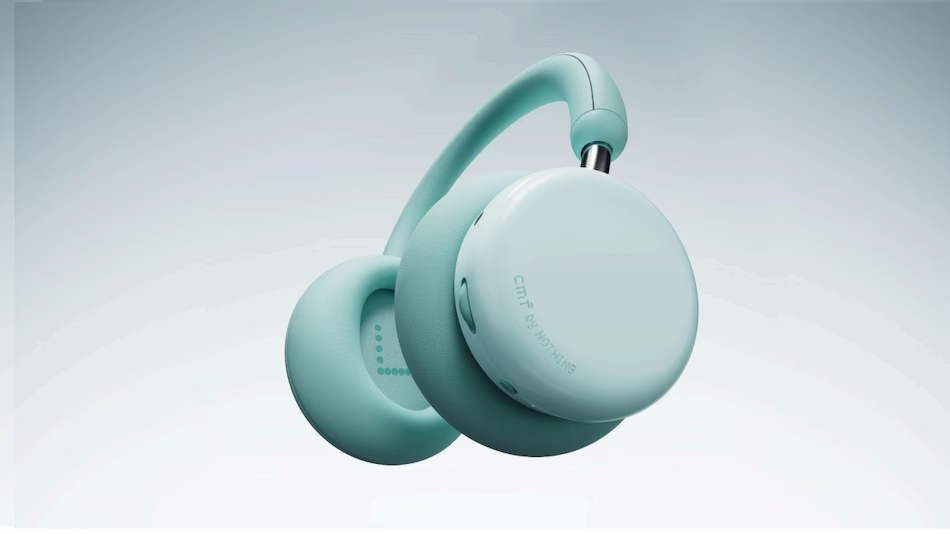
CMF is a brand that really cares about giving people value for their money. Now they have come out with the CMF Headphone Pro in India. The CMF Headphone Pro is a type of over-ear headphone that’s wireless. These CMF Headphone Pro headphones are trying to be the best at three things that people really want: how long the battery lasts, how easy they are to use every day and things, like noise cancellation and being able to customize them with an app. The headline promise is huge: up to 100 hours of playback, paired with 40mm drivers and a new tactile control called the Energy Slider that lets you quickly shift the sound’s focus between bass and treble without digging through menus.
1) Price in India, launch offers, and availability
The CMF Headphone Pro has launched in India with an introductory price of ₹6,999, and several reports say it later goes to ₹7,999 after the initial period.
You will find it in three color options:
Dark Grey
Light Grey
Light Green
As for where you can buy it, coverage indicates online platforms and partner retail channels are expected (this is typical for CMF/Nothing launches in India).
Why this pricing matters:
In the Indian market, over-ear wireless ANC headphones usually fall into two broad buckets: ultra-budget models that compromise on build/comfort and tuning, and pricier “brand-name” options that become significantly more expensive. CMF is clearly trying to sit in the middle—priced like a budget device, but loaded with features that sound “premium” on paper: LDAC/Hi-Res support, hybrid ANC, long battery, and modular parts.
2) The big headline: one hundred hour battery life and what that really means for the battery life of the battery life
CMF is putting battery life front and centre, claiming up to 100 hours under certain conditions. First impressions coverage notes that this figure is generally quoted with ANC turned off (and at a specified volume level), while ANC on brings the claim down to around 50 hours—which is still very strong for the segment.
So what does it really mean when something says you can use it for 100 hours. I want to know what kind of usage 100 hours of something actually translates to. For example if we are talking about 100 hours of music playback on a music player that is a lot of music.. If we are talking, about 100 hours of battery life on a phone then that is something entirely different. So I am wondering what 100 hours of usage really means in situations.
To make something feel real
If you listen to music for two hours every day one hundred hours of music could last for fifty days.
If you listen to something for four hours every day that is, like listening for twenty five days.
I have Active Noise Cancellation on for around fifty hours. If I use it for two hours every day it will last for around twenty five days.
The battery life of the thing is really going to depend on how loud you like your music, what kind of codec you’re using, how strong you like the noise cancellation and if you use things, like Spatial Audio. But even if the battery does not last long as they say it will the idea is clear: CMF wants you to stop worrying about charging the battery every day or every week. CMF wants to make charging something you do not have to think about all the time.
Fast charging and charging convenience
Reports also highlight quick charging—for example, one coverage mentions a 5-minute charge can give up to 8 hours of listening.
Some articles mention different “minutes to hours” numbers depending on test conditions, so treat the quick-charge figure as a best-case claim rather than a guarantee for everyone.
A particularly practical touch: it’s reported that the headphones can be charged via USB-C to USB-C, including directly from a smartphone in some scenarios—useful when you’re travelling and don’t want to carry extra chargers.
3) Drivers and sound: 40mm drivers, LDAC, and “Hi-Res” positioning
At the core, the CMF Headphone Pro uses 40mm drivers. That’s a common size in over-ear headphones and generally a sweet spot for delivering fuller bass extension while still keeping mids and highs under control—assuming the tuning is done well.
Let us talk about LDAC and Hi-Res. These are things you should know about LDAC and Hi-Res.
LDAC and Hi-Res are terms that people use to describe music.
When we talk about LDAC and Hi-Res we are talking about the quality of the music.
You should know that LDAC and Hi-Res are important for people who like music.
The main thing, about LDAC and Hi-Res is that they make the music sound really good.
People who like LDAC and Hi-Res music say it is the way to listen to music.
You can find LDAC and Hi-Res music on some music players.
Some people think that LDAC and Hi-Res are the future of music.
We should learn more about LDAC and Hi-Res to understand why they are so popular.
LDAC and Hi-Res are definitely things that music lovers should know about.
CMF says it supports LDAC and Hi-Res formats, which basically signals that the headphones are capable of receiving higher-bitrate Bluetooth audio (especially with Android devices that support it).
It is important to understand one thing that really matters:
Having codec support does not automatically mean that the sound is better for everyone. You will get the benefit, from codec support if:
You have a phone that supports LDAC this means you can listen to music with good sound quality because LDAC is a technology that helps your phone send and receive music with a lot of detail. The music sounds very clear and nice when you use LDAC on your phone. LDAC is great for people who like listening to music, on their phone.
You use apps and settings that actually give you a good quality stream, like the kind that looks super clear and nice. You have to use the apps and settings to get a high-quality stream.
You are in a place where the Bluetooth connection’s really good and it does not drop. The Bluetooth stability is strong, in this environment. The Bluetooth is working well.
At this price the fact that it has LDAC support is a good thing. This is especially true for people who like to play around with settings on their devices. It is also good for people who already pay for streaming services that offer high quality sound, like LDAC streaming services.
4) The thing that really stands out is the Energy Slider. This is a control that people might think is just a fancy extra but it is actually very useful. The Energy Slider is not something to make the product look good it is a real feature that makes a difference. The Energy Slider is what makes this product special.
I think that a lot of headphones have these controls that you touch or tiny buttons that’re really simple to press by mistake. The thing about CMF headphones is that they are doing things differently. They have controls that you can feel and they are physical which means you can make changes quickly without having to take your phone out. CMF headphones are all, about making it easy to use them with these controls.
The big talking point is the Energy Slider, which is described as a control to shift sound focus between bass and treble—essentially letting you make the sound feel “thumpier” or “brighter” on the fly.
That is actually useful when I am listening to things every day. I find that it helps me in my listening. The thing that is useful is really good, for listening.
People do not listen to one type of music in one type of environment. Music is something that people enjoy in different places and situations. For example people listen to music at home in the car and, at work. The type of music that people listen to can vary depending on where they are and what they are doing. People may listen to music that’s fast and energetic when they are exercising but they may listen to music that is slow and relaxing when they are sleeping. Music is a part of peoples lives and people listen to music in many different environments.
When you are on a bus you probably want the music to have more bass so the music does not sound weak. The music with bass presence is better when you are, on a noisy bus because the music does not feel thin.
In a room the music can sound bad if it has too much bass. This is because much bass can feel bloated. I think you may prefer music that’s clear and easy to listen to. You want to be able to hear all the sounds in the music not just the low bass sounds. So clarity is important when you are listening to music in a room.
When it comes to podcasts and voices they usually sound better with bass. This is because podcasts and voices need to have mid and treble clarity so that the sound is clear. Podcasts and voices are easier to listen to when the sound’s not too heavy, on the bass.
Most people do not open the equalizer menus. The equalizer is a part of music. A slider is an easy way for users to adjust the tone of the music in just a few seconds. This is what CMF is, about: simple and playful music equipment that people want to play with.
Other physical controls
The news coverage also talks about:
A roller for volume and playback control
A customizable action button (often used for quick functions like Spatial Audio or voice assistant triggers)
So the thing with CMF is that they want the controls to feel like you are using something that’s really easy to use like a well made gadget. They do not want the controls to feel like CMF is a hassle, like when you are trying to use those touch panels and it is just not working out. CMF should feel simple like you can just pick it up and know what to do with the controls.
5) Noise cancellation: hybrid ANC up to 40dB, plus transparency
Active Noise Cancellation is now almost a must have in -range wireless headphones but CMF is really stressing how strong and smart the Active Noise Cancellation is. They want to make sure people know that the Active Noise Cancellation is not just good it is really good.
Reports mention up to 40dB of noise cancellation and describe it as hybrid ANC, with some references also talking about adaptive ANC that adjusts to your surroundings.
What “hybrid” and “adaptive” imply (in plain terms)
Hybrid ANC is a technology that uses microphones in two places: outside and inside the earcups. The microphones outside the earcups hear the noise around you. The microphones inside the earcups hear the noise that you hear. Hybrid ANC uses these microphones to detect noise and then correct for it so you can listen to music. Talk without hearing the noise around you. This makes Hybrid ANC really good at blocking out noise. Hybrid ANC is used in headphones to make them better, at reducing noise.
The Adaptive ANC technology is really cool because it can change the noise cancellation level depending on where you’re like if you are on a busy road or in a quiet room and it does this without you having to switch modes yourself. The Adaptive ANC does all the work, for you so you do not have to do anything. The Adaptive ANC is very helpful.
You also get transparency mode, which is basically the opposite of ANC: it feeds outside sound in so you can hear announcements, conversations, or traffic when needed.
When you are actually using these things what really matters is how well they work together not just that they have a number like 40dB. The Active Noise Cancellation experience is, at its best when you can easily switch between modes and it all works smoothly. It seems like CMF is trying to make switching modes a simple thing to do. They want to make it part of how you control the device with your hands.
6) Modular design and swappable ear cushions: comfort + custom look
One of the most interesting choices CMF has made is the emphasis on modularity—especially swappable ear cushions. Coverage notes that these cushions can change the look of the headphones, and in some descriptions, even help you tailor the feel and potentially the perceived sound signature (since ear pad material and seal can affect bass response).
Why this is a big deal for over-ear headphones
Headphones that cover your ear are only good if they are comfortable. It does not matter how great they sound. If they feel hot or tight or heavy after you wear them for thirty to sixty minutes then they are not headphones. The sound is important. Comfort is more important for, over-ear headphones.
Swappable cushions mean that the cushions can be taken off and replaced with ones. This is really useful because you can change the look of your furniture by using colored cushions or different patterned cushions. Swappable cushions are great because they can be easily cleaned or replaced when they get old. You can buy swappable cushions to give your old furniture a new look. Swappable cushions are very convenient. They can be used on many types of furniture.
* They can be changed to match your mood or the season
* They can be cleaned when they get dirty
* They can be replaced when they get worn out
Swappable cushions are an idea because they can help you save money by not having to buy new furniture. You can just buy swappable cushions and use them on your old furniture. This way you can give your furniture a new look, without spending a lot of money on new furniture. Swappable cushions are a way to update your furniture and they are very easy to use.
If the cushions on your headphones wear out you do not have to replace the headphone. You can just get cushions for your headphones. This is a thing because it means you do not have to buy a whole new set of headphones. You can just replace the cushions on your headphones. They will be good, as new.
You can pick a feel that’s just right, for you like something softer or maybe something firmer or even one that gives you a better seal.
You can change the way your new gadget looks on and that is going to make the excitement of having a new gadget last longer. The new gadget excitement will stay with you for a while.
That is a CMF” approach. They make the product feel less disposable and more like an accessory that the CMF approach makes you want to keep for a longer time. The CMF approach is really, about making things that you can use for a time.
7) Companion app: Nothing X and customisation
A good list of features is only really helpful when the software does not cause any problems. The CMF Headphone Pro is supposed to work with the Nothing X companion app which is used for:
customizing controls,
switching EQ presets or tuning,
adjusting additional configurations.
This matters because:
The African National Congress and transparency often need to be adjusted. The African National Congress and transparency are things that people usually have to work on to get just right.
Custom buttons are really custom if the software makes it easy for you to use them. I mean what is the point of custom buttons if the software does not let you make changes to them easily. Custom buttons should be simple to make and use that is what makes them custom buttons.
Equalization is how many people fix sound that’s almost good into sound that sounds right to them. They use Equalization to make the sound that’s almost good sound right to them. Equalization is really important for making sound that sounds right, to people.
In the budget to range category apps are usually not very good or they do not work well. If the Nothing X phone can give people an experience then the Nothing X phone will be better than other phones, in this category. The Nothing X phone will stand out from phones if it can do this.
8) Spatial audio and “feature completeness”
A number of reports mention Spatial Audio as a supported/assignable feature (often tied to that customisable shortcut button).
Spatial audio is something that can be different depending on how it’s used but the main idea is always the same: it makes music and movies sound like they are all around you which can be really cool. Spatial audio can make certain songs and movies feel more real. Some people really like audio but other people do not like it and turn it off. The good thing, about what CMF’s doing with spatial audio is that they are making it something you can easily turn on or off instead of making it the only way to listen which is nice because sometimes spatial audio can be too much.
9) Where the CMF Headphone Pro fits: who should actually buy the CMF Headphone Pro? The CMF Headphone Pro is really for people who want a sound. So the question is, who needs the CMF Headphone Pro?
The CMF Headphone Pro is, for people who want to listen to music with the CMF Headphone Pro.
So what kind of people is this product, for? Based on what it can do it seems like it is made for buyers. The people who will buy this product are the ones who like the features that are being talked about.
A) Battery-first users (students, commuters, travellers)
If charging is your biggest annoyance with wireless audio, 100 hours claimed (ANC off) / ~50 hours claimed (ANC on) is exactly the kind of spec that changes your routine.
People who like to use controls, not those touch controls are the ones we are talking about here. These physical controls are what they prefer. They do not like using touch controls they want controls that they can actually feel when they are using them. Physical controls are important, to these people.
The Energy Slider + roller + custom button approach is clearly meant for users who hate accidental touches and want quick, reliable control.
C) Some buyers want a product that’s good quality like a premium product but they do not want to pay the high price that usually comes with it. They are looking for something that’s good enough and has some premium features but is still affordable. These buyers want a balance between quality and price and they are willing to settle for a product that is not perfect but is still very good as long as the price is right. Buyers who want this kind of product are really looking for a deal, on a product that has some premium features but does not have the high premium price tag.
LDAC/Hi-Res, hybrid ANC, app control, modular cushions, and long battery is a lot of “checkbox value” around ₹6,999–₹7,999 depending on the offer window.
D) People who care about how things look and making things their way they like to customize the things they use like their computer or their phone to make them look really cool and special people who care about looks and customization want to be able to change things to fit their own style.
CMF’s identity is design-forward. Multiple colours and modular parts are part of the appeal, not an afterthought.
10) Things to keep in mind before buying
With a strong launch spec sheet it is smart to keep expectations realistic:
Battery claims are always “up to”
Volume, codec (LDAC can use more power), and ANC settings affect actual performance. Still, the category-leading intent is clear.
The quality of Active Noise Cancellation varies beyond the number. Active Noise Cancellation quality is not about the decibel number. You have to consider things when it comes to Active Noise Cancellation quality.
* It is about how the Active Noise Cancellation works in different situations
* It is, about the quality when Active Noise Cancellation is turned on
The quality of Active Noise Cancellation is what really matters, not just the decibel number of Active Noise Cancellation.
The fit of the headphones the way they seal around your ears the design of the earcups and the tuning all play a role, in how the Active Noise Cancellation or ANC feels when you are using it. The Active Noise Cancellation affects the sound you hear. These things determine how much of an impact it has. The Active Noise Cancellation is what helps block out noises so the fit and design of the headphones are important for the Active Noise Cancellation to work well.
Sound signature will be subjective
Some people like bass-forward tuning; others want neutral mids. The Energy Slider and EQ support are CMF’s way of saying: “Tune it your way.”
Comfort is personal
Over-ear comfort depends on head shape, clamp force, heat build-up, and ear pad materials. The swappable cushion design is a good sign, but real comfort is something reviews will confirm over longer use.
11) The bigger picture is that this launch is really important for CMF and Nothing in India. This launch matters for CMF and Nothing in India because it is a deal. The launch of CMF and Nothing in India is something that people are paying attention to. CMF and Nothing in India are trying to make a name for themselves. This launch is a step for CMF and Nothing in India. CMF and Nothing, in India want to be successful.
CMF has already gotten a lot of attention in India by offering products that have a lot of features at low prices. Moving into over-ear headphones is a next step, for CMF because:
Over-ear ANC is a mass category now, not niche.
People want to have one headset that they can use for work calls and music and travel. They do not want to have to switch between headsets for different things. They want one headset that can do it all like the headset they use for work calls and the one they use to listen to music and the one they take with them when they travel. People want this one headset to be able to handle all of these things.
People are starting to care about how long their headphones last on a single charge and how comfortable they are to wear. Battery life and comfort are really important, to people now. They are becoming selling points than just how loud the music can get. Battery life and comfort are what set some headphones apart from others.
With Headphone Pro, CMF is trying to be the “practical choice” that still feels like a cool gadget—especially through the Energy Slider, modular cushions, and battery dominance.
The CMF Headphone Pro launch in India is really the company CMF saying that they want to make over-ear headphones fun to use. They are going to do this with the CMF Headphone Pro. The CMF Headphone Pro has some features like 40mm drivers and LDAC and Hi-Res support. The CMF Headphone Pro also has adaptive noise cancellation. But what is really cool about the CMF Headphone Pro is the Energy Slider. The Energy Slider, on the CMF Headphone Pro is a button that lets you change the way the CMF Headphone Pro sounds right away. Add the attention-grabbing up to 100-hour battery life, fast charging, modular ear cushions, and app-based customisation, and you get a product that looks designed to punch above its price bracket—especially at the introductory ₹6,999 level.