Daksh Pandey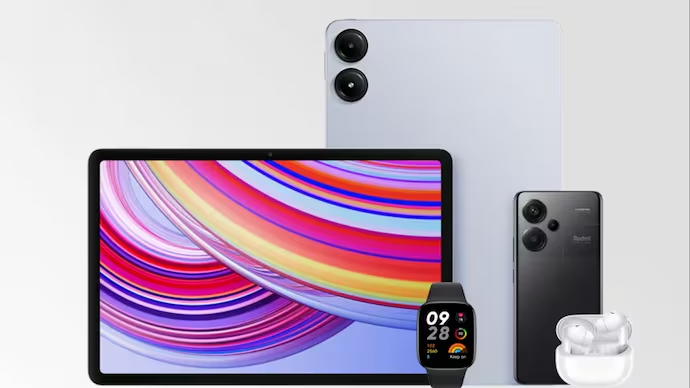
India is the world’s largest smartphone market by shipments and one of the most strategically important markets for consumer-tech firms. For several years Xiaomi rode a volume-led strategy — aggressive pricing, frequent model refreshes, and a sprawling portfolio — to become one of India’s top smartphone brands. But the market has matured: buyers now keep phones longer (three-plus years is becoming common), competition from Samsung, Vivo, and realme intensified in key segments, and the mid-premium and premium segments grew faster than ultra-low-cost devices. As smartphone volumes softened overall, Xiaomi’s reliance on scale exposed it to margin pressure and inventory / product rationalization problems. That is the immediate strategic backdrop for the 2026 reset.
2. The core of the comeback: clearer brand architecture and product focus
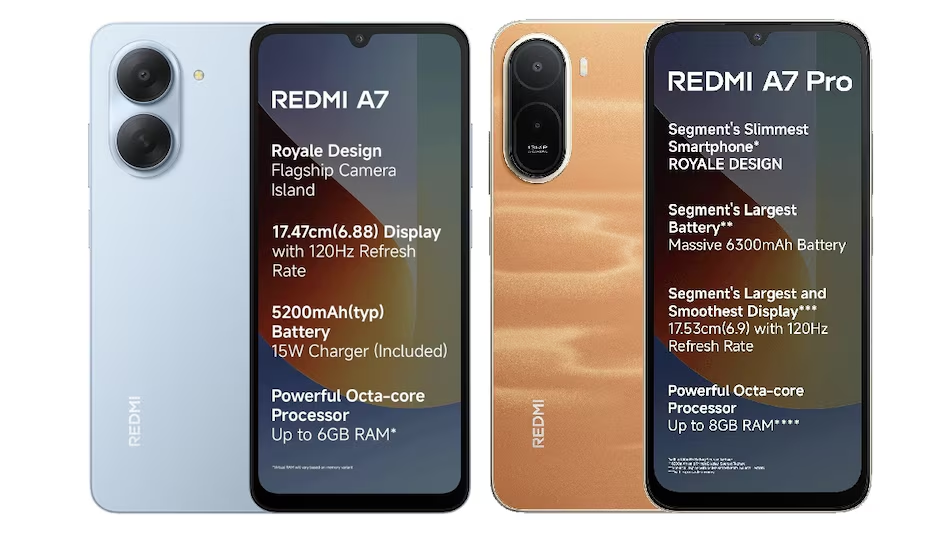
A centerpiece of Xiaomi’s plan is a simplified, tiered brand strategy: keep Redmi as the mainstream/value workhorse, position Xiaomi-branded phones for the premium segment, and retain POCO for the youth / internet-first audience. This is accompanied by focusing flagship efforts (and marketing muscle) on series that shape market perception — notably the Redmi Note family in India, which historically drives volume and sets expectations. But the emphasis is shifting from “specs race” (highest megapixels, biggest RAM numbers) to “experience and longevity:” better camera tuning, battery life and thermal efficiency, and — crucially — longer software support (Xiaomi is pledging multi-year OS and security updates for key models). This change acknowledges buyers are holding devices longer and increasingly value a dependable experience over headline specs.
Why this matters: Brands that previously competed only on price must now deliver sustained value over device lifetimes. If executed well, this could arrest churn, deepen brand loyalty, and improve lifetime revenue per user (service, accessories, repeat premium upgrades).
3. Bigger push from the global arm: resources, R&D, and portfolio imports
Multiple reports indicate Xiaomi’s global headquarters has committed more resources to India in 2026 — not just marketing money, but product pipeline allocation, engineering support, and executive attention. Practically, this means HQ will accelerate India-appropriate product variants (some models will get India-specific design/features), make more IoT and ecosystem products available for Indian certification, and selectively export higher-tier flagships for local launch. In short: India is moving up the priority list at HQ.
What ‘global arm’ support looks like in practice:
- Prioritized chipset allocations and launch windows for key models destined for India (helps match launches against competitors).
- R&D/design support to localize software features and UI tweaks for Indian consumers (camera modes, language support, payments integrations).
- Faster approvals to bring China-market IoT categories into India (robotic vacuums, air purifiers, smart appliances), when local certification and supply chain conditions are met.
4. The non-phone play: IoT, TVs, tablets, wearables — diversification as defense
Xiaomi’s core insight for 2026 is that smartphones alone can no longer shoulder growth predictions. So the comeback is not only about phones — it’s an “ecosystem” push. Xiaomi wants to introduce a larger share of the roughly 200+ product categories it sells in China into India, with tablets, smart TVs, wearables, audio, smart-home gear, and home appliances front and center. The reasoning is twofold:
- IoT and home products carry higher gross margins and allow recurring revenue through services and accessories.
- A broader ecosystem deepens user lock-in — a TV, a tablet, and smart-home devices that all connect to the same UI and services make the smartphone the hub, thereby raising the lifetime value of each user.
Examples of near-term bets:
- Tablets (to capture post-pandemic work/learning demand and replace lower-end laptops).
- TVs and soundbars (India’s smart TV penetration is rising; Xiaomi already competes here and plans to expand SKUs).
- Robot vacuums and home appliances (long tail categories that can be localized and sold through both online and offline retail partnerships).
5. Operational changes: leadership, zones, and online optimization
A comeback at scale requires organizational surgery. Xiaomi India has reportedly restructured leadership and created zonal units to sharpen execution across the country. It has also made senior hires and shuffled responsibilities to improve online performance and channel coordination. On the online front, Xiaomi appointed leaders specifically to oversee that channel — not surprising, because online promotions, flash sales, and marketplace relationships determine much of the volume in India’s smartphone value tiers. These internal steps indicate a seriousness about execution, not only product.
Why zoning matters: India is not a monolith — urban metros, tier-2 towns, and rural districts show very different price elasticity, carrier behavior, and accessory consumption. Zonal units allow Xiaomi to tailor SKUs, pricing, advertising creatives, and distribution priorities by region.
6. The premium pivot: chasing higher ASPs (average selling prices)
Multiple stories suggest Xiaomi is pushing into the mid-premium and premium bracket with more focus and with flagships designed to justify higher ASPs. This is sensible: premium devices deliver higher margins and help rebuild brand prestige, which in turn lifts the desirability of the entire portfolio (a halo effect). Xiaomi’s approach appears two-pronged: (a) bring Xiaomi-branded premium phones with distinctive industrial design and imaging partnerships, and (b) preserve Redmi’s high-volume appeal but with clearer segmentation so it doesn’t cannibalize the premium lineup.
Risk & reward: The reward is better profitability and healthier channel relationships (retailers like higher-ticket SKUs). The risk is that premium buyers in India are brand-conscious and may default to incumbents (Apple, Samsung, and to an extent OnePlus) unless Xiaomi can deliver not just specs but brand trust and distinctive experiences.
7. Software support and device longevity as a competitive lever
One of the most concrete shifts is Xiaomi’s public pledge to extend OS and security updates for key devices (four OS updates and six years of security patches for important models were flagged in recent coverage). That’s a meaningful differentiation in a market where long-term software updates have been an inconsistent promise from various Android OEMs. Longer update promises help with resale value, user trust, and the perception of devices as long-term investments rather than consumables. It also reduces churn and makes users more likely to buy into Xiaomi’s ecosystem for accessories and IoT devices.
8. Marketing and product storytelling: from specs to experience
Xiaomi’s product messaging in 2026 — per multiple device launch reports — is shifting away from chasing raw spec ceilings and toward “real-world” experience: battery endurance, steady imaging, design durability, and sustained performance. This is a conscious marketing decision because Indian consumers are increasingly experience-driven: they care about camera output as it looks in day-to-day use, not only sensor MP counts, and they care about a phone that remains fluid two years after purchase. This storytelling shift is visible in how the Redmi Note 15 was positioned: long-term updates, battery chemistry improvements, and display quality were emphasized rather than one-upmanship in benchmark scores.
9. Regulatory and geopolitical tailwinds: improving India–China ties
Reports have signaled an easing in India–China political dynamics compared to the previous few years. For Xiaomi, that’s non-trivial: it reduces political friction, helps with approvals for product imports and investments, and makes local ecosystem partnerships easier. The company could find it simpler to transfer products and know-how from China to India, and the broader tone may make Indian retail and partners more comfortable working with Chinese-headquartered OEMs again. That said, regulatory scrutiny and data-localization expectations remain — Xiaomi will still need to demonstrate local compliance and trust-building measures.
10. Challenges and headwinds
A comeback is easier written than executed. Xiaomi faces several material challenges:
- Brand perception in premium segments. Moving upscale requires time and marketing investment to shift perceptions in the minds of buyers who equate premium with Apple or Samsung. Single-device upgrades won’t be enough — Xiaomi must deliver a sequence of class-leading products and service experiences.
- Retail and channel complexity. Offline retail remains crucial in India. Xiaomi must convince retailers that stocking higher-priced Xiaomi devices beats stocking other brands; that needs margins, marketing, and reliable stock. The zonal restructure aims to address this, but execution risk is real.
- Differentiation in IoT. Importing 200+ product categories from China is an opportunity, but many categories (robot vacuums, air purifiers) already have incumbents or local players. Xiaomi must localize features, pricing, after-sales service, and establish trust — especially for home appliances where reliability matters.
- Supply chain and certification. Many new categories require BIS or other certifications, local testing, and post-sales service networks. Speed here matters; delays erode first-mover advantage.
- Macro demand dynamics. If smartphone demand stays weak or consumers delay upgrades further, even a well-executed product strategy could face slower sales growth.
11. What success would look like (metrics and signals to watch)
If Xiaomi’s comeback plan is working, we should see:
- A rebound in smartphone market share in the mid-premium and premium segments (measured by IDC/Counterpoint quarterly reports).
- Higher ASPs for Xiaomi India and better channel inventory turns.
- Faster and broader launches of IoT and home categories, with visible revenue contribution from non-phone devices.
- Improved Net Promoter Scores (NPS) and brand perception surveys, especially among urban premium buyers.
- Evidence of fewer supply/stock-outs during launches and stronger offline availability in tier-2/tier-3 markets.
12. Competitive implications for the market
A resurgent Xiaomi — backed by HQ and diversified beyond phones — would intensify competition on three fronts:
- Price/value competition in the mainstream segment (still driven by Redmi).
- Feature and design competition in the mid-premium space as Xiaomi tries to out-deliver rivals on imaging and software support.
- IoT/TV/appliance wars as Xiaomi expands its portfolio and forces incumbents to respond with local price cuts or premium demonstrations (e.g., smart home bundles). For retailers and channels, Xiaomi’s breadth could be a double-edged sword: more reasons to prefer Xiaomi shelves, but also more SKUs to manage.
13. What consumers should expect
For Indian buyers, the 2026 Xiaomi reset should translate to:
- Better long-term software support on selected devices (longer OS/security updates).
- More India-specific variants and features (camera modes, regional language support).
- Wider availability of Xiaomi’s IoT products in mainstream retail and e-commerce.
- A clearer product ladder (Redmi for value, Xiaomi for premium, POCO for youthful devices), making it easier to choose based on budget and intent.
14. Bottom line: realistic optimism
Xiaomi’s 2026 comeback is both necessary and plausible. The company has three advantages: an established distribution footprint, a large ecosystem of products and suppliers, and renewed prioritization from global HQ. If Xiaomi can execute on localized product design, make its premium products feel genuinely premium, and scale non-phone categories with after-sales assurances, it can reassert itself strongly in India.
That said, the path is neither automatic nor painless. Market dynamics (buyers holding devices longer), tougher competition in premium brackets, and the operational complexity of importing and localizing many product categories are real constraints. Execution — not intention — will decide whether Xiaomi returns to being the multiproduct force it once was in India or becomes just another big brand trying to diversify in a crowded market.