Daksh Pandey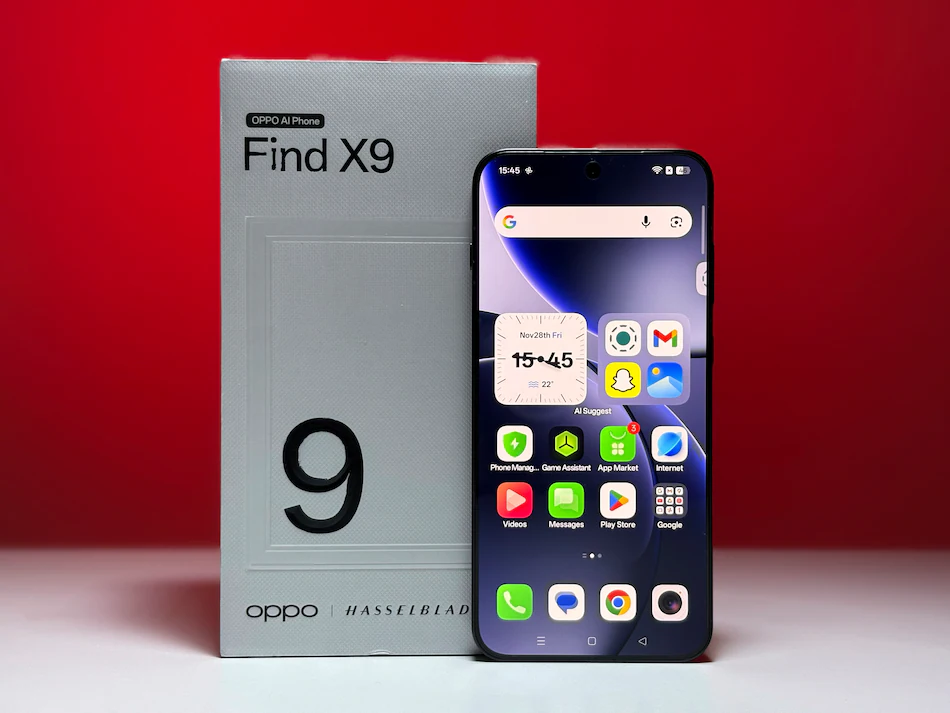
The OPPO Find X9 series came out and people are talking about it. The main thing that got everyones attention is that these phones are supposed to be really powerful and have cameras and the battery will last all day. This is not something the company is saying to make the phones sound good. The OPPO Find X9 series really does have bigger batteries. The company also made some choices with the hardware and software to help the battery last longer charge faster and stay safe. This means that the OPPO Find X9 series phones can run for a time on a single charge. In this explanation I will go through how OPPO did this. I will talk about the battery chemistry and the way they packaged it. I will also talk about the charging. How they handled the heat. Then I will discuss the software tricks they used in ColorOS to save power. I will look at what the people who reviewed the phone and the benchmark tests found out. OPPO says this will help the battery longer over the years. I will compare this to what other companiesre doing. I will also give you some tips, on how to make your Find X9 phone battery last longer and work better.
1) The headline numbers — capacity and charging
The main thing that OPPO is talking about is the big batteries in their new phones. The regular Find X9 phone has a battery that’s around 7,025mAh, which is a lot. The Find X9 Pro phone has a bigger battery it is 7,500mAh. OPPO Find X9. Oppo Find X9 Pro phones can charge really fast with a wire it is called 80W SuperVOOC and they can also charge without a wire, which is 50W. These numbers are really good most new phones have batteries that are around 4,500mAh, to 5,500mAh so OPPO Find X9 and OPPO Find X9 Pro phones have a lot more power. 7,000+mAh places the Find X9 Pro in a different class for sheer stored energy.
So why do people care much about battery capacity? The thing is, battery capacity is really simple. The power it can hold the longer your phone will last. More battery power means you can use your phone for a time you can have more things running in the background and you can do more things that use a lot of power.. The problem is big batteries are not perfect. They make your phone thicker and heavier they can get really hot when you charge them. They do not last as long.
OPPO does things a little differently. Of just using a big battery they use a big battery and some smart engineering and software to make those problems not so bad. We will talk more about the choices they made next.
2) Battery chemistry and the “silicon-carbon” story
The Find X9 Pro from OPPO has a kind of battery cell. OPPO calls the Find X9 Pro battery cell a silicon-carbon battery. This is a deal because it means OPPO is moving away from the usual graphite anodes. Instead the Find X9 Pro battery cell uses anode blends that have silicon in them or silicon-carbon composites.
The Find X9 Pro battery cell with silicon can hold a lot lithium than the old graphite ones. This means the Find X9 Pro battery cell can have power in the same size or the same power in a smaller size.
The problem with silicon, in the Find X9 Pro battery cell is that it gets bigger and smaller when it charges and discharges. This causes stress. Makes the Find X9 Pro battery cell lose power faster. Combining silicon with carbon and engineering electrode architecture can capture silicon’s capacity advantages while controlling swelling and cycle wear.
OPPO also highlights internal stacking and layout optimizations — tightening the arrangement of camera modules, the board, and other internals to create more internal volume for a bigger battery without making the phone a brick. That packaging work is an under-appreciated piece of the puzzle: you can’t just drop in a bigger cell unless the internals are reworked. OPPO’s engineering tradeoffs aimed to retain sleekness while crossing the 7,000mAh boundary.
3) Charging architecture and thermal design
Big batteries need to be charged carefully. When you charge big cells like the ones that are over 7,000 milliamperes per hour it can make a lot of heat. This heat is not good for the person using the battery. It is also not good, for how long the battery will last. OPPO makes sure that the batteries charge quickly but safely by using:
• Some charging bricks are really powerful. They have special charging curves, like the 80W SuperVOOC. This means they send a lot of power to the battery at first. Then they slow down as the battery gets fuller. The 80W SuperVOOC is an example of this it charges the battery quickly at the start and then it tapers off.
• Temperature monitoring across the cell and thermal throttling to prevent unsafe heat spikes.
• The system makes sure that the computers brain and graphics card do not work hard when you are charging the battery quickly so the inside of the computer does not get too hot. This helps to reduce the heat that’s inside the computer when you are charging it fast and it is all, about the system controlling the computers brain and the graphics card to limit their activity.
Wireless charging at 50W is provided as well, which is fast for wireless but naturally more thermally constrained than wired topping. OPPO’s thermal stack — vapor chambers, graphite spreaders, and careful component placement — is part of what makes quick charging feasible without unacceptable heat. Multiple reviews note that despite the huge cells, charging times are reasonable (for wired charging) and thermal behavior is acceptably managed, although heavy sustained high-power usage while charging can still cause warmth, as you’d expect.
4) Software and system-level power management (ColorOS’s role)
A big battery is half of what you need. The software is what really matters because it decides how the battery power is used. The OPPO Find X9 series comes with ColorOS 16 which is based on Android 16 in places. This operating system has some features that help save battery power.
• The Find X9 Pro has a feature called adaptive refresh. This means the screen can change how often it updates the picture. It can go from slow to really fast up to 120 times, per second. The Find X9 Pro does this because it wants to save power when it does not need to update the picture that. The Find X9 Pro is smart. Can figure out when to use high frame rates and when it does not need to.
• The background of the apps is managed by ColorOS. It has a smart way of putting apps to sleep. ColorOS looks at how you use the apps and decides which ones are not important if you have not used them in a while. It stops them from waking up when they are not needed. This helps with the ColorOS management of the app background.
• AI workload scheduling: The device makes sure that the AI features are used in a way that groups the times when the computer is working hard instead of having lots of small spikes. This helps keep the part of the device, which is called the SoC working in a way that uses the least amount of energy. The AI workload scheduling does this by planning when the AI features are used. The device can stay in a good state and work well. The AI workload scheduling is important, for the AI features and the SoC.
• Battery health modes: OPPO has modes that help take care of the battery. These modes include charging options. For example you can set the phone to charge slowly or stop charging when the battery is 80 to 90 percent. This is really useful when you charge your phone overnight. It helps keep the battery in shape for a long time. OPPO battery health modes are very helpful because they reduce the wear and tear on the battery.
These software levers are crucial because raw capacity would be wasted if background processes or inefficient display behavior drained the cell quickly. The combined effect is a phone that can deliver multi-day usage in moderate scenarios while still supporting bursts of heavy activity when you need them. (We’ll look at real-world numbers in the next section.)
5) How long things last. What people who reviewed them and did tests have to say about the real world endurance of these things the real world endurance of products and the real world endurance of stuff we use every day.
Numbers and claims are one thing. The real test is how these design choices actually work when you use them every day. The design choices of something, like this are important because they affect how you use the design choices every day. You have to think about how the design choices will work for you when you are using the design choices all the time.
• Synthetic benchmarks: Battery test results (PCMark and similar) for the Find X9 model show endurance in the neighborhood of mid-teens of hours — e.g., PCMark runtimes reported in some outlets are around 16 hours for the standard X9. That’s competitive and aligns with the large 7,000mAh class.
• Reviewer experiences: Multiple professional reviews of the Find X9 Pro report multi-day battery life in realistic mixed-use scenarios. For example, long-term reviewer tests note that the Pro can often last two days for regular users and sometimes extend to three days with moderate use and power-savings enabled. Those results aren’t miracles — they reflect the large capacity plus efficient SoC and display — but they are still notable for doubly large batteries in flagship-class devices.
• Charging impressions: The 80W wired system is really good at giving you a boost even with a big cell. It takes a while to get a charge but you can get a lot of power in just a few minutes like up to 50 or 70 percent. This is because the 80W wired system can move a lot of energy quickly. The 80W wired system is great for when you need a lot of power fast. Wireless charging is also an option it can charge at 50W, which is really good for when you are, at your desk or bedside and you just need a little top-up with the 50W wireless charging.
In short: measured runtimes and reviewer anecdotes align with OPPO’s claims — these phones genuinely extend time between charges compared with typical 4,500–5,000mAh flagships. That’s meaningful day-to-day improvement, not marginal gains.
6) Longevity and capacity retention over years
People often worry that fast charging and using materials, in batteries will make them wear out quickly. OPPO talks about what they want to achieve with the design and how long it should last: the Find X9 battery system is made to work at about 80 percent of its original power after five years of normal use. This is what most companies aim for when they say a battery will last a time and it usually needs a combination of:
• Safer chemistry and stricter formation processes for cells (to reduce early-cycle loss).
• The company uses charging methods that avoid putting much voltage or current on the batteries and this helps to reduce the stress on the batteries. This is important, for charging algorithms to make sure that the batteries are charged safely and that they last a time. The goal of these charging algorithms is to avoid voltage and current profiles and minimize high-stress states on the batteries.
• We need to manage the heat that our devices make when we charge them or use them a lot so the heat does not get much.
• There is software that helps stop charging your devices all the way when you do not need to like when you are charging them overnight.
OPPO’s messaging suggests they’re combining improved cell chemistry (silicon-carbon), refined manufacturing, and software habits to hit that 80%-after-five-years mark. Independent third-party verification over multiple years will be the final arbiter, but the company’s approach matches the techniques battery experts recommend for long life.
7) So I want to know how OPPO finds a balance between the capacity of their phones the weight of the phones and how the phones feel in your hand, which is what people mean by ergonomics when they talk about OPPO phones. I mean OPPO has to make sure their phones have capacity to store all your stuff but they also have to be light enough that you can carry them around easily and they have to feel comfortable to hold which is the ergonomics part of OPPO phones. How does OPPO do that with their phones that is what I am curious, about, how OPPO manages to balance all these things.
A bigger battery usually means a phone. The design teams, at OPPO found ways to reduce the weight and thickness of the phone that you can notice by:
• Thinner bezels and tighter stacking to reclaim volume for the battery.
• Using higher-energy-density materials so more milliamp-hours fit in similar physical space.
• The people who made this thing were really careful with the design of the chassis. They wanted to make sure the center of mass is in a spot so it feels good when you hold it with one hand. This is important because the cells inside are of heavy but the chassis design helps with that so the phone, with these cells does not feel too heavy for one-handed use of the phone.
Compared to a large-battery “power bomb” from a few years back where phones got thick and heavy, the Find X9s keep a premium feel and still deliver massive capacity. That makes them more acceptable for mainstream users who don’t want a pocket-weight penalty in exchange for better battery life.
8) Comparisons: this is where the Find X9 fits into the market. The Find X9 is a phone that people will compare to phones. So how does the Find X9 stack up against the competition? The Find X9 has some features that make it stand out from the crowd. When you look at the Find X9 you can see that it is a choice. The Find X9 is something that people will consider when they are looking for a phone.
If you are comparing the Find X9 series, with phones that are out now the main things to look at are:
• Capacity: A lot of high-end phones have batteries that’re around 4,500 to 5,500mAh. The Find X9 is different. It has a battery that is around 7,000, to 7,500mAh. This means the Find X9 phone is a little heavier. The Find X9 phone lasts a lot longer.
• The charging speed is 80W when you use a wire. This is pretty good. It is not the fastest you can get. It is faster than a lot of other popular phones. Some phones can charge faster, up to 100 or 240W but they are not very common. The 80W charging speed of this phone is a balance because it helps keep the phone from getting too hot. The phone also charges wirelessly at 50W, which’s one of the faster wireless charging speeds you can find.
• SoC efficiency: The Find X9 uses efficient flagship silicon (for many markets the Dimensity 9500 or similar) which helps battery life. Efficient silicon + LTPO displays + big battery = excellent endurance.
So what does this mean for you? If you want a phone that can last for days on a charge and you do not mind if it is a little heavy or not the thinnest then the Find X9 Pro is a great choice when it comes to flagship phones, like the Find X9 Pro.
9) Practical tips: getting the most runtime and lifetime from a Find X9
If you buy a Find X9 or a Find X9 Pro here are some tips that really work to help you get the most out of your battery life and keep your Find X9 or Find X9 Pro battery healthy for a long time.
When you charge your phone overnight it is an idea to use protective charging. If you are going to charge your phone while you sleep you should enable the limit to 80 percent feature on your phone. This feature is also called optimized charging. The reason, for this is that reducing the time your phone spends at 100 percent charge will really help to slow down the aging of your phones battery over time. This is because calendar aging happens when your phone is fully charged for a time so protective charging helps to prevent this from happening to your phone.
You should not leave your phone in hot places. This means you should not charge your phone or play games on it when it is very hot. Do not leave your phone in a car. Do not leave your phone outside in the sun when it is charging. This will help your phone longer. Your phone will degrade faster if you charge it and play games on it when it is very hot.
You should top up your lithium cells often. This means you do not have to let them go all the way down before you charge them again. Lithium cells like it when you charge them a bit at a time. They do not like it when you use them all the way up and then charge them all the way up. If you can try to charge your lithium cells when they’re not completely empty. This is better for them. They will last longer. Short top-ups are okay. They are actually good, for your lithium cells.
You should use the charger that comes with your phone or one that is approved by OPPO. The fast charging on OPPO phones works well with the right charger because it is set up to work with the battery inside the phone. If you use a charger from a company it might not work as well as the one from OPPO. This is because OPPOs fast charging uses settings that are just right for the battery, in your phone.
To save battery life you can enable refresh or lower the peak Hz, on your display. You can set your display to auto LTPO. You can manually cap it at 120 to 60 or even lower when you do not need high frame rates for the things you are doing on your computer. This will save you runtime without affecting the way you normally use your computer. Adaptive refresh is really useful because it saves battery life. Your display will still work fine with refresh or lower peak Hz.
Let the software take care of the background apps. I think ColorOS is really good at managing apps with its learning-based system. Unless you have a reason to keep an app running you should just let ColorOS handle it. The manual settings that say “always allowed” are for special cases not, for everything.
Following these lifestyle and software settings helps you enjoy the almost-two-day runtimes some reviewers report while also protecting the battery over years.
10) Tradeoffs and realistic expectations
No product is perfect. There are some things to remember when you are thinking about a product:
• Full-charge time still takes longer: A 7,500mAh cell simply needs more energy; even at 80W, filling from 0→100 will take longer than a smaller cell with a similar peak charging rate. But the quick 0→50–70% top-ups are fast enough to be practical.
• Heat, from use: When you play games for a long time or use the camera a lot while the phone is charging it will get hot. The OPPO phone has a design to help with this heat problem but it cannot stop it completely because of how things work with heat and energy. The OPPO phones thermal design helps to reduce the heat from use such as sustained gaming or long camera sessions while charging but the OPPO phone cannot make the heat go away completely.
• Real-world variability: Battery life depends hugely on screen brightness, connectivity (5G vs Wi-Fi), location services, and the apps you run. The multi-day claims generally apply to moderate use — if you’re gaming for hours daily, expect shorter runtimes.
11) The broader engineering picture: integrated design wins
What is notable about OPPOs approach is that the battery is not something they thought about later and then added to the camera or the brain of the phone. OPPO went back to the drawing board. Changed the way things are laid out inside the phone. They looked at the kind of cells they use for the battery how they charge the battery, how they keep the phone cool the display technology and the software that runs the phone. The result is that OPPOs phone has a lot battery power without being really big and bulky which is what happens when a phone is made just to have a big battery. OPPOs phone has a balance of battery power and size which is really important, for a phone. The battery is a part of the phone not just an afterthought and OPPO has done a good job of making it work well with the rest of the phone. This type of systems engineering is really important. It is about making sure that packaging and chemistry and charging and thermals and the operating system all work together. When the operating system and packaging and chemistry and charging and thermals work together like that it makes flagship performance and multi-day endurance possible at the time. Systems engineering like this is what makes it all happen for systems, like these.
It’s also a realistic answer to consumer behavior: people want longer battery life more than they want the thinnest possible phone. OPPO is betting that sensible increases in capacity, combined with smart software, will deliver a better everyday experience. Early evidence from reviews and benchmarks suggests that bet is paying off.
12) So what is the final verdict. Who should think about getting a Find X9?
Pick the Find X9 or X9 Pro if:
• You want a phone that can last for days on a single charge and you do not want to give up having really good cameras and fast performance on that phone the multi-day battery life is important, to you.
• You want the Galaxy phone to have wired charging and fast wireless charging that is balanced for the safety of the Galaxy phone.
• I like it when my phone can take care of things on its own so I do not have to charge it all the time. This way my phone can handle the background work for the phone. I can use the phone without worrying about the phone running out of power. I think it is better, for the phone.
• I am fine, with a device that’s a bit heavier or taller because it means the battery will last a lot longer.
If you prioritize the absolute slimmest phone or insist on the shortest possible full-charge times regardless of battery stress, there are alternatives — but they trade everyday runtime for form factor or extreme peak charging speeds that can accelerate wear.