Daksh Pandey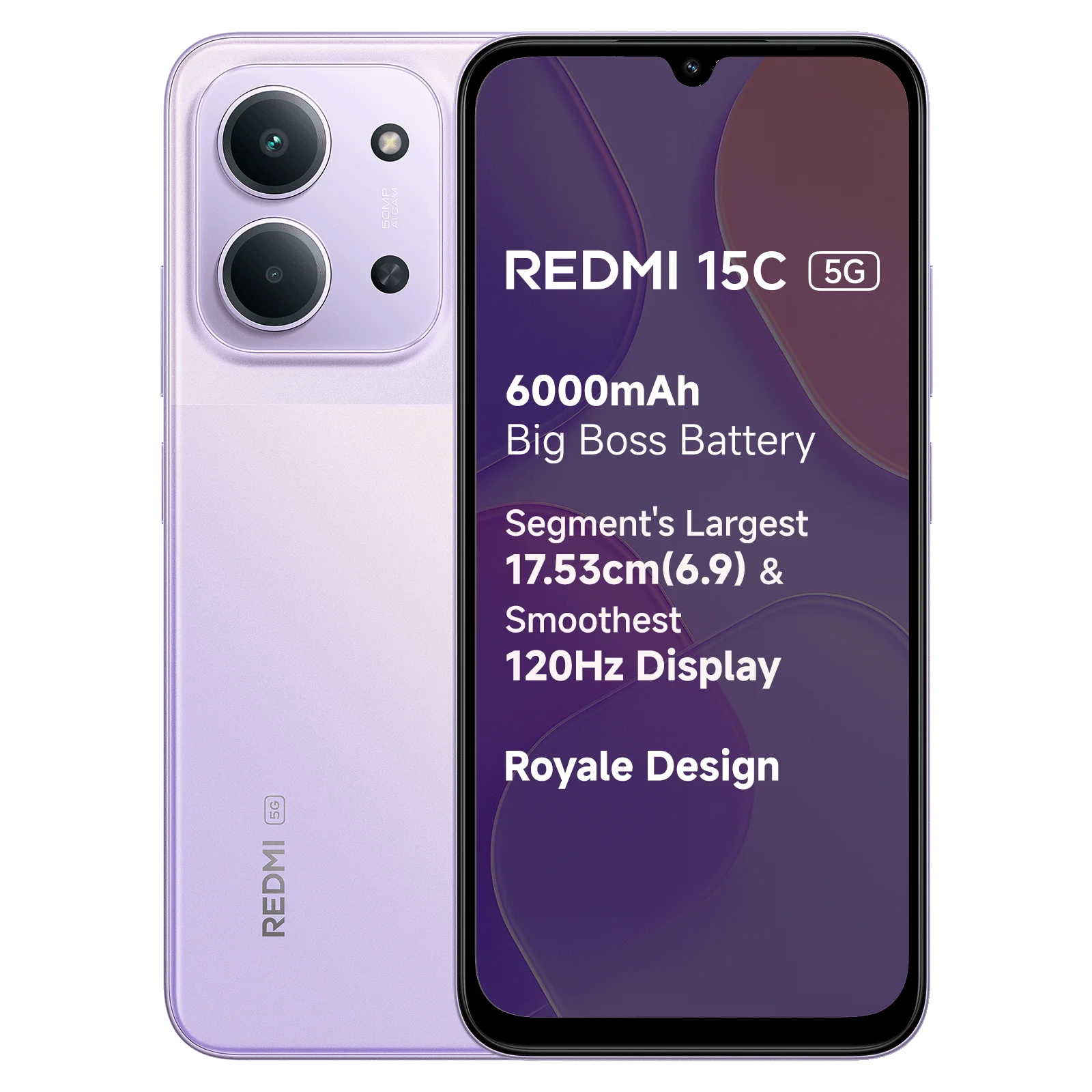
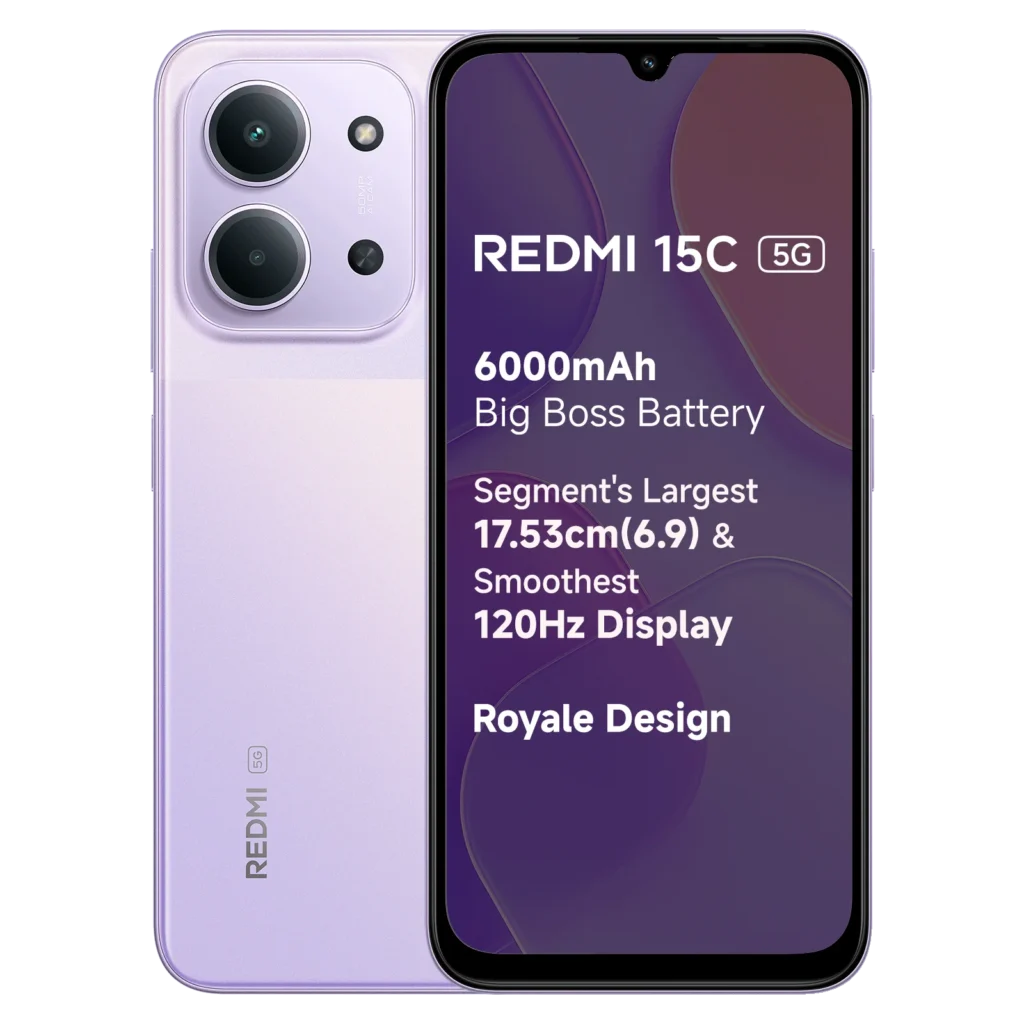
A review describing the Redmi 15C 5G as a “5G marathon runner” is basically saying: this phone is built to last long on a charge, stay stable during daily use, and give you reliable 5G without demanding flagship-level money. The same review also hints that the phone is very close to being “perfect” for its segment, but would feel like an outright “no-brainer” if it were slightly cheaper.
What “5G marathon runner” really means
In budget and lower-midrange phones, you usually compromise on at least one of these:
Battery life (especially on 5G)
Everyday smoothness (apps, scrolling, switching)
Thermals (phones heating and slowing down)
Display experience (size/refresh rate/brightness)
Charging speed (too slow for big batteries)
Software stability (bloat, stutter over time)
When a reviewer calls a phone a marathon runner, they’re highlighting that the device performs like a phone that just keeps going all day—and often into the second day—without turning into a laggy mess.
For the Redmi 15C 5G, this “marathon” identity is strongly linked to two things Xiaomi itself emphasizes:
A 6000mAh (typ) battery
A power-efficient 6nm 5G chipset (MediaTek Dimensity 6300)
When you combine a big battery with an efficient processor, the phone doesn’t just last longer—it also tends to stay cooler and maintain consistent performance.
Battery life: the core “marathon” feature
6000mAh is huge for the segment
A 6000mAh battery is larger than what many mainstream phones offer, and it’s the #1 reason the Redmi 15C 5G earns the marathon label. Xiaomi markets the device around this “massive battery” promise.
What it means day-to-day
In practical usage, a phone like this typically shines for users who:
spend hours on YouTube/Instagram
use 5G (which can drain battery faster than 4G depending on coverage)
attend online classes, work calls, or long commutes
want battery security without carrying a power bank
The review’s tone suggests the Redmi 15C 5G delivers that stress-free battery lifestyle, where you’re not always checking your percentage.
33W charging matters more with 6000mAh
A huge battery is great, but charging becomes painful if speed is low. Xiaomi promotes 33W fast charging and even mentions a quick top-up time (e.g., a short window to reach 50%).
The takeaway: even if you drain it, you can recover enough charge quickly to get through the rest of your day.
Everyday performance: “solid,” not “show-off”
A budget phone doesn’t need to win benchmark battles. What most people care about is:
Does it open apps quickly?
Does it scroll smoothly?
Can it handle multiple apps without reloading constantly?
Does it stay usable after months?
The Business Today review specifically frames the Redmi 15C 5G as delivering “solid everyday performance.”
Dimensity 6300: efficiency + 5G in a sensible package
Xiaomi positions the MediaTek Dimensity 6300 as efficient and good for multitasking.
In real terms, that means:
smoother social media browsing
stable video streaming
decent casual gaming (not max settings, but playable)
better battery-per-performance than older budget chips
“Lag-free” claims and long-term feel
Xiaomi also advertises long-term software optimization and a “like-new” experience claim in its product messaging. Treat marketing claims carefully, but it does show what the brand is targeting: stability and smoothness over time, not raw power.
Display: big and fast, made for content
Xiaomi highlights a 6.9-inch display with up to 120Hz refresh rate.
Why this matters
6.9-inch = excellent for videos, reading, and scrolling (and yes, also bulky for smaller hands).
120Hz = smoother scrolling and a more “premium” feel than basic 60Hz budget screens.
For many buyers, this is the “wow” factor in shops: large screen + smooth scrolling + modern design.
The likely trade-off
In budget phones, large high-refresh displays are usually HD+ resolution, not Full HD+. That’s not automatically bad—HD+ is often fine on big displays for YouTube/social use—but sharpness won’t be flagship-level. (The Gadgets 360 report mentions an HD+ panel with 120Hz.)
Design & durability: “budget” that tries not to look budget
Xiaomi markets the Redmi 15C 5G design with terms like sleek/refined styling and also mentions IP64 dust and water resistance.
Why IP rating is meaningful at this price
Even basic water/dust resistance can be a confidence booster:
splashes in rain
dusty environments
accidental light exposure to water (not swimming)
At entry-level pricing, these small durability upgrades can be a real differentiator.
Camera: “good enough” for daily use, not a night photography champ
Budget phone cameras usually follow a pattern:
Daylight photos: decent, shareable
Indoor/low light: softer, noisier
Portrait mode: hit-or-miss edge detection
Video: fine for casual clips, less stable than premium phones
The product listing and some coverage point to a 50MP main camera setup (marketed with AI features).
So when the review calls the phone strong for everyday use, it’s likely not praising it as a camera beast—it’s praising that the camera is reliable enough for most people’s normal shots while the battery and performance carry the main value.
If your top priority is photography (especially low-light), you may want to look at alternatives in the same price band that emphasize image processing, even if they compromise on battery size.
Software and the “daily experience” factor
Most budget-phone dissatisfaction doesn’t come from specs—it comes from:
too many preinstalled apps
ads or notifications
occasional stutters
storage getting full
slow updates
Xiaomi tries to reassure buyers with messaging around long-term smoothness.
Practical advice
If you buy it, you can usually improve the experience a lot by:
uninstalling or disabling bloat apps you don’t use
turning off unnecessary notifications
limiting auto-start/background activity for rarely used apps
keeping at least 15–20% storage free for smoother performance
These steps matter more in the budget segment than in flagships.
5G on a budget: what to expect
A “5G marathon runner” label also hints at something else: practical 5G, not gimmick 5G.
Budget 5G phones can struggle if:
signal is weak (battery drain increases)
modem is inefficient
thermals force performance drops
With a big battery + efficient chipset, the Redmi 15C 5G is positioned to handle real-life 5G usage better than older entry-level options.
If you’re in India, where 5G coverage can vary by area and operator, battery stability becomes a bigger deal than theoretical top speeds.
The “price cut away from perfection” argument
Now to the key line: the review says it’s one price cut away from perfection.
This usually means the phone is very good at what it’s trying to do, but the current price makes buyers hesitate because:
Competitors offer similar performance for less, or
A slightly higher price gets you a noticeably better phone (better camera, AMOLED, FHD+, etc.), or
The current pricing doesn’t align with the compromises (like HD+ on a huge screen, average low-light camera, etc.)
What the Indian pricing looks like
Reports and listings show the Redmi 15C’s India starting prices around ₹12,499 (and other variants above that), depending on RAM/storage and sales.
At ₹12–15k, the market is brutally competitive. A “small” cut—sometimes even ₹1,000–₹2,000—can completely flip the recommendation.
Why a discount changes everything
When the price drops:
compromises feel more acceptable
buyers stop comparing it to stronger ₹15–17k phones and instead compare it to weaker ₹10–12k phones
the phone becomes the “easy choice” for battery + screen + 5G
That’s why reviewers often say “great phone, but…” and the “but” is almost always value positioning.
Who should buy the Redmi 15C 5G
Based on the “marathon runner” identity and official positioning, this phone is a strong fit for:
1) Battery-first users
If you hate charging anxiety, commute a lot, or can’t charge frequently, 6000mAh is a big win.
2) Students and casual users
People who mainly do:
classes + notes
YouTube + social media
calls + WhatsApp
occasional light gaming
3) Users who want a big screen experience
6.9-inch + 120Hz is made for content consumption.
4) Anyone wanting “safe” 5G entry
Not the fastest phone, but a stable daily driver with 5G + strong endurance.
Who should skip it (or wait for a price drop)
1) Camera-focused buyers
If photography is your #1 priority, you may find better camera processing in other models around this price, especially in low light. (The Redmi’s camera is likely “good enough,” not “best-in-class.”)
2) People who want compact phones
6.9 inches is huge. Great for media, not great for one-hand use.
3) Power users and heavy gamers
The Dimensity 6300 is designed for efficiency and everyday smoothness—not maximum gaming performance.
4) Buyers who live in the “value comparison zone”
If a competing phone is discounted and offers something major—like AMOLED, better cameras, or FHD+—you might feel the Redmi 15C 5G should be cheaper to justify its strengths.
How to judge “value” smartly during sales
If you’re buying in India, here’s a simple way to decide if it’s worth it today:
Buy it now if:
you’re getting it around the lowest sale price you’re seeing (especially near the base ₹12,499 mark or lower during deals)
your top priorities are battery + big smooth display + stable daily use
Wait if:
the price is close to phones that offer clear upgrades (AMOLED, better camera systems, higher resolution display)
you don’t urgently need a phone and can wait for the next sale cycle (price cuts tend to arrive quickly in this segment)
This matches the review’s idea: it’s already very good, but a little cheaper would make it a “perfect” recommendation.
Calling the Redmi 15C 5G a “5G marathon runner” is a compliment aimed at what matters most for budget buyers: battery endurance + dependable daily performance. With a 6000mAh battery, 33W fast charging, a large 120Hz display, and an efficient Dimensity 6300 5G chip, the phone is tuned for people who want a reliable all-day device rather than a flashy spec monster.
The review’s “one price cut away from perfection” line makes sense because the ₹12k–₹15k segment is extremely competitive—small discounts dramatically change what feels like the best deal.