Daksh Pandey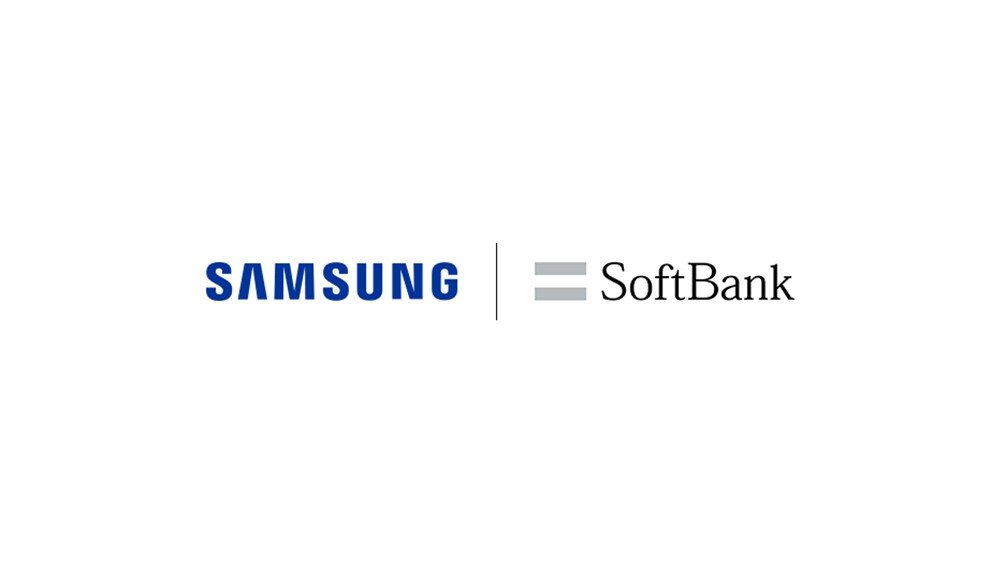
The collaboration of Samsung Electronics and SoftBank Corp. on AI-RAN (Artificial Intelligence for the Radio Access Network) is an indication of where the telecommunication industry is heading in the future, where telecommunication networks will not only be faster but also more autonomous and efficient and “software + AI-native” from the radio access network upwards. In October 2025, both parties announced that an MoU had been reached for joint research and development in next-generation telecommunication technologies, extending to 6G and various innovations in AI-RAN.
Following are the detailed, step-by-step descriptions of what this collaboration entails, what exactly the term “AI-RAN” means, the four focus areas, the importance of these, and the ensuing challenges that lie ahead.
1) Why this collaboration is important: the “cost + complexity” wall in telecom
The cell networks have been growing by adding more spectrum, more cell sites with more antennas, as well as more processing power in the core network. This is still true—but now they have hit a wall of:
“Exploding complexity” continues with 5G networks’ vast adoption of massive MIMO, beam-forming, network slicing, virtualization, and multi-band coordination, and this is expected to continue with advancements in 6G networks’ support for
Increasing operational expense (OPEX): The operation, management, and debugging process of an evolved RAN also involves extensive teams and high-priced tools.
Energy pressure: The energy consumption of RAN is among the largest expenses for operators, and energy efficiency is gaining importance on their strategic agenda.
New service requirements: Cloud gaming, XR, industrial automation, and “always-on” AI services require more Reliable Low Latency.
Why AI has appeal in this context is not as a buzzword or a fashionable term but rather as a tool that makes a network self-optimizing, self-healing, and resource-aware in particular within the RAN, which is the most operationally painful part of the mobile network.
An example of such a partnership is Samsung + SoftBank. Here, Samsung has strong RAN product and research prowess, while SoftBank has operational scale that realizes that RAN innovation can be aggressive.
2) What AI-RAN actually means (and why it’s bigger than “AI in telecom”)
RAN (Radio Access Network) refers to the component of the mobile network that connects your phone to the core network of your mobile operator through cell towers, which are also known as base stations. RAN comprises functionalities such as:
Handling radio waves in the air
Scheduling users (who gets radio resources when)
Managing interference and mobility (handovers as you move)
Modulation/coding according to radio conditions
Coordinating antennas
These are fast, complex algorithms with high timing sensitivity, particularly in Layer 1. A large amount of this functionality has been accomplished in hardware or highly optimized software.
AI-RAN encompasses various terms now generally distinguished through different “flavors” of how AI interacts with the RAN. Four areas of potential collaborative research in R&D are specifically highlighted by SoftBank and Samsung:
AI for RAN
AI and RAN
Large Telecom Model (LTM)
RCR Wireless News
This is significant because it helps to explain that “AI-RAN is much more than ‘use AI to tune parameters.’” This is because it also encompasses other architectural concepts, for example, RAN as an AI platform and AI as a telecom workload.
3) The MoU: What Samsung and SoftBank said that they will do
From the announcements, the core is:
They will together propose and market the R&D in the above four areas.
The objective is to speed up innovation towards the next generation network infrastructure and associate research results with deployment and new use cases.
The newsroom of Samsung describes this as joint research on 6G and AI RAN, and the news release of SoftBank puts emphasis on research categories.
Think of this as a “blueprint” collaboration: it’s not just a supplier and equipment sales deal, but rather an operator and supplier who want to define what AI-native RAN should look like.
4) Area #1 — 6G: why AI-RAN and 6G are being linked together
Although the development of 6G has just begun, the following are the areas the industry is considering:
New Frequency Bands
New air interface technologies
Increased sensing + positioning capabilities
More integrated terrestrial/non-terrestrial networks
Increased use of AI assistance in design and operation
One reason that 6G is linked to AI is that “the radio environment is becoming too complex to be controlled” with heuristically designed rules on their own. “If the network can learn patterns from actual experience—traffic patterns, mobility patterns, patterns of interference and energy consumption, it can adjust and optimize better,” Lidl argues.
One of the coverage articles mentions the possible new bands in 6G research such as the 7 GHz area, and the Samsung-SoftBank collaboration is set against this background of the “6G standardization ramp.”
So, in the partnership, 6G could include two tracks, namely:
Analyzing candidate technologies that incorporate AI in their design.
Facilitating a smooth evolution of current AI-RAN strengths into 6G networks of tomorrow.
5) Area #2 – AI for RAN: Applying AI to optimize the RAN functionality
“AI for RAN” is the most obvious classification because it is merely applying AI to existing RAN functions. This includes:
a) Smarter scheduling and resource allocation
Scheduling determines radio resource allocation to users on a millisecond or faster cycle. AI could assist:
Make predictions about sudden increases in traffic volume
Pro-actively allocate resources
Minimize latency spikes
Increase fairness without degrading throughput
b) Improved channel estimation and beam management
In massive MIMO, it is very important to estimate the channel (radio conditions) and control beams. Sometimes, AI techniques are able to discover patterns that are not discovered by traditional methods of estimation.
c) Mobility and Handover Optimization
Handovers (Switching Towers) introduce losses and latency spikes. AI can analyze movement behaviors and set up optimal threshold levels dynamically.
d) Energy optimization
Artificial intelligence can turn off carriers or components during low traffic, manage sleep modes, and prevent waste to improve battery life—without affecting user experience.
The idea is to move the RAN from a state of ‘static config + periodic human tuning’ to ‘continuous optimization’.
This is exactly how it has been framed in various articles:
“.. . the cooperation has the goal of applying AI in order to improve the performance of RAN, orchestration, and operations in 5G
6) Area #3 – AI/RAN: When the RAN becomes an AI compute platform
“AI and RAN” is quite an revolutionary concept – instead of AI being used for the optimization of RAN, the RAN environment itself can serve as an operational environment for AI tasks.
What would make anyone do that?
Latency: If it is possible to perform inferences near the cell site (-edge location), then it is possible to offer latency-effective AI applications (AR displays, manufacturing automation vision, safety apps).
Bandwidth: Transmitting the raw data to a remote cloud is expensive, and edge computing alleviates the backhaul congestion.
Utilization: The usage of RAN compute is not always optimal and can benefit from resource sharing for network functions and AI workloads.
However, doing this isn’t easy, as the telecom baseband processing has very strict real-time requirements. The concept of ‘AI & RAN’ essentially means:
Advanced virtualization and containerization
Priority scheduling in such a way that radio tasks always get higher priority than
Hardware acceleration choices (GPU/NPUs
Dynamic Orchestration in Remote Locations
Let me
At this point, AI-RAN appears to be a distributed cloud with the radio being one of its primary usages.
Industry chatter concerning AI-RAN often suggests that it is simply a matter of when, not if, that sort of GPU compute will show up in base stations at scale—analysts tend to have differing opinions on this issue.
7) Area #4 — Large Telecom Model (LTM): “foundation model” thinking for networks
The press releases by SoftBank, as well as related news, mention the Large Telecom Model (LTM), which is a kind of foundation model in the style of Generative AI, but
If you apply this to telecommunication-speak, an LTM could be applied to:
Telecommunications
a) Network operations copilots
Summarize alarms and logs
- Personal issues at home:
Suggest changes to the configuration
Produce Change Plans & Rollback Plans
b) Design and planning assistance
Forecast capacity requirements by region
Simulate Performance Effects
Suggest site upgrade or refarming of the spectrum
c) Automated optimization processes
Produce self-optimizing networks (SON) policies
Optimize multiple vendor coordination layers
Break down high-level goals (“decrease dropped calls in these districts”) into actionables
Telecoms twist: the data that telecoms maintain as operational data is sensitive. This data includes topology information, counters, logs, subscription mobility data, configurations. An LTM will add value if it can infer over all that data safely.
According to one report, SoftBank’s LTM was built in the context of SoftBank’s network data to aid in the design and management of cellular networks—a perfect exemplification of AI “operator-native foundations.”
SDxC
8) What each partner may contribute to the relationship
Samsung’s likely contributions
RAN HW/SW expertise (basestation, massive MIMO, virtualized RAN solutions)
The Strengths of Samsung Research in Next-Generation Wireless and AI-RAN Technologies
Capacity to productize outcomes into deployable infrastructures
Contributions from SoftBank
Live network environments and operational data
Requirements for operator-grade systems: reliability, robustness
A call to translate research into field validation and commercial viability
It is significant that this vendor-operator combination, if not the AI models being developed and validated in the lab, can fail in the “messy middle” of the actual networks due to hardware peculiarities, the affects of weather, and other factors.
9) The ‘7GHz’ aspect and what it may foretell
Some individuals might be
There are telecom industry reports that the topics for the earlier stages of 6G research include the use of new bands like 7 GHz, and that tests and optimization in these bands are a part of the innovation process.
Why is this band of frequencies of interest to engineers?
One reason is that
It may potentially provide a solution that offers a trade-off between sub-6 GHz range and mmWave bandwidth.
It could support broad channels with better propagation qualities than mmWave, but it still requires sophisticated radio technology.
In many cases, new bands represent new challenges in interference management, beamforming, and device ecosystems, in which AI optimization can make a difference.
Even if 7GHz is ultimately simply one slice of 6G, this is a good “frontier” band to trial AI control loops and find out what does and does not work.
10) Success:
The result of successfully implementing such a measure,
Such a partnership may generate a number of outputs. However, the most significant of these include:
a) KPI improvements in actual settings
Increased throughput per cell
Enhanced cell-edge support
Lower latency variation (jitter)
Reduced handover failure rate
Less energy per bit transmitted
b) Automation regarding operational tasks that minimize human involvement
Shorter fault isolation time (MTTR down)
More accuracy without manual tuning of parameters until
Automated remediation actions with guardrails
c) A route to commercialization
A Deployable AI-RAN Software Module
An interface contribution that’s standard (so not prop-rietary lock-in)
RAN and edge AI workload-validated architecture to share compute resources
Several write-ups highlight that the aim is to relate research outcomes to commercialization and application and are not merely to publish papers.
11) The hard parts: why AI-RAN is not “plug and play”
AI-RAN: This seems like an inevitability, although the execution isn’t easy. Challenges
a) Real-time constraints
The functions implemented by RAN operate with a very tight time budget. Adding unpredictable delay from AI inference could impact radio performance.
Implication: The radio stack has to be stable, and it’s imperative that either lightweight or deterministic or isolated systems are developed.
b) Data Quality And Labeling
The operators have vast amounts of data, but it is messy, disorganized, and largely unlabeled for use with machine learning.
Implication: A lot of the tasks are pipelining, cleaning up the telemetry, getting the logs in sync, and determining what the ground truth is.
c. Generalization & drift
A model developed in one city could perform differently in another because of architectural density or mobility. Networks are constantly evolving.
Imlication: Continuous learning and rollback also become important.
d) Security and Privacy
Telecom data is sensitive. New attack surfaces can be introduced by AI systems, such as request injection in ops copilots and model poisoning.
Impact of implication: Governance, isolation, and audits must be imbued right from inception.
e) Boundaries in Vendor/Operator
If the AI suggests adjusting the parameter and this results in an outage, what party will be liable for the responsibility of the outage?
implication: The implication is that the operators would require strong guardrails, explainability, and staged rollout
This explains the value that operator and vendor co-development (e.g. SoftBank + Samsung) brings: it simply forces these realities into the development process.
12) How this relates to larger AI-RAN momentum
SoftBank has been engaged in other AI-RAN related projects aside from the above MoU. This includes industry efforts, as well as assessments of AI-RAN commercial viability.
The company is also highlighting partnerships with AI-RAN in the 6G era. Other partnerships announced in late 2025 also belong to this category.
Therefore, this kind of announcement is merely part of an ever-expanding web, as telecom hardware providers, network operators, and computing companies compete to establish what constitutes “the right” architecture, while preemption by standards and scale is still possible. 13) What it could mean for users and the industry (India/global view) Although this collaboration is primarily about Japan + Samsung’s worldwide R&D effort, its aftereffects can be global: Improved user experiences: less “dropping” of calls or connections, smoother online media streaming, and consistent network speeds in high-density More cost-effective network expansion: With AI-driven improvements in spectrum efficiency and reduced OPEX, operators will find it more economical to expand the network. Faster rollout of enhanced services: edge AI + network could provide a platform for the development of novel enterprise services such as smart factories, logistics, or safety services. 6G Readiness: An early alignment in AI-native architectures could allow for acceleration in the transition from standardization to implementation. For example, in Indian markets, which are highly sensitive to capacity expansion, costs, and operational simplicity, innovative approaches such as AI-RAN that offer significant cost per GB and quality enhancements could see huge potential. (Of course, this will depend on support in the device sector and by the operators.) 14) Bottom line The MoU between Samsung and SoftBank is an Investment-Thought that AI would not remain an ‘add-on’ to future networks. Rather, AI would more and more become: A control layer for optimizing RAN behavior (“AI for RAN”), a native workload able to share the same infrastructure as the RAN (“AI & RAN”), A foundation model type AI designed to operate a telecommunication network (“Large Telecom Model”), all the while keeping an eye on how these capabilities translate into the 6G era. +2 Samsung Global Newsroom 2 Providing that they are able to demonstrate actual improvements in KPIs and safe automation in a live scenario, such a collaboration may prove instrumental in anchoring a vision of “AI-native telecom” in reality, as opposed to mere marketing.