Daksh Pandey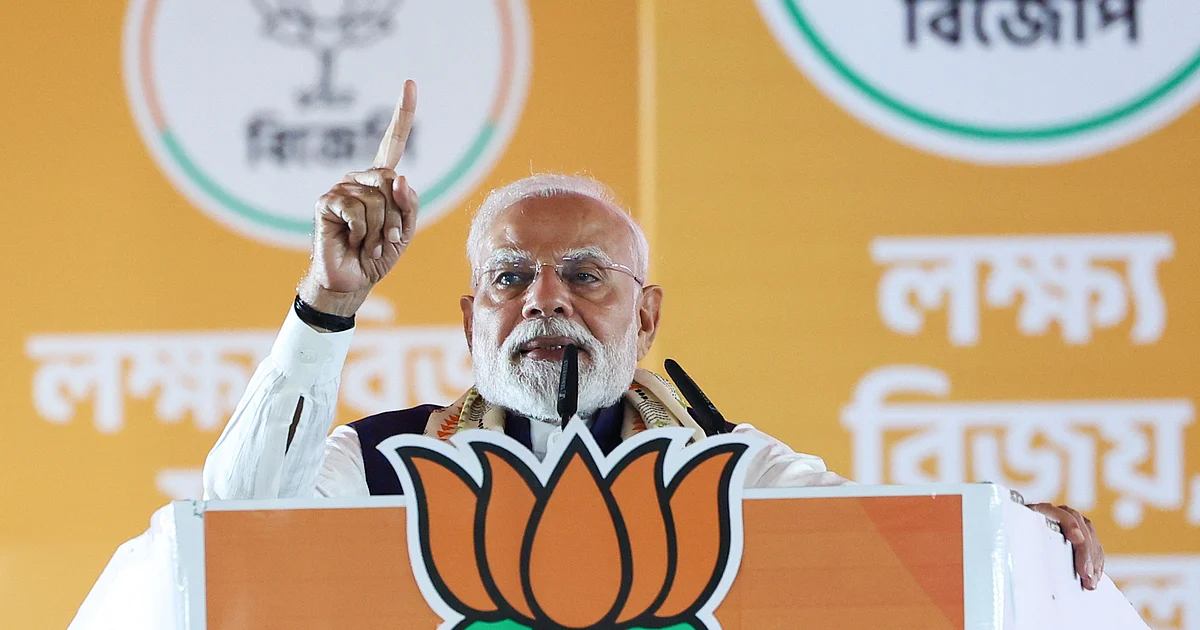
- Political Scenario in West Bengal before 2026 Elections
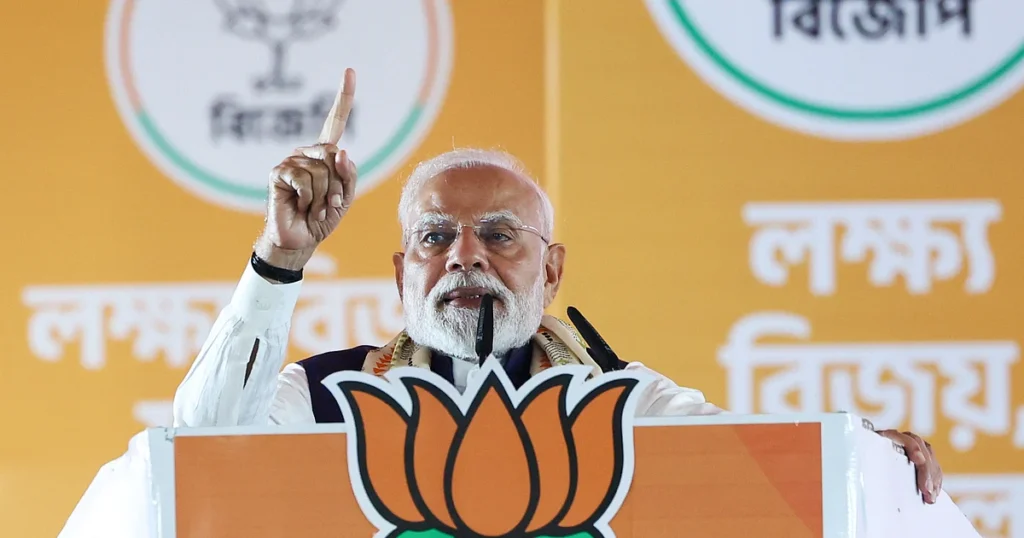
The state of West Bengal is preparing to hold crucial 2026 Legislative Assembly polls, where the ruling All India Trinamool Congress is facing stiff opposition from the Bharatiya Janata Party, headed by Prime Minister Narendra Modi. In recent years, the BJP has steadily expanded its footprint in the state, challenging the dominance of the All India Trinamool Congress.
Election manifestos core areas are the quality of governance, law and order situation, development agenda, identity politics, citizenship debates, and grassroot welfare implementation. Modi’s visit and utterances are located against this particular background.
- The Incident – The Fog Havoc that Triggers a Virtual Speech
On 20th December 2025, PM Modi was scheduled to give a big public speech at a rally in Taherpur, Nadia district, which was known to be a politically sensitive area with a diverse population, including strong Matua community members. But due to thick fog at the helipad in Taherpur, it became difficult for landing, which forced PM Modi’s helipad to turn back to the Kolkata Airport.
Authorities also observed that the helicopter hovered for a while but conditions did not favour a landing, and as a result, the helicopter turned back to Kolkata, where Modi had been waiting for over two hours at the ceremonial lounge of the airport before deciding to address the rally through video conferencing. The road travel alternative did not work.
Rather, the Prime Minister’s presence was represented by an audio-virtual connection at the airport, reaching thousands of people assembled at the rally site. The Prime Minister, Modi, apologized for not being able to reach the site because of the “adverse weather” conditions, as well as ensuring that the message of the rally was still able to reach the masses.
mint
Though such weather interruptions are not uncommon in the Indian winter season, the event immediately attracted political reactions, with the Trinamool Congress terming the situation symbolically as the BJPs “campaign turbulence.”
- Core Points of Modi’s Virtual Speech
Notwithstanding the technical glitch, the televised speech by Modi addressed important political themes effectively:
a. A critique of TMC Rule and “Maha Jungle Raj”
One of the predominant themes was Modi’s description of the ruling government in West Bengal, led by Mamata Banerjee, as a “maha jungle raj.” This was used as a political imagery of a situation where there was a element of anarchy, corruption, nepotism, and a incompetent government, despite the presence of many welfare schemes introduced and implemented at a centralized level, yet remaining unutilized because of resistance at the government level of West Bengal.
It is of course connected with a larger national BJP narrative of it itself embodying reform and change in governance, in contrast to regional, corrupt administration by parties viewed by the BJP as ineffectual and inept.
b. Double Engine Government
In
Modi appealed to the voters to support the BJP and help form a “double engine government,” which is a political alignment that the BJP calls the coordination of the state and federal governments, indicating that with this political alignment, there would be faster development in Bengal to attract more investments from the government.
He also spoke about the recent electoral successes of the BJP in other states such as a neighboring state of Bihar and believed that such a precursor could lead to a victory for the BJP in West Bengal.
c. Infiltration and SIR Debate
One such controversial and politically loaded statement was when Modi said that infiltrators get the backing of the TMC, and that the party is also against the Special Intensive Revision (SIR) of voters’ lists, which is the voter revision program in West Bengal. The TMC’s resistance against SIR was due to their reluctance to expose non-loyal voters through the SIR program.
This is a theme that clearly has a lot to do with the BJP’s focus on protecting our borders and citizen rights, which has been a traditional focus for a long time, specifically in a
d. Cultural and Symbolic References
A culture
Modi used imagery from history and culture, with a special mention of praise for Bankim Chandra Chattopadhyay, who penned “Vande Mataram,” and referred to him as “Rishi Bankim-babu,” while defining “Vande Mataram” as ‘rashtriya jagaran mantra.’ This was a cultural hint at, and a reaction to, the recent parliamentary discussions about “Vande Mataram.”
But he also addressed the rally with local cultural slogans that are very common among some communities (such as “Joy Nitai”), which also included embracement of local feelings and cultures.
e. Addressing Community Concerns – Matua Belt
There are
Modī’s speech was also aimed at the community at large, and the Matua community in particular, a very important vote bank in Nadia and North 24 Parganas districts. Though the observation was not very detailed, the tone was that of reassurance.
- Political Response and Oppositional Analysis
Following the
a. Response of TMC
A way for the TMC to capitalize on the disturbance involving the helicopter would be to make fun of the BJP’s outreach program, stating the incident represented the problematic pace of the BJP’s campaign. TMC policymakers could then summarize the difficult environment associated with the weather of the region during the winter.
TMC Party leaders have always opposed the BJP on such matters as SIR processing, citizenship fears, and issues of federal versus state management. They project themselves as protectors of the identity of West Bengal.
b. Third-Party and Oppositional Voices
There are also political leaders who do not fall under the category of TMC-BJP and have made similar criticisms. Independent party leaders such as Pappu Yadav have questioned the need for Modi’s constant visits to the state and argued that nothing good comes out of these visits, as they are mere showpieces.
On the other hand, groups such as Indian National Congress have remained critical of completely irrelevant yet politically significant national matters, for example, pointing out judicial pronouncements in the National Herald case and calling for the resignation of BJP party leaders.
Navbharat 5. Strategic Implications of Modi’s Speech A. Narrative Control and Electoral Messaging Although Modi did not speak before the public, his speech virtually has ensured continuity in the BJP’s campaign message. Modi’s speech was intended to emphasize the fact that the BJP, whether at a national and state level, is committed to putting a stop to alleged misrule, corruption, and developments on the right path, respectively. This particular situation emphasizes how campaign rhetoric extends beyond rallies, now leveraging audio connections as a way for politicians to stay connected with voters, regardless of logistical issues. b. Mobilizing Support in Key Demographics Modi’s speech and the statements he made emphasize the BJP’s attempt to reach particular demographics of voters, particularly those disillusioned with the current systems of governance or those from certain identity or citizenship backgrounds. Cultural appeals, as well as references to iconic figures from history, entwined with stories of development, are made to appeal to a larger audience, not merely BJP supporters. c. Federalism and Identity Politics
Bak There is, however, a large political discourse at work in this speech that relates to the Indian political context. This discourse refers to the challenges between the national narrative and the claims of regional identity, where the BJP’s message, by attacking the governance by the TMC, brings out its ideological positioning. This struggle is more than just a fight for seats, but for visions of governance, identity, and citizenship that are becoming increasingly defining of Indian election politics. 6. Broader Political Climate around December 2025 Aside from the aforementioned occurrence in West Bengal, the current state of politics in India is quite dynamic. National discourses about the issuance of judicial decisions on large-scale cases between prominent political groups have influenced the framing of the opposition. Groups such as the Congress have relied on judicial decisions to call the BJP into question on matters of ethics and administration. Navbharat At the same time, in neighboring states such as Assam, Modi has reaffirmed his stands on issues of national security and citizenship, suggesting that there is a wider campaign strategy that links together issues of the region, the nation, and security. Navbharat Currently, the politics in the Indian subcontinent is full of rivalries and the blending of stories such as development and tradition, autonomy and control, and identity and governance, where every political leader is capitalizing on every event that comes along and reinforces these basic stories. 7. Conclusion – Political Implications of Modi’s Virtual Rally PM Modi’s experience in West Bengal, whether it was the disruption in the weather, the chopper ride back home, or the delivery of the virtual address, marks not only a logistical turn of events but a politically significant one as well.
This aims to show how the rising trend of political campaigns in the modern age of Indian politics combines traditional mass rallies with online communication channels to ensure that even in cases where it’s not possible to hold mass rallies, the politician stays in the public eye. Though delivered online, Narendra Modi’s speech was replete with political messaging, including criticism of TMC’s administration, promotion of their agenda of development, appeals to various groups of citizens, and constraining nationalism ideology. The response of opposition political parties, media reports, and public discussions testify to the charged political environment before the 2026 elections in West Bengal.