Daksh Pandey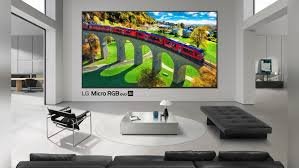
Big Display & Wearable Tech News Explained:
LG Unveils a New Range of RGB LED TVs and the Find Hub Arrives for Wear OS Smartwatches
The technology world is changing rapidly in the global arena. Some of the key players are working with an emphasis on display technologies and smart ecosystems. There are two significant developments that have recently come into the limelight. These include the introduction of the next generation RGB LED TVs by the tech giant, LG. Additionally, the enhancement of the Find Hub feature on the Wear OS smartwatches from Google. This feature is specifically designed to improve the security of the smartwatches.
These developments, at first, may appear to be unrelated; the first aims at home entertainment, while the second targets the wearable space. But looking closer, it can be seen that these are actually related by the fact that technology players are trying to offer more intelligent experiences to their customers.
This article breaks down the announcements in great detail to help understand the technology, implications of these technologies, how technology can affect the user, and the future of TV and smartwatches.
Part 1 – LG Launches a New Series of RGB LED TVs
- The LG Legacy in Display Technology
LG is one of the most revered brands in the display world. Whether the product is CRT TVs, Plasma TVs, LCD displays, OLED displays, and more recently, advanced LEDs, LG has made sure that they are always at the forefront as innovators.
The company is particularly famous for:
- OLED TVs, which provide perfect blacks and high contrast.
High-quality IPS LCD panels
Innovation in large format commercial displays
State-of-the-art color precision and brightness adjustment
With the introduction of its new range of RGB LED TVs, the company seems to be giving a clear message that it intends to aggressively pursue next-generation LED-based display technology that can compete with and in fact surpass OLED and Mini LED technology.
- What Is RGB LED Technology?
To comprehend why this news matters, it is necessary to first learn about the technology of RGB LEDs.
Traditional LED TVs usually employ:
White LED backlighting, where white LEDs are used behind color filters
Or Mini-LED backlight, which features enhanced contrast achieved through the utilization of smaller LEDs in a zoning pattern
RGB technology, on the other hand, uses distinct red, green, and blue LEDs, not white ones.
The RGB LEDs create light directly with colors rather than using so many filters.
Main Features of RGB LED Displays:
Individual red, green, and blue light sources
More control over the reproduction of colors
Increased brightness potential
Enhanced Color Volume
In order
Enhanced dimming and contrast adjustments
This technology has been employed within professional-grade monitors and high-end consumer displays and is now being optimized for consumer TV.
- What LG’s New RGB LED TV Lineup Offers
LG’s newly introduced RGB LED TVs are intended to provide cinematic display capabilities even for larger TV sizes, in view of the growing demand for larger TVs, such as 75-inch, 85-inch, and 100-inch TVs among consumers.
Important Key Points of LG’s RGB LED TVs:
a. Higher Color Accuracy
With the use of specific red, green, and blue LEDs, the following is achievable by LG’s RGB LED TVs:
More accurate colors
Wider color gamut
Enhanced representation of HDR content
It is especially important for:
Movie enthusiasts
Content Creators
Gamers
Users who expect realistic visual representations
b) Greater Peak Brightness
RGB LED TVs are capable of reaching a far brighter level of brightness than standard OLED TVs. They are ideal for:
Well-lit living rooms
Daytime viewing
Sports broadcasts
HDR with strong highlights
Good afternoon, ladies and
Increased brightness also enables greater visibility without compromising color integrity.
c) Contrast Enhancement & Local Dimming
LG’s use of RGB LEDs also utilizes advanced local dimming, where regions of the display dynamically brighten and dim differently:
Deeper blacks
Less Halo Effects
Improved shadow detail
Although OLED TVs remain in the lead in pixel dimming, the RGB LED technology has reduced the gap in brightness and lifespan.
d) Longevity & Burn-In Resistance
One of the prominent issues associated with OLED technology is burn-in, and this is particularly important for consumers who are interested in news channels, sports, and games that have a fixed User Interface.
RGB LED TVs:
Are more resistant to burn-in
Provide longer life for panel assemblies
Are better suited for continuous use
This makes them desirable in both home settings and commercial settings.
- RGB LED vs OLED vs Mini-LED
To grasp how LG’s RGB LED TVs fit into the picture, we can compare them against current display technologies.
RGB vs OLED
Brightness: The brightness of an RGB LED is brighter compared
Black Levels: OLED displays true blacks
The black level refers to how
Burn-in risk: Lower risk – RGB LED
Lifespan: RGB LEDs may live longer.
Cost:
“The technology of the RGB LEDs is such that it could lead to a more favorable
Color Accuracy
RGB LED
Light Control: RGB LED allows for more control
Brightness: Both are good, but generally much brighter for RGB LED
Complexity: RGB is more advanced
This indicates that LG’s action may point to a new high-end market for RGB LED technology that is situated in between OLED and Mini LED technology.
- Target Audience for LG’s RGB LED TVs
A target audience is
Against this backdrop of rising competition, it seems that LG’s new series
Premium TV Buyers
Home theater enthusiasts
Gamers craving high brightness and response rate.
Users who prefer large screens with no OLED issues
If you are a user who
It also puts LG in a very good place compared to Samsung, Sony, and TCL, all of whom are betting big on next-gen display technology.
- Effectiveness within the TV Market
In examining
LG’s RGB LED TVs could potentially impact the TV industry in the following ways:
“Within the premium segment we need to increase competition,” says
Promote the adoption of OLED and Mini-LED TVs by reducing prices.
Increase innovation in color and brightness technology
Add more choices for consumers other than OLED screen technology
With more content being rolled out through streaming in HDR and 4K or 8K, technology such as RGB LED has become more relevant.
Part 2: Google’s Find Hub Feature Coming to Wear OS Smartwatches
- What Is Google’s Find Hub?
Google Find Hub: The Google Find Hub represents an “evolution of the Find My Device feature that Google already provides.” The Find Hub enables users to:
• Locate a device
Find lost or mislaid devices
Monitoring Connected Accessories
Remotely secure devices
Integrate tracking functionality on the Google platform
With the integration of Find Hub on Wear OS smartwatches, Google has introduced the feature on other devices beyond phones and tablets.
- Why Find Hub on Wear OS Matters
Smart watches continue to get increasingly powerful and expensive. Losing a watch can be a source of inconvenience, as it also incurs an economic cost. Find Hub, a new addition to Wear OS, solves this problem.
Key Benefits:
Assists users in tracking lost smartwatches
Enhances safety and peace of mind
Enhances Google Ecosystem Integration
Improves Usability
It
What this also does is draw Google closer to the very successful Find My system offered by Apple.
- Features of Find Hub on Wear OS
As for what specific features Find Hub on Wear OS might have, these could include:
a) Device Location Tracking
Users will be able to:
A location where the last known whereabouts of their smartwatch can be accessed
Track movements if the device is turned on
Find their watch via their phone or web dashboard
b. Sound Alerts
If your smartwatch happens to be nearby but cannot be located, the
You could activate the loud sound
Easily locatable under cushions, bags, and furniture
c) Remote Lock and Data Protection
In case of losing or getting a smartwatch stolen:
It can be remotely locked by the user
Prevent unauthorized access
explains that
Protect personal information such as health statistics and messages.
d) Integration with Google Account
This is an
Find Hub will be linked to the user’s Google account, making it:
Simple to manage
Secure
Available on multiple devices
- Wear OS Ecosystem Becoming Increasingly Strong
There has been significant progress in Wear OS in recent years, including:
Performance improvement
Increasing battery efficiency
Improved application support
Partnerships with brands such as Samsung, Pixel, Fossil, and others
Find Hub adds the following benefits to Wear OS:
Enhancing its reliability
Conting
Increasing trust among users
Featuring capabilities like the Apple Watch
This is even more significant for those who are considering a switch from an iOS device to an Android device.
- Issues of Privacy and Security
Privacy
What it means to be human – Find Hub – Home
**End-to-
User-controlled permissions
Privacy-first design
Location information will not be shared without the user’s consent, and tracking functionality will be developed in a way that ensures it cannot be misused.
- Consumer Impact of Find Hub on Wear OS
For the typical user, it will mean:
More security against loss of devices
Quick tracing of misplaced smartwatches
Stronger safeguards for personal data
More seamless experience across Google devices
It also makes Wear OS more attractive in emerging markets, where smart-watches have adopted rapidly.
Part 3: The Bigger Picture – A Smarter, More Connected Tech Future
Both these announcements – that of LG’s RGB LED TVs and Google’s Find Hub for Wear OS – are a part of some broader trends that are currently happening in
- Emphasis on Experience
Companies are no longer simply selling hardware; they are selling experiences:
“Customer expectations are shifting, andImmersive Home Video Experience
The home
Portable and seamless tracking of devices
- Ecosystem Integration
Whether it’s an ecosystem between an LG television and smart homes, or Google’s wearables and phones, ecosystems are becoming an ever-more essential area.
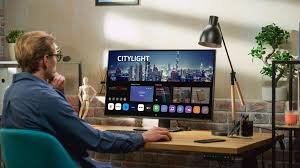
- Premium Features enter the Mainstream Technologies that used to be the preserve of professionals or premium consumers are gradually trickling into the hands of the general public. Conclusion “LG’s launch of its latest RGB LED TV series is a huge leap forward for giant display technologies because these TVs are brighter, offer more vivid color and have longer lifespans,” said Kim. “With this offering, we are able to offer consumers an even more compelling option than OLED and Mini-LED TVs in the market,” he added. However, the presence of Find Hub in Wear OS Smartwatches from Google adds to the security, convenience, and usability of the Android experience. This is evidence that Google is serious about improving wearables and making them smarter, safer, and easier to use. Taken together, these press releases demonstrate that there is a trend in the technology space of improvement in visuals, intelligence in devices, and connectivity.