Daksh Pandey
In the IT Services Market, Nimble Midsize Companies Outperform Large-Caps
Introduction: A Shift in the Balance in the IT Services Market
The overall IT services market is presently seeing a paradigm shift. For several decades, the big-cap IT service providers were the leaders of this space through their sheer sizes, offshore delivery models, and capacity to execute mega orders of outsourcing contracts. The names that were and are associated primarily with IT transformations of organizations were and are TCS, Infosys, Wipro, Accenture, IBM, and Cognizant.
However, in recent years, and especially in the post-pandemic era, a new wave has increasingly appeared, namely, mid-sized providers of Information Technology services operating effectively and overcoming large-scale players in the industry. The mid-sizes offer faster growth, higher growth rates, and are winning new business compared to their full-scale opponents.
This does not mean that the large-cap technology companies are shrinking or no longer relevant to the industry, but rather the way that the marketplace is changing, the way that clients are demanding catering to these changes, and how mid-sizers are poised to take advantage of that movement.
This paper examines why agile Mid-Sized IT Service Organizations are gaining a competitive advantage and ways in which these differ from Large Caps, challenges being faced by these organizations, and its significance to their clients and investors.
Understanding the IT Services Market Landscape
IT Services Market: Definition
In order to
The information technology services sector comprises various service offerings including:
Application development and maintenance (ADM)
Cloud migration and management
Digital transformation services
Data analytics and AI solutions
Cybersecurity Services
Enterprise software implementation (SAP, Oracle, Salesforce)
IT Infrastructure Management
Consulting and managed services
In the past, few big companies wanted to work with big IT companies because of their reliability, scalability, and reach. But today, the market is much more fragmented.
Who Are Midsize IT Services Firms?
Defining “Midsize” IT F
The average midsized IT service firms are often situated between startups and large-cap giants. They typically encompass:
Annual revenues in the few hundred million dollars to a few billion dollars range
Employee base ranging from a few thousand to 50,000
Presence in niche or vertical-specific services
Decision-Making Processes are faster compared to large organizations
Examples (worldwide) include companies that focus on cloud-native development, digital engineering, AI solutions, product engineering services, and industry-specific platforms.
Why Nimble Midsize Companies Are Gaining the Competitive Edge
- Agility and Speed of Execution
Agility is one of the most significant benefits mid-sized Information Technology firms have over large-cap firms.
Prolonged
Midsize enterprises have a leaner organizational structure
Decisions do not require multilayer approval processes
It can get directly involved in sales, delivery, and strategies
This enables them to:
• Create
Quickly respond to client needs
Make solutions fit individual needs without having to wait for
Execute pivot strategies quickly if technology trends shift
Large-cap corporations, on the other hand, may struggle with longer cycle times because of the complexity and size involved.
- Specialization over Scale
Large IT companies are horizontal in scale and provide each and every service to every industry. Midsize companies function on deep specialization.
Niche Expertise Secures Business
Mid-sized firms are often concerned with:
Specific industries (Healthcare, BFSI, Retail, Manufacturing
New/emerging technologies – AI/ML, blockchain technology,
Specific Platforms like Salesforce, ServiceNow, AWS, Azure, GCP
Clients would rather retain the services of specialists than generalists. A midsize firm that knows their niche thoroughly might turn out to be more effective than a big vendor who provides holistically identical services.
- Enhanced Alignment with Digital-First Demand
The IT services sector has shifted from a traditional outsourcing contract to:
Smaller, outcome-oriented projects
Agile development methodologies
Agile
Cloud-first and SaaS-enabled solutions
Continuous innovation instead of one-time transformations
Mid-caps are born and raised in the digital era, or at least have adapted faster, while large-caps are left with traditional sources of revenue such as:
App maintenance
Infrastructure management
Legacy ERP support
As a result, midsize companies will be more attuned to the objectives of the modern enterprise.
A. Global Environment and Global Issues
B. Global
Even though larger IT companies tend to be pricey due to their brand and size, medium-scale firms can also provide:
Competitive pricing
In
Commerical adaptable models
Improved value for money offerings
Lean Cost Structures
Reduced overhead costs
Fewer management-layer positions
More efficient use of talent
This is particularly attractive to:
Mid-sized Enterprises
Startups
Companies feeling pressures from the economic uncertainty
- Improved Client Relationship & Personal Attention
Mid-sized information technology firms may focus on relationship-building engagement.
Client Preference: The Reason
================dds
Clients are given direct interaction with senior management
Escalation resolution time will
Increased accountability
Customised engagement models
In the case of larger cap companies, customers may feel that they are ‘just another customer’, whereas ‘midsize suppliers view them as ‘strategic partners’.
- Talent Attraction and Retention Advantage
The struggle for talent in the technology sector is stiff. Notably, mid-sized IT companies are gradually becoming favorite workplaces for talented individuals.
Why Talent Choses Midsize Firms
Whenever
More meaningful roles
Rapid professional advancement
Experience in end-to-end project ownership
Less rigid corporate culture
Large-cap stocks usually face:
High attrition
Role Differentiation Role differentiation refers
Slow promotions
Improved talent retention means a higher level of delivery quality in midsize companies.
- Innovation Culture and Experimentation
Innovation flourishes when experimentation is stimulated. Mid-size companies will normally have:
Entrepreneurial leadership
Increased use of new technologies, frameworks, and tools
Greater risk-taking capacity regarding innovations
They are more likely to:
Invest in new technologies
Develop accelerators and IP
Moreover,
Co-create solutions with clients
Large corporations, owing to their scale, tend to proceed with caution in order not to interfere with their existing income sources.
<iframe src=”
Enterprises Want Flexibility, Not Just Size
Accordingly,
Nowadays, the following are the
Speed-to
Business outcomes
Continual improvement
Domain Expertise
Open-Source Databases prefer large vendors for:
Mega Contracts
In
Mission-critical legacy applications
Global launches
However, for digital transformation, cloud migration, artificial intelligence, and innovation labs, mid-sized companies are often the preferred choice.
Emergence of Multi-Vendor Strategies
Enterprises begin adopting multi-vendor IT strategies:
One major hardware supplier for core systems
Multiple midsize or niche suppliers for innovation and agility
This provides massive opportunities for mid-caps to exist and thrive side by side with large-cap companies.
Financial Performance: Growth or Stability
Incorpor
The Rates of Growth are in Favour of Medium
In many markets, medium-sized IT companies observe that:
Higher revenue growth rates
Faster deal wins
DIGITIZATION, Margaret R. Ch Yue Wang
Large-cap stocks provide:
Stability
Predictable cash flows
Strong balance sheets
A strong
Investors tend to choose mid-sized IT companies during technology upcycles due to their growth potential.
Obstacles for Midsize Companies Offering IT Services
While small
Despite these benefits, mid-sized companies also experience some difficulties:
- Scalability Constraints
Not able to handle very large projects
Relying on a few major clients
- Brand Recognition
Lower brand recall compared to large caps
harder to win high-profile global business at the outset
- Scalable Pressure from Talent
Fast growth may stress talent pipes
The leadership bandwidth might actually expand
- Vulnerability to Economic D
Less financial cushion than large firms
Increased vulnerability from client budget cuts
How Large-Cap IT Companies are Reacting
Large IT service providers are not idle. They are engaged in the following:
Buying Medium-Sized and Niche Firms
Investing heavily in AI and Automation
Reshaping In-House Teams for Agility
Developing digital business units
Nevertheless, changing culture in larger organizations requires time, which presents an opportunity for mid-size companies.
Role of AI and Automation
Artificial intelligence is transforming the IT services market:
Rapid technological advances
Automation can minimize reliance on teams of workers. Some of the
Outcome-based pricing displaces effort-based billing
Intelligent platforms simplify the delivery chain
Midsize companies tend to adapt easily to new systems like AI delivery models. Large firms face issues with existing technology and employees.
Implication for Clients
This paradigm has many advantages to the clients, including:
More choice in vendors
Improved Pricing and Innovation
Rapid project implementation
Enhanced Service Quality Due to Competition
The market is shifting from vendor dominance to a client-centric ecosystem.
Implications for Investors
This
Midsize IT companies offer investors:
Higher growth potential
Exposure to emerging technologies
Opportunities in scale and value creation through specialization.
But they also transmit:
Higher risk
A higher sensitivity to market cycles
An investment portfolio may consist of a mix of stable large companies and mid-sized companies with high growth rates.
The Future Outlook
Author:
Coexistence, Not Replacement
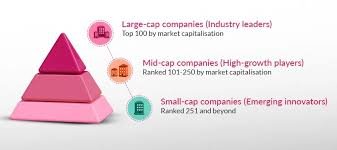
Midsize information technology service providers are not substituting large-cap companies, they are supplementing them. The future information technology services outlook will include:
Giant corporations dealing with world-class complex systems
Medium-scale businesses as innovation, agility, and specialization drivers
“Startups involved in cutting-edge experimentation
Consolidation Ahead
As midsize companies expand, many will:
Being acquired by major players
Interact with peers
Become large-cap companies on their own
Conclusion: Why Nimble Midsize IT Firms Are More Important Than Ever
The IT services industry is now characterized not only by size. In today’s age of rapid technology change, unpredictability, and disruption, agility, specialization, and innovation count as much as scale. Mid-sized IT service firms are on the rise owing to the following factors:
i) Act quicker Innovate better Strengthen ties with the modern consumer market Provide compelling value propositions Though giant IT companies are likely to be larger and stable in size, the wind appears to be in favor of fast-paced mid-sized companies in digitization-driven markets. In conclusion, the market for IT services has shifted from a world of giants to a world of balance, where mid-sized firms exert ever greater might and influence.