Daksh Pandey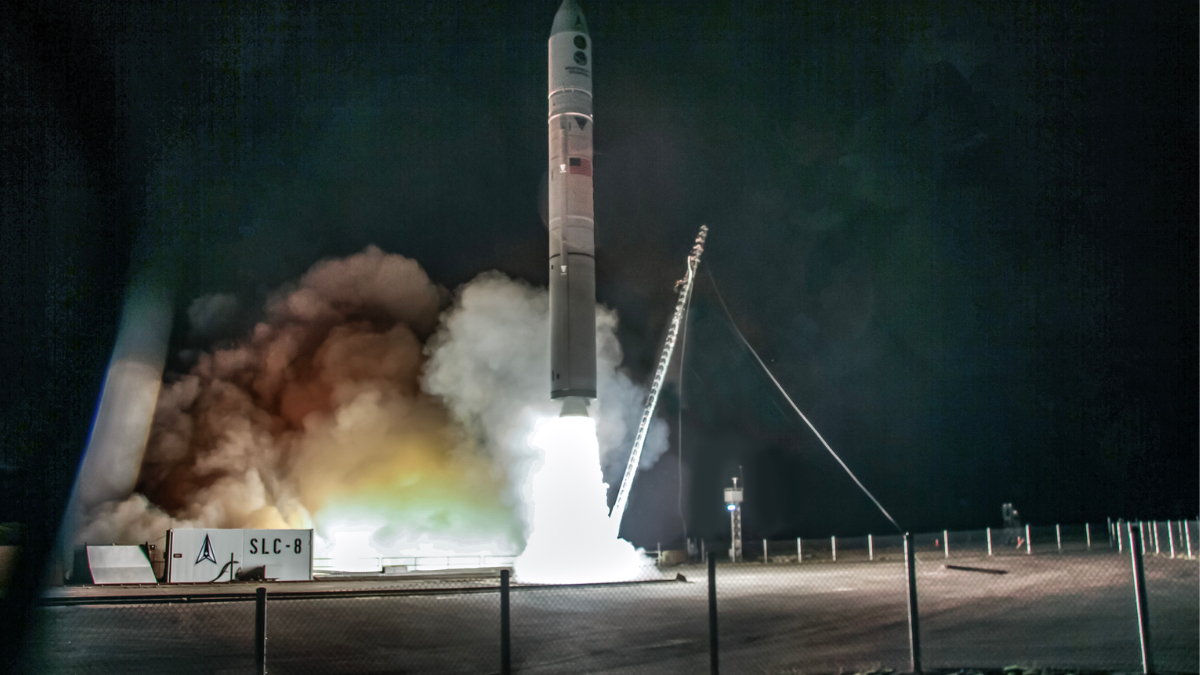
The recent launch of NASA’s CANVAS CubeSat mission is a step in understanding a complex question: How does lightning on Earth affect space weather far above our planet? Lightning is usually linked to thunderstorms and weather systems in the atmosphere.. Scientists are realizing that its effects go much higher—into the ionosphere and even the magnetosphere. These regions are critical to satellite operations and space exploration.
This small satellite is designed to answer a question. By tracking radio waves produced by lightning and studying how they travel through Earth’s atmosphere CANVAS could change our understanding of space weather. This could help protect technologies like satellites, GPS systems and communication networks.
🌩️ Understanding the Connection: Lightning and Space
At glance lightning and space seem unrelated. Lightning happens in the troposphere, where clouds form and weather happens. Space weather on the hand is influenced by the Sun and occurs in regions like the ionosphere and magnetosphere far above Earth.
These systems are more connected than we thought.
When lightning strikes it emits bursts of very-low-frequency (VLF) radio waves. These waves are not confined to the atmosphere—they can travel upward. Reach near-Earth space.
NASA’s CANVAS mission is designed to track these waves and understand how much energy from lightning actually reaches space and what happens next.
🛰️ What Is the CANVAS CubeSat?
CANVAS stands for Climatology of Anthropogenic and Natural VLF wave Activity in Space. It is a satellite, about the size of a shoebox.
Here are the key mission details:
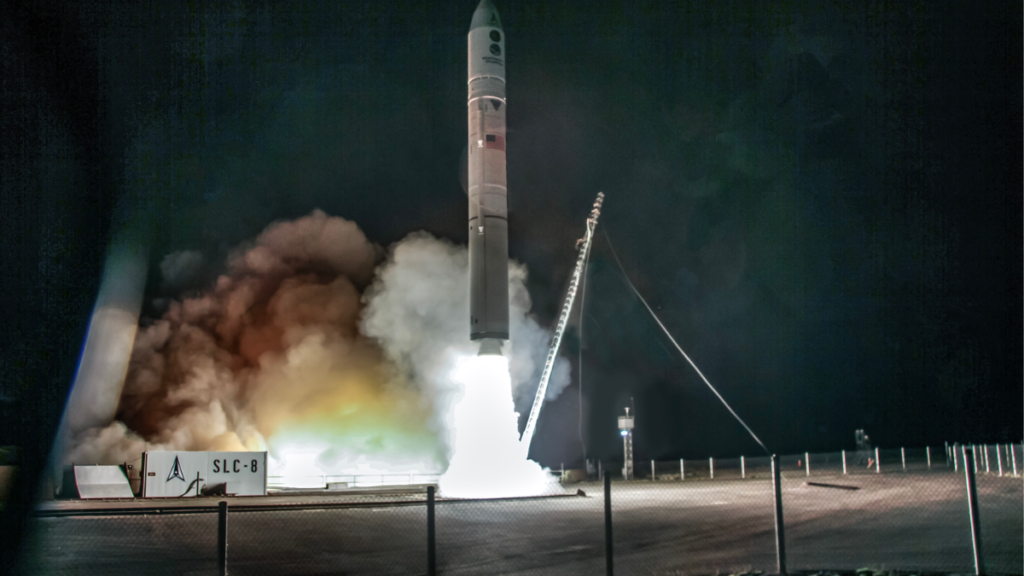
* Launch date: April 7 2026
* Launch vehicle: Minotaur IV rocket
* Orbit: Low Earth orbit
* Mission duration: 1 year
Despite its small size it carries advanced instruments:
* A three-axis magnetometer
* A two-axis electric field sensor
These tools allow the satellite to measure both the electric parts of radio waves generated by lightning.
📡 How the Satellite Works
Tracking VLF Waves
The CANVAS satellite focuses on low-frequency (VLF) radio waves, which are generated by:
* Natural lightning strikes
* Human-made transmitters
These waves travel upward through:
* Troposphere (weather layer)
* Stratosphere
* Ionosphere (charged particle region)
* Magnetosphere (Earth’s magnetic field region)
CANVAS measures:
* The strength (power) of the waves
* Their direction of travel
* How much energy reaches space
By comparing satellite data with ground-based lightning observations scientists can create a map of how these waves behave.
🌌 Why This Matters: The Role of Space Weather
What is Space Weather?
Space weather refers to conditions in space caused mainly by solar activity, such as:
* Solar flares
* Coronal mass ejections
* Radiation storms
These events can:
* Damage satellites
* GPS signals
* Affect communication systems
* Even impact power grids on Earth
Lightning’s Role
Traditionally space weather studies focused on the Sun.. Canvas explores a new idea:
👉 Earth itself—through lightning—may influence space weather.
When VLF waves from lightning reach the magnetosphere they interact with high-energy electrons trapped in the Van Allen radiation belts.
These interactions can:
* Change the motion of electrons
* Push them into Earth’s atmosphere
* Alter radiation levels in space
This process is crucial because:
* Radiation belts affect satellite safety
* High-energy particles can damage electronics
* Astronauts can be exposed to radiation
⚡ The Van Allen Radiation Belts
The Van Allen belts are zones of charged particles trapped by Earth’s magnetic field.
Lightning-generated VLF waves can:
* “Nudge” electrons in these belts
* Cause them to scatter and fall into the atmosphere
* Reduce or redistribute radiation levels
This means lightning may act as a regulator of space radiation.
Understanding this could help scientists:
* Predict radiation hazards
* Design safer satellites
* Improve space mission planning
🧠 Scientific Goals of the Mission
The CANVAS mission aims to answer key questions:
1. How much lightning energy reaches space?
Not all lightning energy escapes Earth’s atmosphere. CANVAS will measure how much actually penetrates into the ionosphere and beyond.
2. How do VLF waves travel globally?
The mission will create a “climatology” of wave activity showing patterns across regions and times.
3. How do these waves affect radiation belts?
Understanding how electrons behave in response to these waves is crucial for predicting space weather.
4. What is the role of human-made signals?
Ground transmitters also produce VLF waves. CANVAS will compare natural vs sources.
🛰️ Why Use a Small Satellite?
Advantages of CubeSats
CubeSats like CANVAS are:
* cost
* Quick to build and launch
* Highly specialized
They allow NASA to:
* Test ideas quickly
* Conduct focused experiments
* Deploy missions simultaneously
This makes them ideal for studying complex systems like space weather.
🌍 Real-World Applications
The findings from CANVAS could have practical benefits:
1. Protecting Satellites
Better models of space weather help prevent:
* Satellite failures
* Communication disruptions
2. Improving GPS and Navigation
Space weather can distort signals. Understanding lightning’s role improves accuracy.
3. Enhancing Astronaut Safety
Radiation exposure is a risk in space missions. Better predictions mean protection.
4. Power Grid Protection
Severe space weather can affect Earth’s infrastructure. Improved forecasting helps reduce risks.
🔬 Broader Scientific Impact
The mission bridges fields:
* Atmospheric science
* Space physics
* Electromagnetism
It also connects:
* Earth-based weather systems
* Near-Earth space environment
This kind of research is essential for understanding Earth as a connected system.
🚀 Future of Space Weather Research
CANVAS is part of a growing trend:
* Small satellites studying Earth-space interactions
* Increased focus on predicting space weather
* Integration of ground and space-based observations
Future missions may:
* Use constellations of CubeSats
* Provide real-time monitoring
* Improve forecasting systems
📊 Why This Mission Is Important
In terms:
👉 Lightning is not just a weather phenomenon—it may influence space itself.
👉 Space weather affects technology more than ever before.
👉 Understanding this connection can help protect billions of dollars in infrastructure.
NASA’s CANVAS CubeSat represents a step forward in understanding the hidden link between Earth’s weather and space weather. By studying how lightning-generated radio waves travel from the atmosphere into space and interact with the magnetosphere scientists hope to unlock insights into how our planet and its surrounding environment are connected.
This mission highlights a shift in scientific thinking: space weather is not only driven by the Sun but may also be influenced by processes happening on Earth itself. The data collected over its one-year mission will help refine models improve satellite safety and enhance our ability to navigate and communicate in an increasingly space-dependent world.
In the coming years as humanity becomes more reliant on space-based technologies missions, like CANVAS will play a role in ensuring that we can safely operate in and understand the dynamic environment surrounding our planet.