Daksh Pandey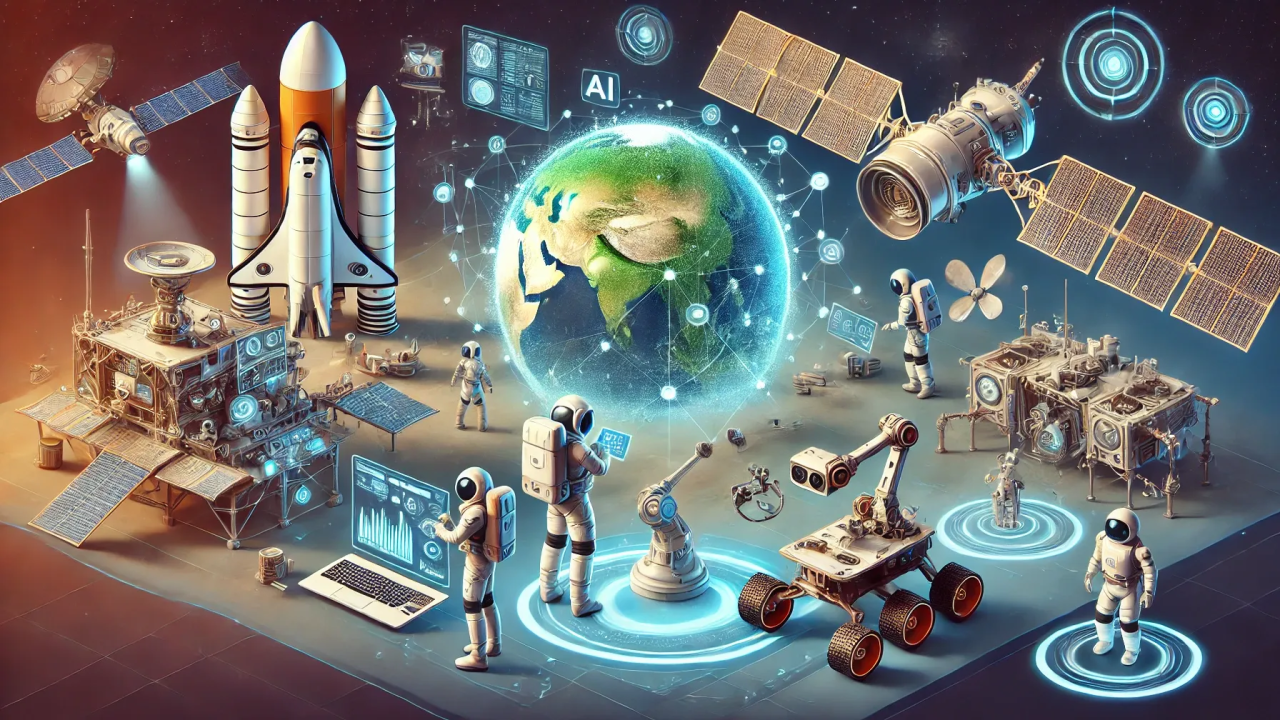
Astronomers are reaching, if not already immersed, in what many call a golden age of planetary discovery, driven by powerful next-generation telescopes like the James Webb Space Telescope, ESA’s Gaia mission, and advanced ground-based observatories. Scientists discover exoplanets with never-before-seen properties: super-Earths, larger than our own planet but smaller than Neptune; ultra-hot lava worlds; water-rich “ocean planets”; and even rogue planets that wander freely through space without a host star. These discoveries are reorienting our understanding of how planetary systems form, evolve, and survive extreme cosmic conditions. Particularly exciting is the detection of atmospheric chemicals-like water vapor, methane, and carbon dioxide-that may hint at habitability or even primitive biological processes. Each is a further challenge to Earth-centric assumptions and brings humanity closer to an answer to one of its oldest questions: Are we alone in the universe?
Key Highlights (Point Wise)
???? Discovery of thousands of new exoplanets by using transit and radial velocity methods
Earth-like Planets identification in habitable zones of other stars.
Direct study of extraterrestrial atmospheres with infrared spectroscopy
Growing evidence for water-rich and oceanic worlds.
❄️ Detection of free-floating rogue planets that are not bound to any star
Invest energy in searching for biosignatures (chemical signs of life) with increased precision.
Expanding planetary science beyond our solar system
AI Training First in Space: Intelligence Beyond Earth
4.
For the first time in history, artificial intelligence systems are being trained and adapted directly in space, rather than only on Earth. Until recently, AI models were training on terrestrial servers and uploading to satellites or space probes. Experiments aboard satellites and space stations now allow for on-orbit learning where AI systems process real-time space data—radiation levels, cosmic noise, orbital changes—and autonomously better themselves. This breakthrough is key because space is not predictable, communications are greatly delayed, and space missions cannot be controlled by humans continuously. AI trained in microgravity and high-radiation conditions can learn to manage spacecraft systems, detect anomalies, optimize fuel usage, and even conduct scientific experiments without waiting for instructions from Earth. This is a very fundamental turn toward self-sustaining space missions, which will be necessary for manned missions to Mars and further into deep space.
Key high Blick’s:
On-orbit AI training.
⏱️ Less reliance on Earth because of delays in communication
AI systems will be able to adapt to microgravity and radiation conditions.
Autonomous fault detection and spacecraft maintenance
Processing real-time satellite data without ground stations
Challenging deep-space and Mars missions call for
The foundation for future interplanetary AI networks
✈️ Aerospace Innovations: Redefining How Humans Can Fly and Explore
4
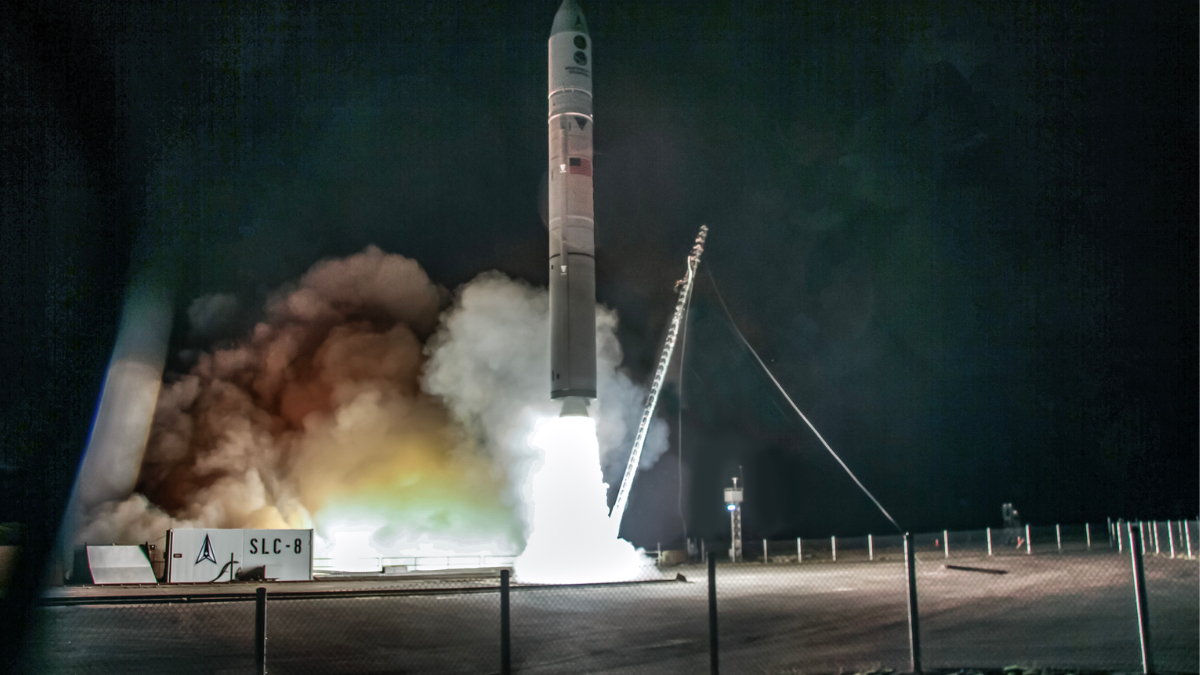
Aerospace technology is undergoing a sea change through the interference of software intelligence, advanced materials, and sustainable engineering. Reusable rockets have cut the cost of space access dramatically, while hypersonic aircraft are promising to cut travel time fivefold over the speed of sound. Electric and hybrid propulsion systems are changing aviation for minimal emissions, while spaceplanes further blur the boundary between aircraft and spacecraft. Meanwhile, AI-assisted flight systems are enhancing safety, navigation, and fuel efficiency. These innovations are not about just speed or power but scalability, sustainability, and accessibility, making space and advanced air travel feasible for governments and private companies, eventually civilians.
Key highlights (Pt-to-Point):
♻️ Reusable rockets lower launch costs dramatically
⚡ Smarter electric and hybrid aircraft for cleaner aviation
Hypersonic travel (Mach 5+) development ????
AI-driven flight control Predictive maintenance
???? Advanced light materials, improving efficiency
????️ Growth of private aerospace companies to complement the space agencies
The long-term vision for commercial space travel and space tourism is Big Picture: Why These Trends Matter Taken together, these breakthroughs portend a future in which humans will be truly more cosmic, autonomous, and intelligent in technological terms. Rare planetary discoveries further extend our inclusive sense of membership within the universe, AI taught in space makes exploration that much wiser and safer, and aerospace innovations provide hands-on means to reach farther than ever before. Converging at an unprecedented level of astronomy, artificial intelligence, and aerospace engineering, this is not a trend-it reshapes civilization’s next chapter in space and science.