Daksh Pandey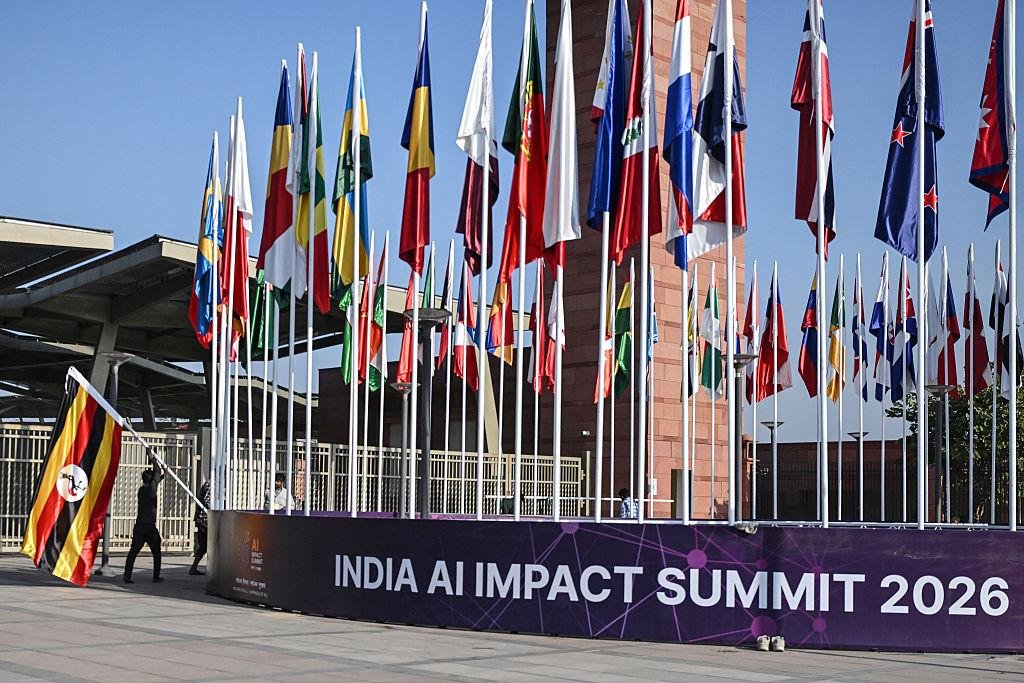
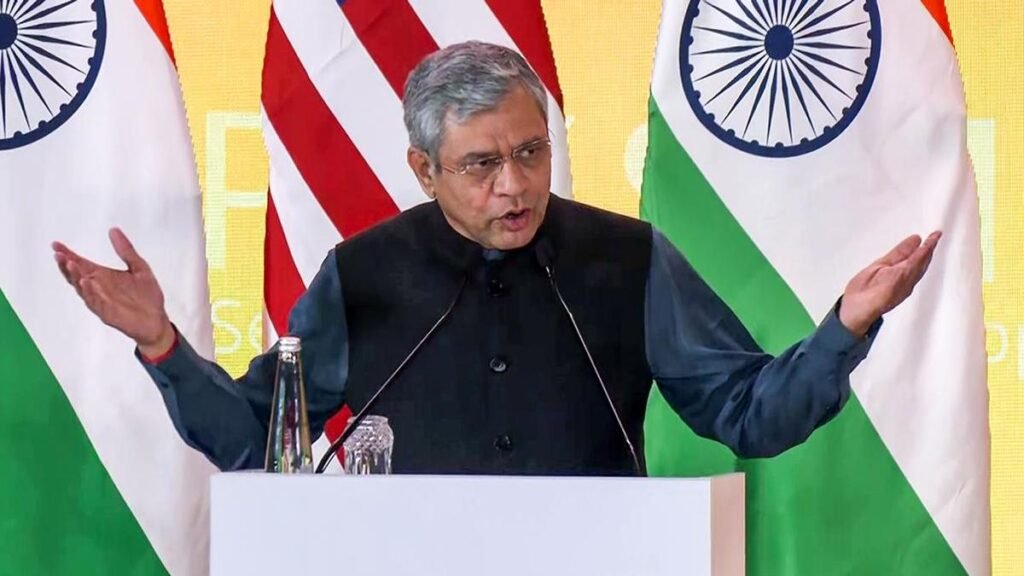
At the India AI Impact Summit 2026 which was held in New Delhis Bharat Mandapam, Union IT Minister Ashwini Vaishnaw said that the summit got than $250 billion in investment commitments for infrastructure and over 500,000 visitors. The summit also got pledges for venture and deep-tech funding, around $20 billion and lots of international participation, which supported a Delhi/AI declaration on responsible AI. These numbers show that the world has faith in Indias role in the phase of AI-driven economic growth.
1. What was announced at the India AI Impact Summit 2026?
The main announcement was two things:
Investment commitments: The India AI Impact Summit 2026 got over $250 billion in commitments for the infrastructure that is needed for an AI ecosystem, like data centers, connectivity and edge cloud.
There were also reports of a $20 billion in venture capital and deep-tech funding commitments for startups and AI product development.
Footfall and participation: The two-day exhibition and summit at the India AI Impact Summit 2026 had than 500,000 visitors, including industry delegates, corporate pavilions, startups, students and international delegations. The event was held at Bharat Mandapam in New Delhi.
2. Where do these numbers come from. How are they counted?
When the government or the organizer of the summit talks about investment commitments and visitor counts they use a different methods:
Memoranda of Understanding and letters of intent: Big commitments are often recorded as Memoranda of Understanding or letters of intent signed between companies and government entities during the summit.
These are like promises, not contracts but they show that people are interested.
Investor declarations: Venture funds and corporate venture arms may say they plan to invest in regional funds or startups which adds to the total.
Project announcements: Entities may announce infrastructure projects, like data centers or manufacturing investments, which can add up to a lot.
Counting visitors: The total number of visitors at exhibitions includes people who bought tickets, delegation members, exhibitor staff, volunteers, media and people who got in for free.
3. Why $250 billion matters for the economy. What it targets
The $250 billion investment in AI infrastructure is a big deal because it can help India become a big player in the next phase of AI-driven economic growth.
This money can be used to build data centers improve connectivity and create jobs.
It can also attract investment and make India a hub for AI research and development.
4. Who are the people behind the investment commitments?
The reports from the summit do not name companies but they do mention some big groups:
Global hyperscalers and cloud providers: These are big companies that provide cloud services and can invest a lot in data centers and other infrastructure.
Telecom operators and infrastructure conglomerates: These companies can build fiber networks, edge nodes and 5G/6G backhaul.
Estate and infrastructure investors: These investors can put money into data center parks and industrial corridors.
Equity and venture funds: These funds can invest in startups and AI research.
Domestic corporates and conglomerates: These are companies that can announce new facilities or dedicated AI units.
5. What do 500,000 visitors mean for the India AI Impact Summit 2026?
Having 500,000 visitors at the India AI Impact Summit 2026 is a deal because it shows that the event was able to reach a lot of people.
It means that the summit was able to blend business-to-business tracks with facing exhibitions and student participation.
This can help increase AI literacy and show people what AI can do.
It also suggests that there was a lot of participation from startups, universities and small businesses which’s good for innovation and job creation.
6. The governance and diplomatic angle of the Delhi Declaration
One of the outcomes of the India AI Impact Summit 2026 was the Delhi/AI declaration, which is a statement of principles for responsible and inclusive AI.
A lot of countries and international organizations supported this declaration, which can help accelerate the development of AI safety standards and data-sharing norms.
This can make it easier for companies to work together on AI projects. Can reduce the risk of investment.
However the declaration is not a law so it will depend on what countries do to turn these principles into rules.
7. Short- and medium-term opportunities for India
If the investment commitments turn into projects India could see some big opportunities:
Data center and cloud region growth: More cloud regions and localized data centers can reduce latency and satisfy data-residency preferences.
Chip design and manufacturing ecosystem ramp-up: Infrastructure and policy attention can accelerate the development of fabs, test and packaging facilities and domestic chip design houses.
Startups and VC acceleration: More funding can help startups productize AI research and commercialize it.
Skilling and education: Big exhibitions and government initiatives can create a push for skilling programs in AI, ML engineering, data science and AI governance.
8. Risks, caveats and what to watch for
There are some risks and caveats to consider:
Implementation gap: Not all signed Memoranda of Understanding convert into executed projects.
Concentration risk: If investment flows into a few projects or regions the broader startup ecosystem may not benefit equally.
Footprint: Data centers and AI training consume a lot of energy and water so it is important to ensure green-power commitments and efficient infrastructure.
Talent constraints: Building compute and data infrastructure requires engineers, data scientists and operations staff. It is important to have rapid skilling programs.
Ethical frameworks: Rapid deployment, without robust privacy, liability and safety frameworks increases legal and social risks.
Geopolitics and supply chains: Planned investments may be influenced by export controls, sanctions or regional tensions.
9. What a reasonable timeline looks like
Big infrastructure and deep-tech investments usually take a time to develop:
It can take several years for projects to get started and for the investment to pay off.
The real test is whether agencies, industry and investors can convert commitments into projects, jobs and outputs while managing these risks.
It is going to be important to watch what happens next and to see if the India AI Impact Summit 2026 can deliver on its promises.
When we think about the term, which is around six to eighteen months we can expect to see some real progress. This is when we will see companies start to turn their ideas into plans get the money they need to start working and launch small test projects. We will also see countries signing agreements to work together.
In the term, which is around one to three years we will start to see some big things happening. This is when companies will start building data centers creating new cloud regions and setting up places to design and make computer chips. We will also see the first groups of people finish their training programs.
In the term, which is around three to seven years or more we can expect to see some really big changes. This is when companies will have their manufacturing and computing systems up and running and we will see a lot of startups getting funding. We will also see products that use artificial intelligence being exported and we will have systems in place to make sure everything is working smoothly.
These big announcements are the starting point. To really make things happen we need to have a plan. We need to make sure that the government and other organizations are working together to make it happen.
So how do we make sense of all this?
* As an investor we need to look beyond the announcements and do our research. We need to look at the details of each project and make sure that the government is supporting it. We need to look for projects that have a plan and a commitment to follow through.
* As a startup founder we can expect to see opportunities for partnerships and funding. However we will also face competition so we need to make sure we have a strong plan and a way to stand out.
* As a policymaker we need to use this momentum to create systems that will support the growth of intelligence. This includes making it easier to get approval for projects and making sure that we have training programs in place.
* As a citizen we need to pay attention to how these big projects will affect our communities. We need to make sure that they are respecting the environment and that everyone has access to the benefits of intelligence.
This summit is a deal because it shows that India is serious about being a major player in the artificial intelligence era. India is not just talking about providing services. About being a place where companies can build and manufacture things. The fact that India is making promises and has the support of other countries suggests that it is serious about making this happen.
The real test will be in how well India follows through on its promises. If India can turn its promises into projects and make sure that it has the systems in place to support them then it could really change its role, in the global artificial intelligence industry. If it does not follow through then all the big announcements will not mean much.