Daksh Pandey
Google’s “The Android Show | XR Edition” and tonight’s XR glasses & headset reveal
(Short version up front: Google used the Android Show: XR Edition on December 8, 2025 to lay out its Android XR strategy, show updates to the Galaxy XR headset, preview two classes of AI glasses that will arrive in 2026, and reinforce Gemini-powered experiences across glasses and headsets. Below I unpack what was announced, how the hardware and software work, who the partners are, what this means for developers and the market, and the biggest technical and social challenges ahead.)
Business Standard
+3
blog. google
+3
Android
+3
- What actually happened during the event itself (concrete facts)
The event was the Android Show | XR Edition, streamed by Google on December 8, 2025; it focused on Android XR platform updates, Galaxy XR headset features, and upcoming glasses/headset experiences that tightly integrate Gemini (Google’s multimodal AI).
Android
+1
Google previewed two classes of AI glasses aimed at different use cases: (a) a screen-free, lightweight AI glasses design (audio + sensors + cameras; “Gemini by your side” style assistant) and (b) display (in-lens) glasses that can show private, contextual visual information (navigation, translations, discreet notifications). These glasses are expected to ship in 2026 with partner brands.
Reuters
+1
Google also announced further updates for the Galaxy XR headset (software updates and expanded platform capabilities for Android XR) and demonstrated the developer tools and platform changes that let apps run across headsets and glasses.
blog.google
+1
Key commercial partners mentioned in coverage and Google materials include Samsung, Warby Parker, and Gentle Monster (and Google has been collaborating with other OEMs on Android XR devices). Reuters and other outlets confirmed the Warby Parker partnership and the 2026 timeline.
Reuters
+1
2) The products — what the glasses and headsets appear to be (technical summary)
Spectacles: two methods
Screen-free AI glasses: very light, all-day wearable form factor. No continuous visual overlay; instead they rely on microphones, small cameras and bone-conduction or tiny speakers for voice + audio feedback, and Gemini for real-time assistance (live translation, reminders, context-aware prompts). Good for people who want hands-free AI without a visible HUD.
Reuters
+1
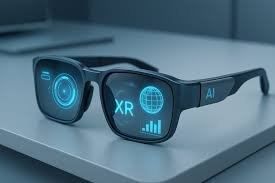
Display (in-lens) AI glasses: incorporate miniature displays embedded in or projected through the lens to deliver private visual info — turn-by-turn directions, captions/translations, contextual info cards, notifications and small AR widgets. These balance privacy and utility but are more complex (optics, power, thermal).
Reuters
+1
Headset (Galaxy XR updates)
Google highlighted software improvements for the Galaxy XR headset (better support for immersive video, improved spatial features, and tighter Gemini integration), plus tools for developers to adapt mobile apps and build new XR experiences on Android XR. The Galaxy XR is a full headset (more immersive, more compute/battery, closer to VR/MR devices).
blog.google
+1
Software stack & AI
The platform is Android XR (Google’s XR platform for glasses and headsets) with deep Gemini integration: voice + image + contextual multimodal assistant that can provide conversational interaction inside XR experiences. Android XR aims to let developers build apps that run across devices (glasses ↔ headset).
Android
+1
- Use cases and demos that Google emphasized.
Hands-free assistance: ask Gemini to summarize a conversation, set reminders, or get context about what you’re looking at.
Live translation & captions: real-time language translation displayed as captions or read aloud — useful for travel, customer service, or multilingual settings.
Android
Navigation overlays: brief directional cues or small route cards shown in the user’s field of view for walking or biking.
Android
Notifications and productivity: glanceable info cards for messages, calendar events, to-dos; potentially private micro-apps (calculator, notes).
Immersive media & gaming on headsets: larger VR/MR experiences, 360° video, and use of Gemini to create contextual in-experience assistance.
4) Developer implications — why does Android XR matter
Unified platform: Android XR intends to offer APIs and tools so Android developers can adapt mobile apps to spatial formats with less friction (porting UI to 3D, supporting hand/eye tracking, spatial audio, and Gemini hooks). Google released resources/streams for devs during the show.
Android Developers
+1
Gemini as an in-XR SDK: developers will likely be able to call Gemini capabilities (summarization, multimodal Q&A, translation) inside XR experiences — enabling apps that are contextually aware and voice-driven.
blog.google
Opportunities: productivity apps (notes, meetings), travel/tour apps, translation services, retail (virtual try-on), enterprise usages (remote assistance, field work) and new entertainment formats.
Challenges for devs: designing for glanceability and privacy, optimizing performance and power for tiny glass form-factors, and creating comfortable UIs that don’t cause motion sickness.
5) Market context — competition & partnerships
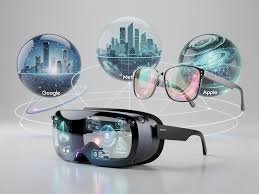
Where Google fits: Google is positioning Android XR + Gemini as a cross-device AI layer to compete with Apple (Vision Pro), Meta (Quest + Horizon), and other smart-glasses efforts (Ray-Ban Meta, Samsung’s work). The strategy is platform-first: get partners to ship devices running Android XR and seed a developer ecosystem.
Android Central
+1
Partner strategy: Google isn’t building all glasses itself. Instead, it’s partnering with fashion/eyewear brands (Warby Parker, Gentle Monster) and OEMs (Samsung) to get design credibility and retail distribution — a sensible play given eyewear’s fashion constraints. Reuters and multiple outlets reported the Warby Parker tie-up.
Reuters
+1
6) Technical realities & constraints (what the press/demo glosses over)
Battery & heat: small glasses have limited battery capacity; delivering continuous vision processing, displays, and wireless radios is power-hungry. Expect compromises: offloading heavy compute to a companion phone/earpiece or cloud, intermittent visual overlays, or very efficient low-power AI chips.
Optics & display tradeoffs: in-lens displays that are truly discreet and readable in daylight require advanced optics and can be expensive; manufacturers must balance brightness, field-of-view, and form factor.
Weight and ergonomics: “all-day” glasses must be extremely light. That pushes sensor miniaturization and careful battery placement. Fashion matters — which is why partnering with eyewear brands is strategic.
Reuters
Privacy & security: cameras and microphones in glasses raise legitimate privacy concerns — bystanders and regulatory bodies will scrutinize recording capabilities and on-device vs cloud processing. Expect both product safeguards (visual indicators, obvious recording lights) and policy/regulatory debate.
Connectivity & latency: cloud-assisted AI features (Ge mini) may need low-latency links; offline modes will be important in privacy-sensitive or low-connectivity scenarios.
- Consumer implications: What this may change day-to-day.
From phone-centric to assistant-centric: if executed well, everyday interactions (directions, translations, quick lookups) could shift from pulling out a phone to quick voice or glance interactions.
New social norms: wearing cameras and tiny displays will force new etiquette — when is it okay to glance at your glasses, and how detectable is recording?
Accessibility: better live captions and contextual assistance could be huge for hearing-impaired or mobility-restricted users. Android 8) Business and regulatory considerations Retail & pricing: early AR/XR devices are expensive (e.g., Vision Pro), so Google’s partners and product variants (screen-free vs display) may target different price bands. The mainstreaming of a low-cost, stylish, screen-free AI glass would be a major step. Reporting suggests launches in 2026 but little public pricing yet. Reuters +1 Regulation: legislatures and regulators may focus on data collection, recording in public, workplace use, and biometric processing. Compliance will shape features (opt-in recording, on-device processing). Ecosystem play: Google wins if Android XR becomes the standard OS for a variety of XR devices — it can push services (Maps, Gemini, Play) and monetize via app/assistant features. 9) Risks, unknowns and realistic timeline Timeline: Google previewed glasses and said models are planned for 2026, but wide availability (multiple markets, low price points) typically takes longer. Early models often target enthusiasts and enterprise before mass adoption. Reuters Product maturity: miniaturized displays, battery longevity, comfortable ergonomics and reliable on-device AI are hard engineering problems — first products will likely trade off some features for size/weight. Adoption hurdles: price, fashion acceptance, privacy worries, and app-ecosystem maturity will determine how fast these become mainstream. 10) Takeaway — Why this matters Google’s Android XR and Gemini integration signal a strong, platform-level commitment to making XR + AI an everyday computing modality rather than a niche lab demo. The strategy is platform + partners: provide the software, AI, and developer tools; get OEMs and fashion brands to design and sell the hardware. If Google executes, we can expect a range of XR devices from lightweight, socially acceptable AI glasses to fully immersive headsets — and with Gemini baked in, these devices will be positioned as conversational, context-aware assistants rather than mere displays. That could reshape how we navigate information, language, and tasks in real time — but the road has hard engineering, social and regulatory bumps to clear. Android +1 11) Where to watch/read official materials & readups Google’s Android blog / Android XR hub — has the show, highlights, and developer resources. blog.google +1 Reuters / major press coverage for partner deals and commercial timelines (Warby Parker tie-up, 2026 launch windows). Reuters Technology outlets (9to5Google, Gadgets360, Business Standard, Business Today) for event recap and market analysis