Daksh Pandey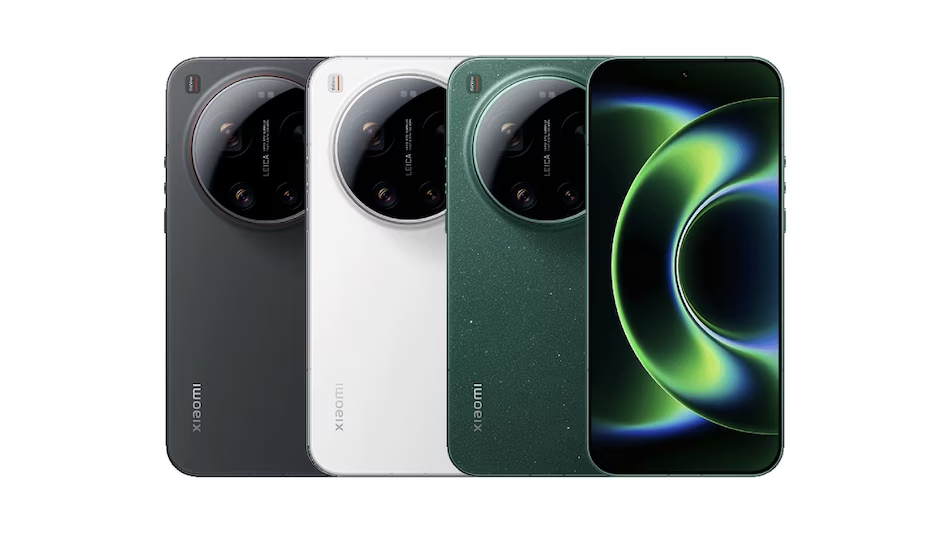
The new information about the Xiaomi 17 Ultra is like a story we have heard before. It is the phone but with some changes for different places. There are some things that people are talking about. The version of the Xiaomi 17 Ultra that people in countries get might have a smaller battery than the one that people in China get. We also know how much the Xiaomi 17 Ultra might cost in Europe and India. The price is higher than what a lot of people thought it would be. This means that Xiaomi might be selling the Xiaomi 17 Ultra as an expensive phone. The Xiaomi 17 Ultra is a flagship phone, from Xiaomi. Below I am going to look at the leaks. Then I will compare them to the China specifications. I want to understand why companies like Xiaomi ship hardware in different regions. The 17 Ultra has some things that will affect the people who buy it like how the battery lasts how fast it charges and how hot it gets. I will also look at where the 17 Ultra fits in with similar products. I have included sources to back up the claims I make. The 17 Ultra is a deal for companies, like Xiaomi and Qualcomm and Leica because they all play important roles in the story of the 17 Ultra.
Quick summary (TL;DR)
The leak says that the global Xiaomi 17 Ultra will have a battery that’s 6,000 mAh. On the hand the Xiaomi 17 Ultra that is sold in China will have a bigger battery that is 6,800 mAh. This is what the leak claims about the Xiaomi 17 Ultra.
The price of this thing is going to be pretty high. In Europe the top end model will cost around €1,499, which’s roughly ₹1,60,000. For India the price will be somewhere between ₹1,29,999 and ₹1,39,999, for some models of this thing.
The colour options that people are talking about for the Ultra include Black, White and Green. These colours will be available in lots of places around the world. In China the Ultra will have some colours that are only available, in that region.
The new product is supposed to be available in the world in late February, which is before or, around the time of the Mobile World Congress. India will get it a little later in March following the global launch of the product the new product.
What the China 17 Ultra actually is (baseline)
To understand the changes, for the variant it is helpful to look back at the China market 17 Ultra hardware, which is what Xiaomi shipped in that area. This means we need to think about what the China market 17 hardware is and that is what Xiaomi sent to China. The China market 17 Ultra hardware is important to consider when looking at the variant.
A large 6.9-inch LTPO AMOLED display with very high peak brightness and a 120 Hz adaptive refresh capability.
This camera package is really something. It was made with the help of Leica. The main camera has a high resolution and the zoom lens is also very good. Leica helped with the settings. There are some special modes that you can use with the camera. The camera package has resolution main sensors and tele optics with Leica tuning and special camera modes.
The new Snapdragon chip is a powerful one. It is the version of the Snapdragon 8 Gen 2 and Snapdragon 8 Gen 3 that came out before. The one that people are talking about in China is the Qualcomm chip you can get for this generation. This Snapdragon chip is the top of the line.
The China version of this product came with a big battery that holds a lot of power. 6,800 MAh. The China version also has some features, like fast charging when you plug it in which works really fast at 90W or something similar. The China version also has wireless charging and reverse charging, which are features you usually find on high end products.
That 6,800 mAh cell is a standout — unusually big for “Ultra” devices and part of Xiaomi’s pitch for multi-day battery life on heavy use.
The leak: global variant with a smaller 6,000 mAh battery
So there are a lot of news outlets saying the thing: the global version of the 17 Ultra is going to have a 6,000 mAh battery. This is different, from the 6,800 mAh battery that the 17 Ultra has in China. These news outlets are talking about what one person who leaks information said and then other people started reporting on it and now the regional tech press is picking it up.
So why does Xiaomi make the battery smaller for countries? There are a few reasons that usually happen in these situations:
There are differences in regulations and certification. Batteries have to pass safety tests and get approval in each place. Manufacturers sometimes make changes to the batteries so they meet the rules, in a particular area or work with different radio equipment. This can change how things are laid out inside the batteries. Regulatory differences and certification differences can be a problem. Batteries must be made to meet safety tests and approvals.
The cell supply is a problem. So is the packaging. We have to deal with battery suppliers or different pack designs. We also want to keep the device thickness or weight the same for all the different versions of the device, which is a challenge. This means we have to make some trade-offs with the cell supply and packaging of the battery. The battery suppliers and pack designs are important to consider when we think about the cell supply and packaging constraints.
When we think about weight and how things feel in our hands there are some trade-offs to consider. Some people really like phones that’re light because they are easier to carry around. So companies that make phones often try to make them thinner and lighter especially when they are selling them in countries. This is because people, in those markets really value phones.
The cost and the margins are things to think about. When the price of something is higher around the world the people who make it might change the parts that’re inside. They might do this the way around too. Sometimes they make the battery smaller so they can use the space for other things like more antennas or a special tray that can hold two SIM cards or some other kind of hardware that is needed to get approval. The cost and the margins are key, to making these decisions about what parts to use and how to design the product.
So when it comes to shipping there are some things to think about. Like accessory differences. The thing is, some areas get chargers or accessories.. That can actually affect the internal layout of the shipping. For example shipping and regional accessory differences can change what is inside. This is because shipping and regional accessory differences are important to consider.
These things make sense. The leak does not say why Xiaomi did this. But in the past Chinese companies like Xiaomi have sold phones with different battery sizes, in other countries. This has happened before with international versions of their phones.
So the battery size is going from 6,800 mAh to 6,000 mAh. How big of a deal is that for the battery I mean for the battery of this thing? Does a smaller battery like 6,000 mAh battery make a difference compared to a bigger one, like 6,800 mAh battery?
The battery capacity went down from 6,800, to 6,000 mAh. That is a difference when you see it in writing. It looks like a 12 percent drop. But how much it really affects things depends on a lot of factors: the battery capacity, the 6,800 to 6,000 mAh change and how the battery capacity is used in real life with the 6,000 mAh battery.
The System on Chip efficiency and the way we tune the software are important. If the global model uses the silicon and HyperOS or MIUI to manage power the actual reduction in screen on time may be smaller than what the difference in battery capacity says. This is because the System on Chip is better at states the screen can be dimmed more and background processes are managed in a better way, which reduces the difference. The System, on Chip efficiency really makes a difference here.
The display brightness and the network bands are things to think about. When we talk about units they usually need more radio bands, like the ones for Europe and India and that can make the battery use more power. On the hand if Xiaomi makes the display peak brightness a little lower or changes how the refresh works by default for the global firmware that might make the difference in battery life not so big. The display brightness and network bands are really key, to making this work.
Charging rates are something to think about. If the speed at which your device charges stays the same for example ninety watts with a wire then a smaller battery will get fully charged in an amount of time. However this does not make up for the fact that it has milliampere hours. The smaller battery charges faster to full in minutes but that does not directly make up for having fewer milliampere hours, in the battery itself.
Performance that lasts. If Xiaomi uses a battery they have to think about how to package things to keep them cool. This means they might have to choose between a battery and keeping the phone cool. If they pick one over the other it could affect how well the phone performs over time or how hot the camera gets when you use it a lot. This could be a thing or a bad thing, for the Xiaomi phone.
So the thing to remember is that the battery will not last long when you use it a lot, like when you play games or take a lot of pictures with the global version of the phone unless Xiaomi does something to make the software better. People who just use their phone a bit might not notice a big difference. The people who leaked this information did not actually test how long the battery lasts they only looked at how big the battery’s.
So I was thinking about Xiaomi and their prices. Are they going to start selling expensive phones, in Europe and India? I mean will Xiaomi phones be premium now?
So the European price for the 17 Ultra is said to be €1,499 for the 16GB/512GB configuration. This is what a lot of people are saying. The price in India is expected to be between ₹1,29,999 and ₹1,39,999 for some configurations. These prices are really high compared to what people paid in China for the thing. The 17 Ultra is going to be very expensive like the Samsung Ultra series, in Europe.
Why the steep jump versus China pricing?
When it comes to pricing strategies, the people who make things like Original Equipment Manufacturers often charge more money for the same product in Europe and other places they sell to. This is because it costs them money to get the products to these places. They have to pay for things like moving the products around taxes on imports warranties that cover people in those areas and advertising to get people to buy their products. Original Equipment Manufacturers do this to make sure they do not lose money when they sell products in Europe and other export markets. The prices that Original Equipment Manufacturers suggest which are called Manufacturer Suggested Retail Prices are higher in these places, for these reasons.
When we talk about currency exchange and taxes we need to consider that Chinas launch prices seem lower when we convert them. This is because they do not include things like VAT or import duties. On the hand European prices do include tax and what the local people charge, which is called local margins. So the prices for currency exchange in China and Europe are different because of these things. Chinas currency exchange prices are lower at first. Then we have to add the VAT and import duties, which makes them higher. European currency exchange prices already have these things included so they seem higher, from the start.
Positioning against competitors: If Xiaomi wants to show the 17 Ultra as a premium alternative to Samsungs S-series Ultra or to Apples top models a higher price in Europe says that Xiaomi is serious about competing. But it also means people will expect better service and support, in Europe like a good warranty and regular software updates for the 17 Ultra.
When we talk about feature parity and price the problem is that people do not like it when they have to pay money for something that has worse features. For example if a company makes a version of a product with a smaller battery that is a bad thing. What people think about a product is very important. If people think that a product is not as good as it used to be they will not want to buy it even if it costs money. Feature parity and price are closely related because people want to get a product, for the money they pay.
If the price of €1,499 is what people really have to pay Xiaomi will have to do a lot to make the camera on this phone really great like the things they can do with Leica and the display tech and the nice box it comes in so people, in places where a lot of phones are already sold will think it is worth the extra money. Xiaomi has to make people want to buy this phone because of the camera capability and the display tech and the premium packaging. The camera capability is a deal because Xiaomi is working with Leica.
So I was looking at the leaks. I found out some things, about the colours and finishes and variants of this new thing. What do the leaks say about the colours and finishes and variants? The leaks are talking about the colours and finishes and variants that are coming out.
Leaks are telling us that the global 17 Ultra will be available in Black, White and Green colors. There will also be some editions with leather or two tone colors but these will only be available in China or as part of special bundles. The 17 Ultra in China often has unique colors and special Leica designs, on it.. For the rest of the world the 17 Ultra usually just comes in a few basic colors.
So why do we have finishes? Well it is because of tastes and the economics of production runs. For example leather or stitched finishes are usually made in batches and that can make them more expensive to import. On the hand solid glass or ceramic finishes are easier to make in large quantities, which makes them better, for selling all around the world. This is why we see more of these finishes. The thing is, leather or stitched finishes are often runs.
Camera and Leica partnership: unchanged—or are there cuts?
The new Ultra phone has a good camera and that is a big reason to buy it. This is because the company that makes it Xiaomi is working with Leica, a company that’s very good at making camera equipment. When the Ultra phone was first released in China people were really excited about the camera and the special Leica features it had. Now that it is going to be sold in countries the company will probably tell people a lot about how great the Leica camera features are, like how it can tune the camera and make the colors look really good. This is why people will have to pay a little money for the phone. There are no rumors that say the global version of the phone will have a camera so it will probably have the same camera parts as the version sold in China. However the software that makes the camera work might be a little different and some features might only be available in countries. The Ultra phone is still going to have the camera hardware, which is a big deal, for people who want a good camera on their phone.
One thing to keep in mind is that the people who make our phones the OEMs often turn camera features on or off, in different parts of the world. This is usually because of certification issues. For example some special camera modes that need to work with servers or have location specific licenses might be turned off in some places. So even if the camera hardware is the same, the OEMs and the way we use our phones could be a little different. The camera features and the way they work can vary from one region to another because of this.
Launch timing and availability
People who leak information say that the new 17 series from Xiaomi will be available everywhere in the world at the end of February. This might happen around the time as the Mobile World Congress. In India people might be able to buy the 17 series in March.
The company might not sell all versions of the 17 series in every country. Some places might not get the versions.
If Xiaomi really is going to start selling the 17 series at the end of February or in March we can expect to see pre-orders and special deals, for certain areas a little before that.
What is the competitive situation like, for this thing? Who is it competing against?
The Xiaomi 17 Ultra is supposed to cost, around €1,499. It has some features. Xiaomi is competing with companies because of this price and the things the 17 Ultra can do. Xiaomi is directly competing with:
Samsung makes the Galaxy S and Ultra models. These are the ones that Samsung has to offer. You can buy the Galaxy S and Ultra models in Europe and in countries around the world. This is where Samsung usually charges the money, for the Galaxy S and Ultra models and lots of phone companies sell them.
Apple’s iPhone Pro/Pro Max territory (different ecosystem but similar top-tier pricing expectations).
Other phones from China like the ones, from OnePlus, vivo and OPPOs Find line are trying to get into the high end market. These China phones have to figure out how to make people think they are worth the money they cost.
When people think about buying the 17 Ultra they need to consider a things. The 17 Ultra camera is really important especially since it has Leica tuning. They also need to think about if the company will keep updating the software for the 17 Ultra.. Then there is the battery life of the 17 Ultra how long it lasts compared to other phones. If Xiaomi wants a lot of money for the 17 Ultra but it has a battery, than the one sold in China people who write reviews and people who want to buy the 17 Ultra might not like that decision very much.
How to read leaks: healthy skepticism
When you are reading articles, like this there are some things you should keep in mind about the coverage of these topics.
The reliability of leakers is not always the same. Some news places talk about leakers who are known and have given information before. Other places just copy what these leakers say. When you check what different good technology news places are saying you can be more sure that the information is correct. The claim, about the battery has been said by news places, which makes it seem more believable but it is still not certain that it is true.
The final details of a product can be different when it is actually released. The companies that make these products the OEMs often make some changes to the parts that are used like the batteries and the parts that help with connections after they have told people in different areas about the product. This can happen because the OEMs need to make sure the product works well in each region. The OEMs and the final specs of the product are very important to consider when waiting for a product to be released. The final specs and the OEMs can make a difference, in how well the product works.
Regional products or Regional SKUs can have their special firmware. So even if the battery in one SKU holds less power than another updates to how the Regional SKU manages power can make a big difference, in how they actually work.
When the official global launch happens, the companies that make these things will put out the details and papers that show what the products can do. These papers will have information about how much the products can hold and how they charge. The papers are like records that tell us what is true about the products. The official global launch is when we will get the information, about the capacities and charging specs of the products.
So you are thinking of buying something. You do not know what to do. Should you wait for it to come out pre-order it now. Just skip it altogether and not buy it at all? The thing is the buyer has to make a decision. Buyer advice is to think about it. Buyer advice is to consider a things before you make a decision. Buyer advice is to ask yourself if you really need it.
Buyer advice is to think about the pros and cons of waiting, pre-ordering or skipping the thing you want to buy. Buyer advice is to do what is best, for you and your money.
If you are thinking about buying a good phone and the 17 Ultra is something you are considering:
If the battery life is really important to you then you should wait for reviews from people who have tested the global version of the product to see how long the battery actually lasts. Just because the battery is smaller it does not mean it will be as good, as the one even if the company has made some adjustments to make it work better. The battery life of the unit is what matters most so wait for these reviews to find out about the global units battery life.
If the quality of the camera or the photos is what matters to you: You should look at how the cameras compare between the version and other main competitors. The way Leica adjusts the camera settings can make a difference but what really matters is how the camera performs in the real world with actual photos.
When you think about how much something costs and what you get for that money you should look at the prices of similar devices that are on sale. You need to consider everything that comes with the device, like how it is covered by a guarantee if the software gets updated and what other things are included in the box. If a top of the line device costs one thousand four hundred ninety nine euros it has to be really worth that money not just because of what the advertising says.
If you do not want to wait you should only place a pre-order for the product if the return policy in your area the warranty coverage and the support you get after you buy it are all okay with you. You also have to be okay with the fact that the battery life of the product you get might be different from the ones they sell in China, which’s where the product is made. The product is the same. The battery life of your product might not be the same, as the battery life of the China variants of the product.
What to watch for at launch
When Xiaomi announces the 17 Ultra or when reviewers get the Xiaomi 17 Ultra units these things will be the most important signs that tell us what the Xiaomi 17 Ultra is really, like.
I want to know the battery capacity that is written on the box or in the official spec sheet. This will finally answer the question about whether it’s 6,000 or 6,800. The verified battery capacity on the box or official spec sheet will settle the debate about the battery capacity of 6,000, versus 6,800.
Official MSRP and configuration breakdowns for each market (Europe, India, US if applicable).
Firmware differences are important to consider. We want to know if the global camera app has the Leica modes. We also want to know if the update promises for the Android version and security patch are the same as what Xiaomi promised for the rest of the world. Does the Android version update schedule match what Xiaomi said it would be? Does the security patch update schedule match what Xiaomi said it would be for the version? We are looking at the firmware differences in the camera app and the update promises for the Android version and security patch to see if they are the same, as Xiaomis global commitments.
Thermal performance and sustained benchmarks (to see whether any internal layout changes for the smaller battery affected throttling).
Real-world battery tests from reviewers (screen-on time, video loop tests, gaming endurance).
The Xiaomi 17 Ultra leak is an example of how the global versions of top phones are not exactly the same as the ones sold in China. The battery size is going down from 6,800 mAh to 6,000 mAh, which’s a big change.. With the high price of the Xiaomi 17 Ultra in Europe and India people are wondering if it is really worth the money for buyers outside of China. The Xiaomi 17 Ultra is a flagship phone. The changes make you think about the value of the Xiaomi 17 Ultra, for people who do not live in China. Xiaomi’s Leica partnership, display tech, and other flagship hardware still position the 17 Ultra as a top-tier device — but whether buyers accept a higher global price and a smaller battery will depend on the full software/hardware experience and independent reviews once global units are in the wild. For now, treat the numbers as credible but provisional until Xiaomi publishes the official global spec sheets.